

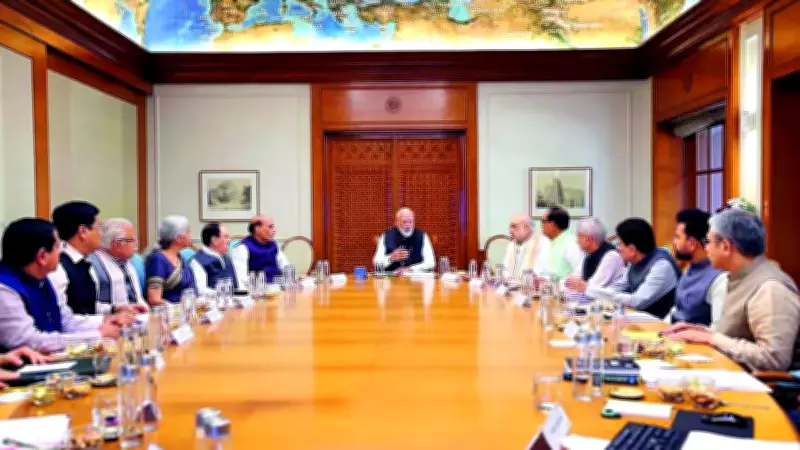
Cabinet Committee on Security Addresses Economic Fallout from West Asia Conflict
In a significant move to address the economic repercussions of the ongoing conflict in West Asia, the Cabinet Committee on Security (CCS), chaired by Prime Minister Narendra Modi, convened on Sunday to deliberate on strategic countermeasures. The high-level meeting, which included key ministers from home, defence, finance, and external affairs, focused on safeguarding India's economy and citizens from the global ripple effects of the turmoil.
Assessing the Impact and Formulating a Response
An official statement released after the meeting highlighted that the conflict is expected to have significant short-, medium-, and long-term impacts on the global economy, with direct implications for India. While immediate domestic effects were assessed as minimal, the government emphasized the necessity of proactive planning for future scenarios. "The ongoing conflict in West Asia will have significant short-, medium- and long-term impact on the global economy and its effect on India were assessed and counter-measures, both immediate and long-term, were discussed," the statement noted.
Prime Minister Modi underscored the urgency of the situation in a post on social media platform X, stating, "We had extensive discussions on short-, medium- and long-term measures, including ensuring continued availability of fertilisers for farmers, diversifying import sources for key sectors, promoting exports to new destinations and more. We are committed to safeguarding our citizens from the impact of the conflict."

Key Measures and Strategic Diversification
The CCS outlined a multi-pronged approach to mitigate risks, with a primary focus on:
- Diversifying Import Sources: Plans were discussed to reduce dependency on single regions by broadening the origins of imports for critical sectors such as chemicals, pharmaceuticals, petrochemicals, and other industrial goods.
- Ensuring Agricultural Stability: The government expressed confidence in current stocks of fertilizers and coal but emphasized measures to maintain their availability for farmers, crucial for food security.
- Enhancing Export Opportunities: Strategies to promote Indian exports to new international markets were explored to offset potential trade disruptions.
This meeting marked the first CCS-level gathering specifically dedicated to formulating a comprehensive strategy, reflecting the assessment that the conflict's economic impact is likely to persist. Previously, PM Modi had engaged in diplomatic talks with counterparts, particularly from Gulf nations—a region vital for energy imports and home to a large Indian diaspora.
Institutional Framework and Coordination
To ensure effective implementation, the Prime Minister proposed establishing a dedicated group of ministers and a panel of secretaries to oversee the response. Detailed stakeholder consultations through sectoral groups are planned to address specific challenges across industries.
Additionally, Modi instructed central and state governments to collaborate closely to prevent black-marketing and hoarding, ensuring minimal inconvenience to citizens. "PM said that the conflict is an evolving situation and the entire world is affected in some form. In such a situation, all efforts must be made to safeguard citizens from the impact of this conflict. PM instructed that all arms of govt work together to ensure least inconvenience to citizens," the official statement elaborated.
Comprehensive Sectoral Review
During the meeting, Cabinet Secretary TV Somanathan presented an overview of the global situation, detailing mitigation efforts already undertaken and those in the pipeline. Discussions spanned multiple sectors, including:

- Agriculture and food security
- Fertilizers and petroleum
- Power and energy
- MSMEs and export industries
- Shipping, trade, and supply chains
- Finance and macroeconomic stability
The statement confirmed that several measures proposed by various ministries would be refined and executed in the coming days, aiming to bolster India's resilience against external economic shocks. As the conflict continues without a clear resolution timeline, these proactive steps are designed to navigate uncertainties and protect the nation's economic interests.





