

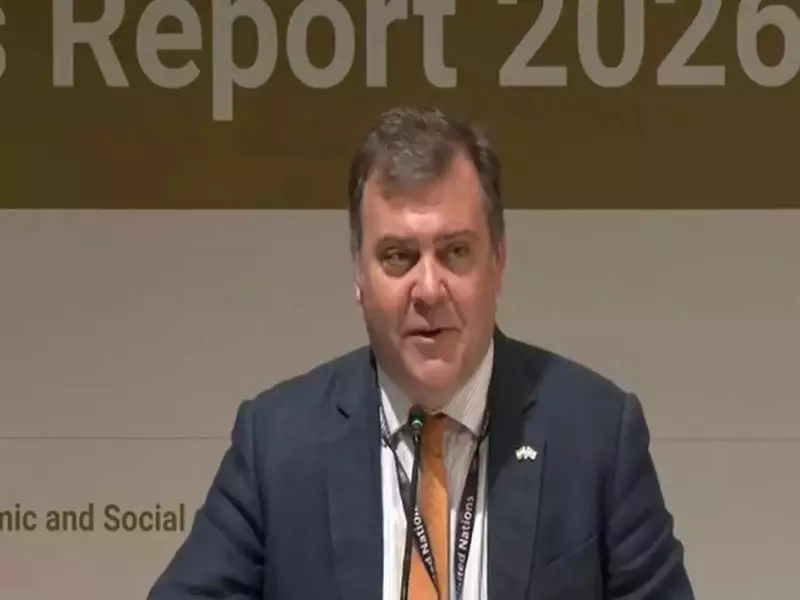
The United Nations has reaffirmed India's position as one of the world's fastest-growing major economies, projecting a robust growth rate of 7.4 per cent for the year 2025. This forecast, detailed in the UN's World Economic Situation and Prospects (WESP) 2026 report, aligns with the Indian government's own advance estimates, signaling broad consensus on the nation's strong economic trajectory.
Growth Trajectory and Key Drivers
According to the UN analysis, India's impressive growth momentum is expected to moderate slightly in the following years, with projections of 6.6 per cent in 2026 and a marginal rise to 6.7 per cent in 2027. UN Country Economist for India, Chris Garroway, emphasized that the 2025 projection is supported by the nation's recent strong performance and matches the estimates released by the Ministry of Statistics and Programme Implementation (MoSPI).
The report identifies two primary engines for India's current expansion: resilient private consumption and a surge in exports from the previous year. However, it anticipates a potential softening in export performance in the coming year as new international tariffs take effect. On the domestic front, significant policy measures are credited for sustaining growth.

Policy Measures Fueling the Expansion
The UN report specifically highlights the positive impact of tax reforms and a period of monetary easing, which have collectively supported broader economic activity. Furthermore, sustained government expenditure on critical sectors is providing a substantial boost.
Major public investments in infrastructure development, defence modernization, digitalisation initiatives, and renewable energy projects are significantly boosting fixed capital formation across the economy. This strategic spending is creating a solid foundation for long-term growth.
Risks and the Global Context
While the outlook is positive, the UN report cautions about near-term risks, primarily centered on trade policy uncertainty. Although recent US tariff increases on Asian economies were less severe than initially feared, and some trade agreements are in place, the shifting global trade landscape remains a concern.
The report notes that higher US tariffs may impact select product categories, but key Indian export segments are likely to remain largely unaffected. Strong demand from other major international markets is expected to partially offset any negative impact.
Navigating this era of trade realignments, persistent inflationary pressures, and climate-related shocks will demand deeper global coordination. The UN underscores the need for decisive collective action at a time when geopolitical tensions are rising and the impetus for multilateral solutions appears to be weakening.






