India's Economic Growth Forecast Revised Upward to 7-7.4% for Next Financial Year
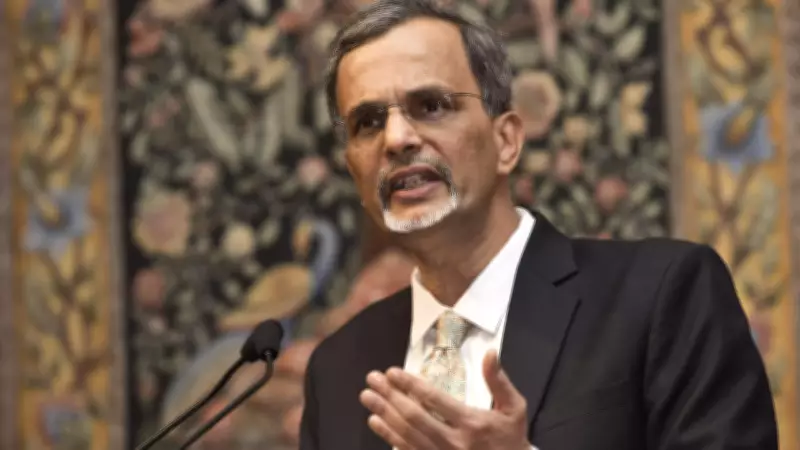
Chief Economic Adviser V Anantha Nageswaran on Friday announced a significant upward revision in India's growth forecast for the financial year 2026-27, projecting a range of 7-7.4%. This marks a notable improvement from the 6.8-7.2% projection made in last month's Economic Survey, reflecting increased optimism about the country's economic trajectory.
Key Drivers Behind the Revised Forecast
The revised forecast is underpinned by several positive developments that have enhanced policy certainty and economic momentum. Trade agreements signed by India, including a framework agreement with the United States, are expected to provide stability and boost capital formation. While the full benefits of these agreements may materialize in 2027-28, Nageswaran emphasized that positive impacts will begin in FY 2026-27, spilling over into consumption patterns.
Improved capital flows represent another critical factor. Nageswaran noted that recent trends indicate better capital inflows, particularly as India moves past its previous disadvantage in artificial intelligence exposure. "With these trade agreements and the second mover advantage that India has in the AI ecosystem...all those things will improve capital flows, stabilize exchange rates," he explained.

$4 Trillion Economy Milestone Within Reach
In a significant projection, Nageswaran stated that the Indian economy is likely to cross the $4 trillion threshold next year. This milestone reflects not just nominal growth but improved economic fundamentals. He highlighted that stabilized exchange rates will allow the dollar value of India's GDP to better represent the underlying performance measured in rupee terms.
The Chief Economic Adviser addressed previous exchange rate challenges, noting that global uncertainties related to capital flows had a depreciating effect on the rupee in 2025. However, the combination of trade agreements and strategic positioning in emerging technologies like AI is expected to reverse this trend.
Sustained Growth Momentum and Risk Assessment
Nageswaran pointed to multiple high-frequency data sets indicating sustained momentum in both consumption and investment. This robust economic activity provides a solid foundation for continued growth. Regarding the March quarter GDP, he expressed confidence that the current momentum is sufficient to deliver a growth rate of 7.3% or higher.
While acknowledging global uncertainties as a potential downside risk, Nageswaran emphasized that "at the moment, the risk is on the upside in this range." He stressed that India's focus on policy reforms and economic management—factors within the country's control—has positioned it among the fastest-growing G20 economies.
Post-Pandemic Growth Trajectory
The Chief Economic Adviser highlighted India's remarkable recovery from the COVID-19 pandemic, noting that the country has achieved "sustained non-inflationary growth of at least 7% in real terms" despite exchange rate challenges. This performance underscores the resilience of India's economic framework and the effectiveness of policy measures implemented in recent years.
Nageswaran's revised forecast and optimistic projections signal confidence in India's economic management and its ability to navigate global uncertainties while maintaining strong domestic growth drivers.