

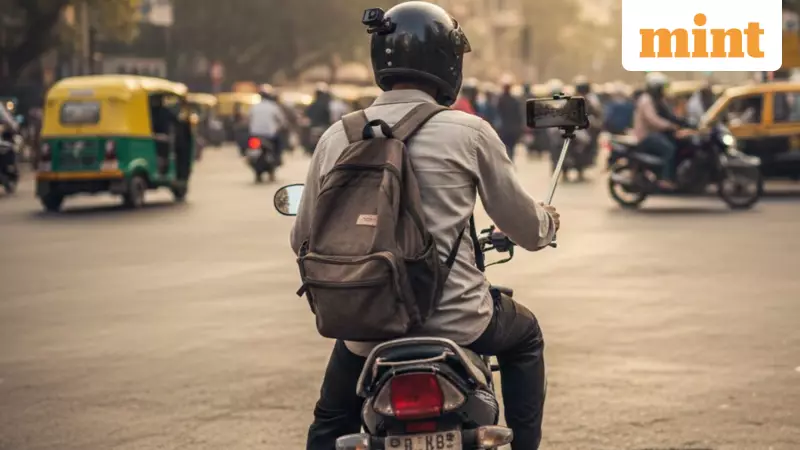
For a rapidly expanding segment of India's workforce, the daily grind of delivering food, driving cabs, or tossing newspapers is no longer just a job—it's content. Faced with unpredictable earnings and limited growth in their primary gigs, millions are turning their smartphones into cameras, broadcasting their work lives on social media platforms to create a crucial parallel income stream and a sense of dignity often absent from their app-based roles.
The Financial Imperative Behind the Camera
The shift towards content creation is frequently driven by necessity, not just aspiration. Aditya Narayan Mishra, MD & CEO of CIEL HR, points out that many workers are pushed online by economic pressures. India's gig economy, which employs over 20 million people, is characterized by volatile pay, demanding hours, and scant protections. CIEL HR data reveals a stark picture: nearly 70% of gig workers earn below ₹50,000 monthly, with 41% making between ₹25,000 and ₹50,000, and 29% earning up to ₹25,000. Only about 9% cross the ₹80,000 threshold.
This widening chasm between effort and reward has fueled demands for better pay and stability, leading to protests in December 2025. While platforms like Zomato and Swiggy temporarily quelled unrest with increased incentives, the underlying job insecurity persists, propelling workers to seek earnings beyond the apps.

Success Stories: Doubling Income and Building Brands
The potential of this side hustle is transformative. Take Deepak Saini, a newspaper delivery worker from Haryana. After his morning rounds, he uploads videos of his precise paper-tossing technique to YouTube and Instagram, where he has amassed over 77,100 and 117,000 followers, respectively. Since starting six months ago and even appearing on India’s Got Talent, his online earnings now match his delivery income. "With a social media side hustle, my income has doubled," Saini stated, explaining he nets around ₹15,000 monthly from each stream.
For some, content earnings vastly outpace gig wages. Aryan Ajay Singh, a 20-year-old part-time delivery partner from Thane, began vlogging his journey as a challenge in October 2023. Now, with 6,620 YouTube subscribers, he highlights the stark contrast: "In part-time food delivery, one makes ₹500–600 after four hours of tiring work. A video made in 1.5 hours can earn ₹5,000–6,000." His content, resonating with both fellow gig workers and curious urban viewers, has attracted brand deals from companies like Magicpin.
The Double-Edged Sword of Creator Success
However, this new avenue comes with its own constraints. Success often tethers creators to the very job they might wish to leave. Bhanu Pratap Singh from Jaipur, who started delivering food after his café failed, now earns nearly ten times more from content than from deliveries. Yet, he finds himself locked in. "It is difficult to switch to a new form of content with the same audience," he admits, now creating food-related content to eventually transition out of gig work entirely.
Not all journeys begin from financial desperation. Angkit Joshi, a Delhi-based cab driver, left a corporate job in September 2023 to drive and create content full-time, recording rides with passenger consent. He treats content creation as an investment, spending on equipment like GoPro cameras and dashcams. Now, 60% of his doubled income comes from brand deals, though it remains variable month-to-month.
Beyond money, sociologists note a quest for respect. Bibhuti Bhushan Malik, a sociology professor at Babasaheb Bhimrao Ambedkar University, Lucknow, observes that gig workers use social media to share daily struggles, aiming to alter perceptions and gain fame that boosts the respect associated with their profession.
Platforms generally adopt a hands-off approach. Ride-hailing service Rapido stated that while they don't formally partner with creator-captains, they respect the choice provided safety and service are upheld. Most other major platforms, including Swiggy, Uber, Ola, and Zepto, did not comment on the trend.

Ultimately, the rise of the gig worker-creator highlights a fundamental market correction. As Dhruv Khurana, co-founder of Astatine, notes, their content works because it showcases "real lives in motion"—the daily hustle, financial pressure, and small wins. In doing so, these workers are monetizing the very labor that traditional gig platforms often undervalue, crafting personal brands and finding both income and recognition on their own terms.





