

India Asserts Summer Power Supply Stability Amid Middle East Tensions
India does not anticipate that the ongoing conflict in the Middle East will significantly hinder its ability to meet peak summer electricity demand. The government is banking on a strategic mix of coal, renewables, and battery storage to offset any potential stress from gas supply disruptions, according to power secretary Pankaj Agarwal.
Limited Gas Dependence Shields Power System
Speaking at the Bharat Electricity Summit 2026, Agarwal emphasized that India's electricity system remains largely insulated from the crisis due to the minimal role of gas in the country's power mix. "We are quite hopeful that this Middle East crisis is not going to affect us," he stated, as reported by ANI. He highlighted that India uses relatively little gas-based power in normal operations, with only about 2.5 gigawatts off-grid, which operates consistently without impact from the Gulf situation.
As per Reuters, gas accounts for merely around 2% of India's total power generation. However, the country does rely on approximately 8 gigawatts of gas-fired capacity during peak-demand periods, particularly in extreme summer heatwaves. "Another about 8 gigawatts is what we use when we are actually really hard pressed, high-demand periods, particularly during the heat waves," Agarwal explained.

Government Leverages Coal and Renewables for Peak Demand
To ensure power availability during summer stress, the government is bringing in additional conventional and renewable capacity. Agarwal noted that the imported coal-based plant at Mundra in Gujarat is being readied to provide a major buffer of 4,000 megawatts. India expects this 4 GW coal power plant to restart, bolstering demand support if gas supplies tighten.
Additionally, the government is fast-tracking wind power projects, which can be particularly useful during evening and non-solar hours. "There is a lot of wind capacity which is about to be commissioned, we have kind of started a specific facilitation for the wind-based capacity because these capacities can help us in the non-solar hours," Agarwal said.
Solar and Battery Storage Key for Day and Evening Needs
Agarwal affirmed that India already has sufficient solar generation to comfortably meet daytime peak demand, exceeding 270 gigawatts regardless of gas availability. "Solar hour, we have absolutely no problem, gas or no gas, we actually have no problem," he remarked.
For the evening, when solar output declines and demand remains high, the focus shifts to battery energy storage systems. About 2.5 gigawatt hours of battery storage is already under commissioning, with hopes for rapid deployment. NTPC is preparing to launch its first battery storage project soon, expected to come online in June.
Coal Plants to Balance Grid Flexibility
Even as India expands renewables, coal will continue to play a critical role in balancing the grid. Agarwal highlighted the flexibility of coal-based plants, which can ramp down during strong solar generation and ramp up in the evening when demand is elevated. "Flexibility of coal-based plants is actually unique during the daytime when you have plenty of solar. That is when you want the coal-based plants to ramp down. For the evening period, you actually need to ramp up the coal-based capacity," he said.
India had previously instructed domestic coal-based utilities to be prepared for uninterrupted power supply in case of gas shortages. The country has produced 1 billion metric tons of coal for a second successive year, further strengthening summer power preparedness.
Broader Energy Concerns Beyond Electricity
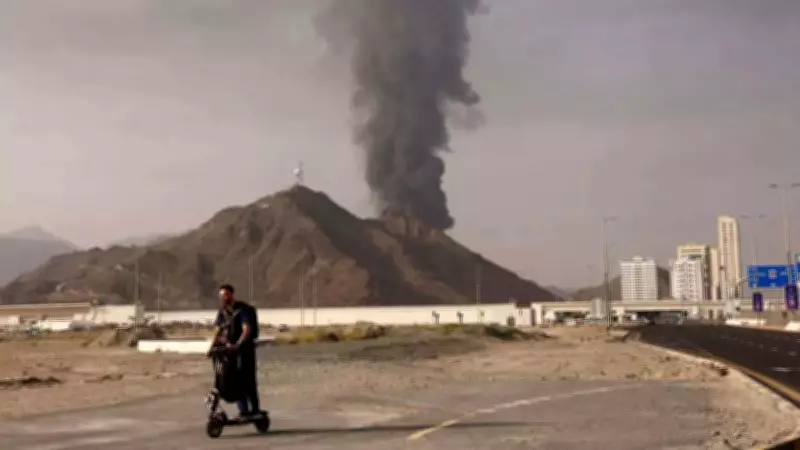
While the power ministry remains confident in electricity supply, the wider energy landscape presents challenges. The US-Israeli war on Iran has disrupted gas supplies, leading to force majeure notices and impacting India—the world's second-largest liquefied petroleum gas importer—with a severe cooking gas crisis as shipments through the Strait of Hormuz are nearly halted. This distinction underscores that the government's reassurance is specific to power demand management, not the broader LPG or fuel import situation.

International Partnerships in Focus
Beyond immediate power supply, Agarwal flagged India's growing international cooperation in the power sector. Russia has offered to partner with Indian companies for co-manufacturing electrical and power equipment in India, described as a business-to-business arrangement. Additionally, Power Grid Corporation of India is collaborating with Kenya on a $311 million transmission project, reflecting India's push to expand its role in overseas energy infrastructure.





