

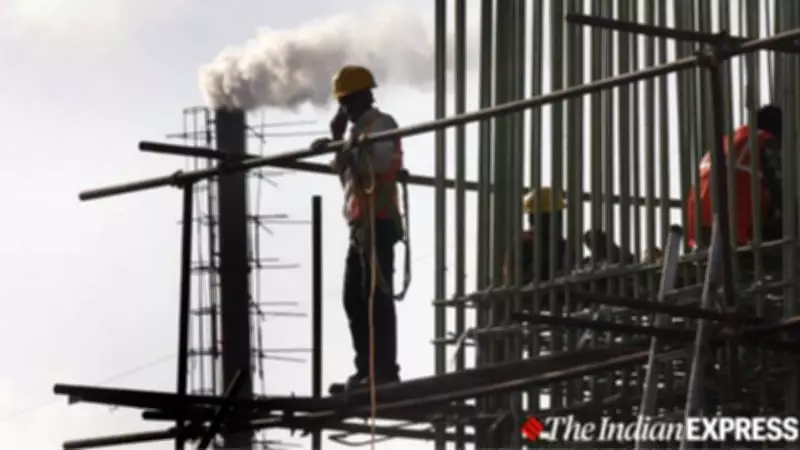
The Economic Survey 2025-26, released by the government, underscores a transformative shift in India's infrastructure paradigm, moving beyond traditional physical networks to embrace broader themes like decarbonisation, digitalisation, and resilience. This evolution is positioned as a critical driver for the nation's long-term growth and development under the Viksit Bharat @2047 vision.
High Multiplier Effects of Capital Expenditure
Capital expenditure, defined as public spending on infrastructure, continues to demonstrate significant economic benefits. According to the report, every rupee invested in infrastructure creation yields a GDP increase ranging from Rs. 2.5 to Rs. 3.5, highlighting the high multiplier effects that underpin India's growth strategy. This reinforces the importance of sustained investment in this sector.
Beyond Physical Networks: A Holistic Approach
The survey notes that consistent investments in key areas such as roads, railways, ports, and civil aviation have already produced tangible gains, including reduced travel times, faster freight movement, and enhanced logistics. However, it emphasizes that the concept of infrastructure is now expanding to encompass:

- Digital public infrastructure
- Clean energy systems
- Resilient water management
- Future-ready technologies
This broader framework is deemed essential for addressing emerging priorities and ensuring sustainable development.
Need for Private and Institutional Investment
The report reiterates a finding from previous years: public investment alone is insufficient to meet India's growing infrastructure demands. It calls for increased participation from the private sector and long-term institutional investors to maintain the growth momentum. This is crucial as the government has significantly ramped up capital expenditure, with the outlay rising from Rs. 3.07 lakh crore in FY19 to Rs. 11.21 lakh crore in FY26, marking a substantial increase over the years.
Quality of Execution and Project Challenges
While increased capital expenditure is vital, the survey cautions that its effectiveness hinges on the quality of project planning, prioritization, and execution. Evidence from various studies points to common issues such as time and cost overruns in large infrastructure projects, often linked to gaps in upstream preparation. These include:
- Weak feasibility assessments
- Incomplete Detailed Project Reports (DPRs)
- Rigid procurement practices
- Delays in dispute resolution
Addressing these challenges is key to maximizing the impact of infrastructure investments.
Progress in Core Physical Infrastructure
In core physical infrastructure, sectors like roads and highways, railways, civil aviation, and shipping remain primary drivers of development. Over the past decade, significant achievements include:
- A 60% increase in the National Highway network since FY14
- A tenfold rise in high-speed corridors
- Average annual construction growing by 2.3 times
- Capital expenditure on roads and highways expanding by 5.8 times
However, the report notes a slowdown in National Highway construction in FY26, with only 4,938 km completed out of a 10,000 km target as of December 2025.
Railways and Aviation: Key Growth Areas
Railways have seen capital expenditure surge from an average of Rs. 0.99 lakh crore during 2014–19 to Rs. 2.65 lakh crore in FY26, leading to more than doubled line commissioning compared to the previous decade. The sector has become a backbone for freight and energy logistics, supporting coal movement and industrial supply chains through dedicated corridors and modern terminals.
In aviation, India operates 0.11 airports per million people, significantly lower than the US (47.35) and China (0.39), indicating substantial headroom for growth. The number of airports has increased from 74 in 2014 to 164 in 2025, with passenger traffic projected to rise from 412 million to 665 million by FY31. Current volumes represent only a fraction of the potential, highlighting opportunities for expansion.

Ports and Shipping: Efficiency Gains
The ports and shipping sector has made substantial progress through infrastructure upgrades, mechanization, and smart port initiatives. Digital trade facilitation has improved operational efficiency, with average container vessel turnaround times nearing global best standards, enhancing India's competitiveness in international trade.
Overall, the Economic Survey 2025-26 positions infrastructure as a central pillar of India's medium-term growth strategy, emphasizing the need for aligned investments in decarbonisation, digitalisation, and resilience to achieve long-term development goals.





