

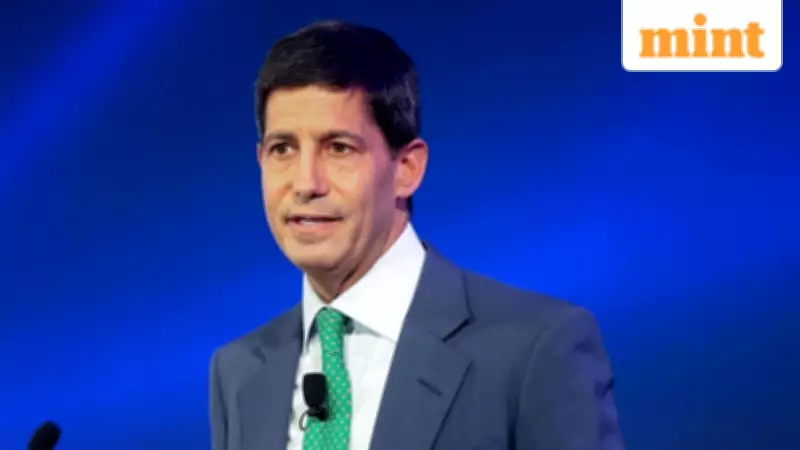
Kevin Warsh's Federal Reserve Nomination: A Hawk's Transformation Under Trump's Spotlight
In a move that has captured the attention of global financial markets, President Donald Trump has nominated Kevin Warsh to lead the Federal Reserve. This decision, announced on January 30th, marks a significant shift in the leadership landscape of America's central bank, raising profound questions about the future direction of monetary policy.
From Inflation Hawk to Rate-Cutting Dove
Kevin Warsh's nomination represents a curious paradox. During his tenure as a Federal Reserve governor from 2006 to 2011, Warsh established himself as a ferocious inflation hawk, consistently warning about price surges even during the depths of the 2007-09 global financial crisis when inflationary pressures were virtually non-existent. His reputation was built on this unwavering vigilance against inflation.
Today, America faces genuine inflation challenges, exacerbated by pandemic-era fiscal policies that Warsh himself opposed. Yet the nominee has undergone a remarkable transformation, now positioning himself as a rate-cutting dove who aligns with President Trump's persistent calls for lower interest rates. Warsh attributes this philosophical shift to what he describes as the administration's deregulatory achievements and the potential productivity boom from artificial intelligence development.

The Selection Process and Market Reaction
Warsh emerged victorious from a months-long competition that included notable contenders such as Kevin Hassett, Rick Rieder, and Christopher Waller. President Trump praised Warsh's extensive credentials, famously describing him as "central casting" material—a reference to both his professional qualifications and his Wall Street appearance.
Financial markets have responded with measured relief to the nomination. Bond yields have remained largely stable since Warsh emerged as the frontrunner, and stock markets have shown minimal reaction. Investors appear to view Warsh as the closest approximation to a conventional choice from an administration that was never likely to nominate a business-as-usual candidate.
Policy Implications and Potential Conflicts
The Warsh-led Federal Reserve would likely implement several significant policy shifts:
- End of Quantitative Easing: Warsh has consistently opposed the Fed's expanded balance sheet through bond-buying programs, aligning him with Treasury Secretary Scott Bessent who has compared QE to controversial "gain of function" biological research.
- Interest Rate Challenges: Despite his dovish rhetoric, Warsh would face practical limitations in implementing rate cuts, casting only one vote on the 12-member Federal Open Market Committee that determines monetary policy.
- Fed Independence Concerns: The nomination raises serious questions about central bank autonomy, particularly given President Trump's unprecedented interventions in Fed affairs and attempts to influence monetary policy decisions.
The Independence Question and Historical Context
Perhaps the most troubling aspect of Warsh's nomination concerns the Federal Reserve's cherished independence. No president in the seven decades since the central bank gained autonomy from political interference has been as meddlesome as Donald Trump, who has consistently criticized current Chair Jerome Powell and attempted to remove other Fed governors.
Even if Warsh rediscovers his hawkish tendencies once securely installed in a fixed-term position, questions about his impartiality will persist. His defining career moment came during the financial crisis when he served as the Fed's liaison to Wall Street—a period when the central bank maintained credibility across political divides and market sectors.
The Road Ahead for Monetary Policy
Warsh's ability to balance presidential expectations with sound monetary policy will require extraordinary diplomatic skill. His argument that future productivity gains from artificial intelligence will naturally curb inflation represents speculative optimism rather than established economic theory, placing him at odds with more cautious central banking traditions.

As the confirmation process unfolds, the financial world watches closely to see whether this former inflation hawk turned presidential favorite can navigate the complex terrain of modern monetary policy while preserving the Federal Reserve's institutional integrity in an increasingly politicized environment.





