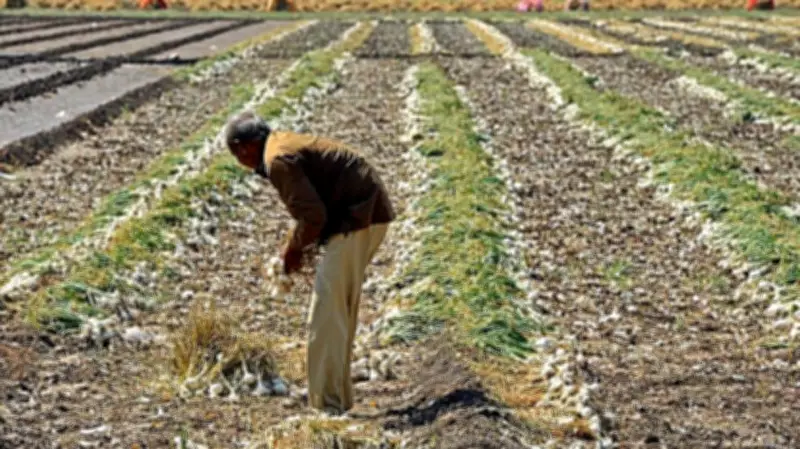
India's kharif sowing has plummeted by 23% compared to the same period last year, driven by a delayed and erratic monsoon, according to data released by the Ministry of Agriculture. As of June 30, 2026, total sown area under kharif crops stood at approximately 180 lakh hectares, down from 234 lakh hectares in 2025. The shortfall is widespread, affecting not only rice but also pulses, oilseeds, coarse cereals, and cotton.
Key Crops Hit Hard
Rice, the main kharif crop, has been sown on only 45 lakh hectares so far, a decline of 30% from 64 lakh hectares last year. Pulses have seen a 20% drop, with area under arhar (pigeon pea) and urad (black gram) shrinking significantly. Oilseeds, including soybean and groundnut, are down 18%, while coarse cereals like maize and bajra have fallen by 22%. Cotton sowing has also slumped by 25% to 60 lakh hectares.
“The delayed onset of the southwest monsoon and uneven rainfall distribution have severely hampered planting operations,” said an agriculture ministry official. “Farmers in many regions are waiting for adequate soil moisture before sowing.”

Reservoir Levels Raise Concerns
Compounding the sowing crisis, water storage in India's 150 major reservoirs has dropped to just 26% of their live capacity, as per the Central Water Commission. This is 12 percentage points lower than the 10-year average for this time of year. The low reservoir levels threaten irrigation for already planted crops and could impact rabi sowing later in the year.
“Water availability is a critical constraint,” said a water resources expert. “If monsoon rains do not pick up in July, we could see significant yield losses.”
Regional and Economic Impact
The sowing slump is most pronounced in central and western India, including states like Maharashtra, Madhya Pradesh, and Gujarat, which have received 30-40% below-normal rainfall. Northern states like Punjab and Haryana have fared slightly better due to irrigation, but overall area under paddy in Punjab is down 15%.
Analysts warn that lower kharif output could stoke food inflation, which has already been running above 6% in recent months. The government is closely monitoring the situation and may consider contingency measures such as releasing additional food grains from buffer stocks or easing import duties.
“We are prepared to take necessary steps to ensure price stability,” said a senior official in the Ministry of Consumer Affairs. “But the priority now is to accelerate sowing once rains arrive.”
Outlook for July
The India Meteorological Department has forecast above-normal rainfall in July, which could help recover some of the sowing shortfall. However, delayed planting often leads to lower yields, especially for long-duration crops like sugarcane and cotton. Farmers are advised to opt for short-duration varieties to mitigate risks.
As of June 30, the monsoon has covered only 60% of the country, compared to the normal 80% by this date. The sowing window for kharif crops typically closes by mid-July, leaving little time for catch-up.