

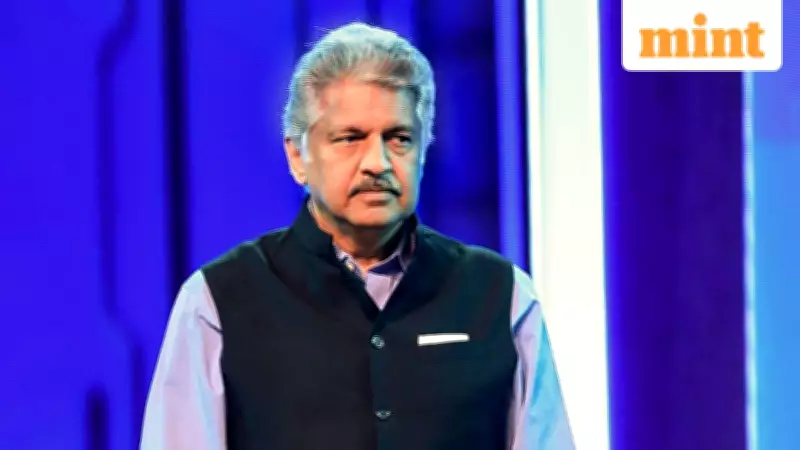
In a notable response to the recently released Economic Survey, Mahindra Group Chairman Anand Mahindra has highlighted what he describes as a significant transformation in India's policy framework. According to Mahindra, this year's survey represents a fundamental shift by positioning cities at the very core of the nation's economic strategy, rather than treating them as mere administrative afterthoughts.
Mahindra's Social Media Endorsement
Taking to social media on Friday, Anand Mahindra expressed his views on the document, stating that it "breaks new ground by blending a bold, optimistic vision for the future with a realistic assessment of the economy's vulnerabilities." He emphasized that the most striking aspect for him was the unprecedented attention given to Indian cities within economic policy discussions.
Cities as Economic Engines, Not Problems
Mahindra pointed out that, perhaps for the first time, cities are being recognized as essential economic systems. This contrasts sharply with previous approaches where urban areas were often discussed primarily in terms of housing shortages, traffic congestion, or welfare delivery challenges. He noted that this represents a clear departure from earlier policy thinking, which tended to view cities as problems requiring management rather than as strategic assets capable of driving substantial growth.

Beyond Economic Output: The Liveability Factor
Importantly, Mahindra highlighted that the Economic Survey does not confine the concept of successful urbanisation to mere output and economic metrics alone. He argued that cities which prioritize liveability are more likely to attract and retain top talent, foster creativity, and sustain long-term growth. This holistic view underscores the interconnectedness of quality of life with economic prosperity.
The Economic Survey's Urban Vision
The Economic Survey itself outlines specific measures to bolster urban development. It recommends that every Indian city with a population exceeding one million should be required to prepare a comprehensive 20-year City Spatial and Economic Plan, which must be updated every five years. This forward-looking approach aims to provide a structured framework for sustainable urban growth.
Addressing Institutional and Fiscal Gaps
The survey candidly acknowledges that Indian cities have not been equipped with the necessary institutional, fiscal, and planning foundations to match their critical role in national prosperity. It notes that while urbanisation has concentrated productivity, innovation, and labour markets in cities, it has also led to challenges such as congestion, informality, and complex governance issues.
Integrated Solutions for Urban Challenges
To tackle these multifaceted problems, the Economic Survey advocates for an integrated approach. On the supply side, it suggests unlocking urban land through clearer property titles, improved density norms, and transit-oriented development. These measures are designed to expand affordable housing options and reduce peripheral urban sprawl, thereby creating more efficient and livable urban environments.
Potential for Transformative Change
Looking ahead, Anand Mahindra expressed optimism about the potential impact of these ideas. He stated, "If this thinking carries meaningfully into budgeting and institutional reform, it could mark a long-overdue shift: from managing cities as problems to building them as platforms for India's growth." This sentiment underscores the critical need for the principles outlined in the Economic Survey to be reflected in concrete policy actions and financial allocations.

Key Takeaways from the Discussion
- The Economic Survey represents a paradigm shift by recognizing cities as core economic systems essential for productivity and innovation.
- A strategic, integrated approach to urban planning can significantly enhance liveability and drive sustainable growth across Indian cities.
- Future budgeting and institutional reforms must meaningfully incorporate the survey's ideas to ensure effective urbanisation and bolster national prosperity.
Anand Mahindra's endorsement brings significant attention to this evolving policy perspective, highlighting the potential for cities to become central pillars in India's economic advancement. The emphasis on moving beyond problem management to strategic asset building could pave the way for more resilient and dynamic urban centres across the country.





