Middle East Conflict Threatens India's Oil Supply and Economic Stability
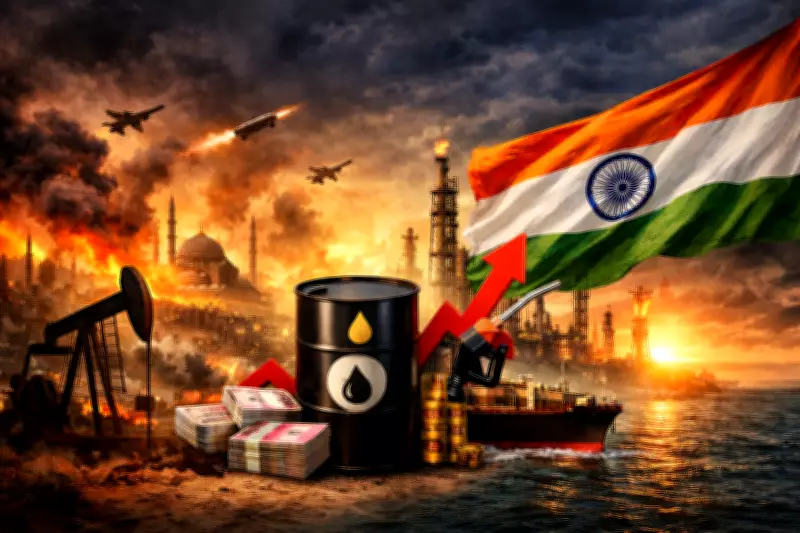
The Middle East region is experiencing significant turmoil, raising serious concerns about the potential implications for India's economy. New Delhi imports approximately 88% of its crude oil requirements, making the country particularly vulnerable to any disruptions in global oil supplies. Such disruptions could rapidly increase India's oil import bill and fuel inflationary pressures across the economy.
Security Concerns Drive Global Crude Prices Higher
Fresh security concerns surrounding the Strait of Hormuz have already triggered sharp increases in global crude oil prices. Brent crude surged more than 10% to reach $80 per barrel, while US-traded oil rose approximately 9% to $73. This significant price spike reflects growing market nervousness about potential supply disruptions through one of the world's most critical oil transportation routes.
The escalating conflict has seen multiple developments including Israeli attacks on Iranian targets, reports of a US F-15 downed in Kuwait according to Iranian state media, explosions reported in Bahrain, Dubai, and Doha, and Israeli bombing of Hezbollah targets in Beirut. Gulf nations have responded by vowing to defend themselves against further aggression.

India's Vulnerability to Oil Market Disruptions
This development carries particular significance for India, which relies heavily on imports to meet its crude oil requirements. Any sustained increase in global oil prices is likely to inflate the country's import bill substantially and add to fuel-driven inflationary pressures throughout the economy.
As the conflict continues to escalate, two vital sea lanes connecting India with the Gulf region and major markets in North America and Europe—the Strait of Hormuz and the Bab el-Mandeb Strait—could experience major disruptions to shipping traffic.
Price Hikes Across Consumer Products
Crude oil plays a vital role in the production of everyday consumer products including detergents, biscuits, toothpaste, paints, and packaging materials. Petroleum derivatives are widely used in items such as soaps, shampoos, creams, hair oils, bottles, and tubes. These inputs constitute more than 25% of production costs for fast-moving consumer goods companies and approximately 40% for paint manufacturers.
If crude prices continue to soar, these daily use products may become significantly more expensive for Indian consumers. Abhijit Roy, Chief Executive Officer of Berger Paints, explained to Economic Times that demand could also be impacted in states like Kerala, Uttar Pradesh, West Bengal, and Telangana, which receive substantial remittances from Gulf countries.
Arup Chauhan, promoter of Parle Products, India's largest biscuit manufacturer, told Economic Times that the escalation in Brent crude prices would have a cascading effect throughout the economy. He expressed hope that the situation might settle down within approximately 72 hours.
Widening Current Account Deficit
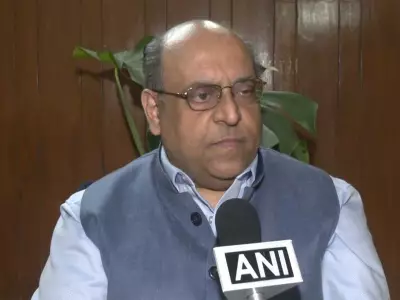
Ajay Bagga, Banking and Market Expert, informed ANI that approximately 20-22 million barrels per day pass through the Strait of Hormuz, representing roughly one-fifth of global oil consumption. Even short-lived disruptions at this critical chokepoint tend to push up insurance premiums, freight charges, and crude benchmarks. Markets are already witnessing steep increases in war-risk insurance, tanker rerouting, naval escort activity, and higher embedded logistics costs.
Bagga outlined a range of possible price outcomes depending on the conflict's escalation. Under limited escalation, Brent crude could move to $100-115 per barrel. If maritime disruptions occur, prices may rise to $120-140, while a sustained closure risk could drive crude to $150 or beyond.
Every $10 increase in crude oil prices widens India's current account deficit by roughly 0.4-0.5% of GDP and lifts Consumer Price Index inflation by 30-40 basis points. Bagga emphasized that this situation represents not simply a geopolitical story but a macroeconomic story with far-reaching consequences.

He added that sectors including aviation, chemicals, automobiles, paints, and oil marketing companies could face significant pressure if higher crude costs are not fully passed on to consumers. Potential relative gainers might include upstream oil firms, defence companies, IT sectors benefiting from US dollar hedging, and gold-linked investments.
Bagga noted that geopolitical risk is no longer episodic but has become structural, with 2026 marking the return of hard geopolitics. He urged investors to stress-test portfolios for $120 oil scenarios, diversify geographically, own real assets, and implement currency hedging strategies.
Diversifying India's Oil Basket
The Global Trade Research Initiative indicated that in the event of a Hormuz closure, refiners could potentially reroute supplies via pipelines to Red Sea ports. India may also increase sourcing from Russia, the United States, West Africa, and Latin America, while drawing on its strategic petroleum reserves to manage near-term supply shocks.
However, risks remain uneven across different fuel types. Sumit Ritolia, Lead Research Analyst for Refining and Modelling at Kpler, noted that while India may be able to cope with higher crude prices and temporary supply disruptions, liquefied petroleum gas supplies appear more vulnerable. He explained that escalating Middle East tensions highlight a structural reality: India remains materially exposed to the Strait of Hormuz not just for crude oil, but even more so for LPG and liquefied natural gas.
Potential Stabilization Timeline
Meanwhile, energy policy expert Narendra Taneja suggested that oil markets might experience only a brief phase of volatility following the recent escalation in the Iran-Israel conflict. He expected the situation to stabilize within 7 to 10 days, with the United States and Israel potentially moving toward diplomatic engagement after achieving their immediate objectives.
Speaking to ANI, Taneja expressed concern about the current trajectory but stated his belief that things would likely begin to stabilize within the next 7-10 days. He suggested that the United States and Israel might declare they have achieved their objectives and subsequently call for peace negotiations.