

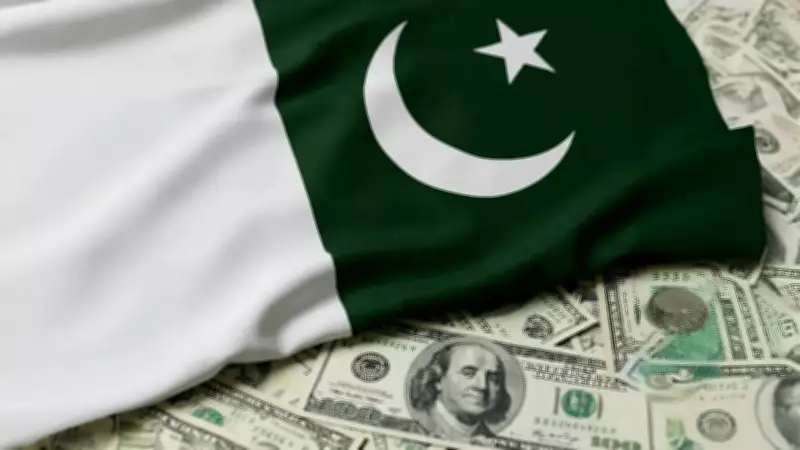
Pakistan Scrambles for Financial Alternatives as UAE Debt Repayment Nears
With its financial situation under severe strain, Pakistan is urgently exploring a variety of options to replace a $3.5 billion facility from the United Arab Emirates and bolster its foreign exchange reserves. The country is set to repay approximately $3 billion to the UAE by the end of this month, marking the first time in seven years that it has failed to secure a rollover of this debt. This impending repayment is expected to exert significant pressure on Pakistan's reserves, which currently stand at around $16 billion, covering about three months of imports.
Exploring Diverse Financing Strategies
Finance Minister Muhammad Aurangzeb has outlined that Pakistan is evaluating multiple financing avenues to address this challenge. These include issuing Eurobonds, securing bilateral loans, and raising commercial debt. In discussions with Reuters, Aurangzeb emphasized that every option remains under consideration, particularly regarding potential loans from Saudi Arabia to substitute the UAE support. He noted that the ongoing conflict in the Middle East has highlighted the need for Pakistan to build strategic petroleum reserves and accelerate its transition toward renewable energy.
Speaking on the sidelines of the IMF and World Bank spring meetings, Aurangzeb assured that Pakistan remains capable of meeting its debt obligations, with foreign exchange reserves currently sufficient for about 2.8 months of imports. He stressed that preserving this level is crucial for maintaining overall macroeconomic stability in the coming period. The government is actively considering issuing Eurobonds within the year, along with exploring Islamic sukuk and dollar-settled, rupee-linked bonds as part of its broader financing strategy.

Engaging with International Partners
Sources have informed Bloomberg that Pakistan is holding talks with Saudi Arabia and China to secure financial assistance. These negotiations are said to cover both borrowing and potential investments, reflecting Islamabad's efforts to diversify its funding sources. Additionally, Pakistan is preparing to introduce its first Panda bond next month, a yuan-denominated debt instrument. The initial issuance of $250 million is part of a larger $1 billion plan, with support from the Asian Development Bank and the Asian Infrastructure Investment Bank.
Aurangzeb indicated that the IMF board is expected to approve the next tranche of funding by the end of this month or early next month. This would release just under $1.3 billion through the Extended Fund Facility and the Resilience and Sustainability Facility. While Pakistan has not yet sought revisions or additional support under its $7 billion IMF programme in response to the economic impact of the Middle East conflict, such a move remains under consideration. "Depending on how the situation evolves over the coming weeks, it is something that could be taken up," he said.
Economic Outlook and Strategic Measures
Looking ahead, Aurangzeb projected that Pakistan's GDP growth of around 4%, remittance inflows of roughly $41.5 billion, and targeted support for vulnerable sections of society should help the country absorb the economic impact of the Iran conflict during the current fiscal year ending June 30. However, he underscored the importance of building strategic reserves of fuel and LPG, rather than relying solely on commercial stockpiles, to mitigate the effects of supply shocks.
"When a supply shock of this nature occurs, it clearly signals the urgency of moving faster on these fronts," he remarked, reiterating the need to accelerate the transition to renewable energy. As Pakistan navigates these financial challenges, its ability to secure alternative funding and implement strategic measures will be critical for ensuring economic stability and resilience in the face of global uncertainties.






