Political Storms Gather Around Central Banks Worldwide
The independence of central banks faces unprecedented challenges across the globe. Political leaders are increasingly encroaching on monetary policy decisions that were once considered sacred territory for technocrats.
America's Federal Reserve Under Direct Assault
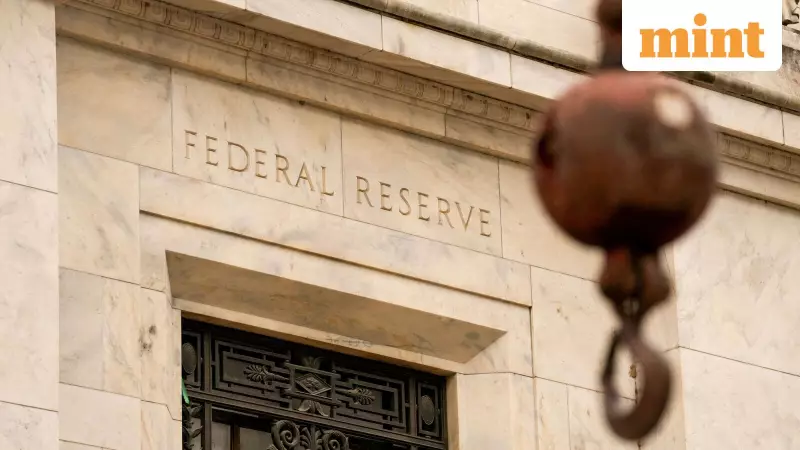
President Donald Trump has spent the past year aggressively pushing the Federal Reserve to cut interest rates more rapidly. The situation escalated dramatically on January 11th when Fed Chair Jerome Powell revealed that the Department of Justice had served subpoenas to the central bank.
Powell now faces potential criminal indictment related to a prolonged dispute about renovation costs at the Fed's headquarters. This represents the most significant attack on central bank independence in decades, particularly concerning because the Federal Reserve serves as the world's most influential monetary institution.

A Global Pattern Emerges
Political pressure on central banks extends far beyond American borders. The decades-old arrangement that delivered lower inflation and greater economic stability can no longer be assumed as guaranteed.
Modern central bank independence took shape after World War II. The 1951 "Treasury-Fed accord" freed America's central bank from the obligation to suppress government borrowing costs. Germany established the Bundesbank with explicit authority to control inflation and prevent a repeat of Weimar-era currency disasters.
The independence movement gained momentum during the 1980s as research demonstrated its benefits. The argument suggested that politicians often pursue self-defeating monetary policies to achieve high employment, reduce debt burdens through inflation, or secure election victories.
Japan's Delicate Balance
Japanese Prime Minister Takaichi Sanae previously criticized interest rate increases as "stupid" before taking office in October. Bond markets reacted sharply to her appointment, demonstrating how government attitudes influence monetary policy even when central banks maintain formal independence.
Japan now confronts inflation concerns that prompted the central bank to raise rates to a thirty-year high in December. With national debt reaching 130% of GDP, further interest rate increases will significantly strain government budgets, creating tension between fiscal and monetary policies.
European Vulnerabilities
Britain faces pressure from both populist-right Reform UK and populist-left Greens regarding high interest costs. Both parties have suggested eliminating interest on reserves, which would essentially tax lenders while making the central bank function as a government funding mechanism.
The euro zone presents different challenges. Although the European Central Bank enjoys treaty-guaranteed independence, rising government debts create pressure for intervention. France's substantial economy and massive debt burden make it particularly influential in potential standoffs with the ECB.
Emerging Markets Follow Suit
Indonesia represents a concerning case where the government is tapping the central bank's balance sheet despite manageable debt levels. The Bank of Indonesia agreed to "share the burden" of funding government projects by increasing interest payments on finance ministry deposits.
Other nations including Ghana, Turkey, and Nigeria have witnessed central bankers facing legal prosecution in recent years. The fact that America's Fed chair now encounters similar legal threats demonstrates how dramatically the landscape has shifted.
Market Reactions and Political Calculations
Surprisingly, bond markets have remained relatively calm despite these developments. America's ten-year Treasury yield has stayed near pre-controversy levels. This stability may reflect Powell's strengthened resolve and support from Republican senators who have pledged to block Trump's Fed nominations until the legal matter resolves.
Another factor involves the difficult politics of inflation. Voters intensely dislike rising prices, as demonstrated by Jimmy Carter's 1980 defeat and Kamala Harris's 2024 election loss. The ongoing "affordability crisis" continues to trouble incumbent politicians worldwide.

In Japan, Prime Minister Takaichi appears restrained from excessive monetary intervention because looser policy would weaken the yen, making imports more expensive for consumers already frustrated by high prices.
An Uncertain Future
Trump will soon name a replacement for Powell, whose term as chair concludes in May. Potential candidates include Kevin Hassett, who possesses strong economic credentials but maintains close ties to the Trump administration.
Even if the president selects a genuine technocrat, the prospect of personal reprisals like those targeting Powell must concern monetary policymakers everywhere. A pending Supreme Court case regarding Fed governor Lisa Cook could further erode central bank independence if it allows presidential removal authority.
Relying on political restraint represents a significant gamble. Maintaining independent central banks that have repeatedly demonstrated their effectiveness remains the safer choice for economic stability. The coming months will reveal whether this principle survives current political pressures.