

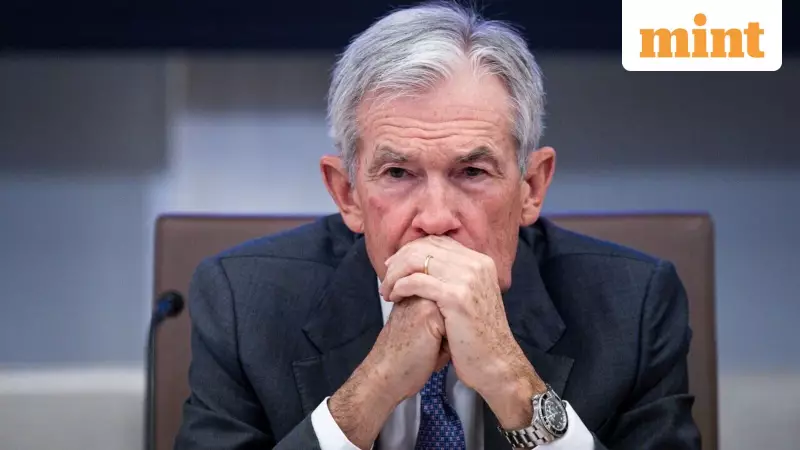
In a stunning break from his typically measured approach, Federal Reserve Chair Jerome Powell has launched a direct and public counterattack against the Trump administration. The confrontation was triggered by a Justice Department investigation, which Powell framed as an unprecedented attempt to undermine the central bank's political independence over interest rate decisions.
The Unprecedented Challenge and Powell's Stern Response
The crisis began late on Friday, January 9, 2026, when Powell received grand jury subpoenas. A lawyer by training, the Fed chair spent the weekend in intense consultations with his advisers, weighing his response. By Sunday night, he had made a decisive move.
Powell released an extraordinary two-minute video statement, shedding his years of diplomatic caution. In unusually stern language, he accused the administration of weaponizing the threat of criminal prosecution to force the Fed into lowering interest rates. "The threat of criminal charges is a consequence of the Federal Reserve setting interest rates based on our best assessment of what will serve the public, rather than following the preferences of the president," Powell declared.

This public disclosure was a strategic gambit. Powell aimed to ensure that pressure applied behind closed doors could not remain secret. He argued that the potential prosecution of a sitting Fed chair constituted material information crucial for investors and anyone analysing the forces shaping monetary policy.
The Investigation: A Building Project or a Political Tool?
The Justice Department's probe formally centres on Powell's congressional testimony from June 2025 regarding a $2.5 billion project to renovate historic Federal Reserve buildings near the National Mall in Washington. White House officials had previously alleged Powell either misstated the project's costs or failed to comply with permitting rules.
However, Powell dismissed this as a mere pretext. He asserted that the real target was the Fed's autonomy on interest rates. President Trump has long advocated for lower rates, which stimulate economic growth and often boost stock market performance. Although the Fed cut rates three times in 2025, tensions had deepened over whether persistent inflation actually warranted higher rates.
While past presidents, like Lyndon Johnson, have clashed with Fed chairs, the threat of a criminal investigation against a sitting chair is without historical precedent. The White House referred questions to the Justice Department. A spokesman for Attorney General Pam Bondi declined to comment on the specific probe but stated she had instructed U.S. attorneys to prioritise investigating abuses of taxpayer funds.
Political Calculus and Market Fallout
The escalation carries significant political stakes. Some Trump allies had hoped the pressure would compel Powell to resign before his term as chair ends in May 2026. This would hand President Trump a second vacancy to fill on the Fed's seven-person board. Powell holds a separate term as a governor until early 2028, which would otherwise limit Trump to one vacancy before then.
Powell's defiant video message suggested the administration misjudged his resolve. "Public service sometimes requires standing firm in the face of threats," he said, vowing to continue his duties with integrity. He had already hired the elite law firm Williams & Connolly as outside counsel, anticipating a legal fight, and had cultivated allies on Capitol Hill.
The immediate market and political reaction was one of shock. Economists warned that Powell's defiance sets a high bar for any successor. "Trump has now made it crystal clear that he will accept no less than the Fed bending its knee to him in its decision-making," said Eswar Prasad, an economist at Cornell University.
The question of whether a future chair would risk prosecution to maintain independence will now loom over Senate confirmation hearings. Senator Thom Tillis (R., N.C.) added a new complication, stating he would block any Fed nominee until the investigation is resolved.

Analysts were caught off guard because Powell had recently delivered rate cuts at the last three Fed meetings, albeit against growing internal opposition. "Without Powell to act as a shield, it's easy to see Trump quickly turning his ire toward the remaining FOMC participants," noted Tim Duy, chief U.S. economist at SGH Macro Advisors.
The administration now faces a choice: back down or escalate further. One extreme option would be for Trump to attempt to fire Powell, potentially citing negligence on the building project. However, Trump himself undermined this rationale in July 2025 during a site tour, refusing to call it a fireable offense. Any dismissal would likely trigger a protracted court battle, similar to the ongoing legal contest over Trump's efforts to remove Fed Governor Lisa Cook. The Supreme Court is set to hear arguments on the scope of presidential power to dismiss Fed officials later this month.
The fallout from this historic clash will redefine the relationship between the White House and the Federal Reserve for years to come, testing a bedrock principle of modern economic policy.





