

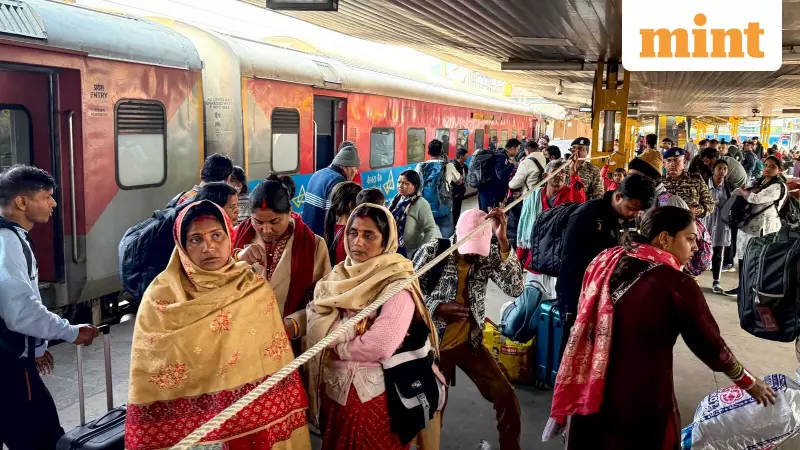
In a significant shift from its recent policy, Indian Railways has increased passenger fares not once, but twice in the year 2025. This marks the end of a five-year period of stability where fares had remained unchanged since January 2020. The latest revision, effective from December 26, 2025, follows a similar hike implemented in July, placing a new financial burden on millions of commuters, particularly those in the economically weaker sections.
The Anatomy of the 2025 Fare Hikes
The fare adjustments, while appearing modest on a per-kilometer basis, are structured to affect different classes of travel. The December revision increased fares for mail and express trains by 2 paise per kilometre for both air-conditioned (AC) and non-AC classes. For second-class passengers traveling on ordinary trains for distances beyond 215 kilometers, an extra 1 paisa per km is now charged.
This move mirrors the July increase, which had also raised mail/express fares by 2 paise per km for AC coaches and 1 paisa per km for non-AC classes. Second-class ordinary passengers saw a 0.5 paise per km hike after the initial 500 km. The cumulative effect of these two revisions is projected to generate approximately ₹600 crore in additional revenue for the national transporter in the current fiscal year.

Longer Journeys, Heavier Pocket Pinch
The real impact of these successive hikes becomes starkly evident on long-distance routes. Taking one of India's longest train journeys, the Dibrugarh-Kanniyakumari route spanning 4,154 km, as an example, the total extra cost is substantial.
Passengers in AC classes now pay ₹166.2 more per trip (₹83.1 from each hike). Those in non-AC mail/express classes face a total increase of ₹83.1. Even second-class travelers on ordinary trains, who paid ₹18.3 more after July, now bear an additional cost, bringing their total extra fare to ₹57.7 for this marathon journey.
On the heavily traversed Delhi-Mumbai route (1,400 km), the combined increase amounts to ₹56 for AC class passengers and ₹42 for non-AC mail/express travelers. Second-class ordinary passengers on this route now pay about ₹16 more for a ticket.
Who is Feeling the Heat?
The burden of these revisions falls disproportionately on a specific segment of railway users. The fare hikes primarily affect sleeper and second-class passengers in both ordinary and mail/express trains. This group is critically important, as they account for over 70% of passenger-kilometers in non-suburban travel and are typically from lower-income backgrounds.
While revenue from AC travelers is growing, the vast majority of railway usage still comes from ordinary and sleeper classes. Consequently, a significant portion of the increased financial load is being shouldered by those with limited means, raising concerns about accessibility for India's most affordable long-distance transport option.
The timing of these hikes is notable. Before 2025, the last general passenger fare increase was in January 2020, and prior to that, in 2013. The back-to-back revisions this year signal a potential move towards more frequent, distance-based pricing adjustments. The railway ministry has indicated that the enhanced revenue is partly aimed at boosting safety-related expenditures, with a record allocation expected in the upcoming Union Budget.






