

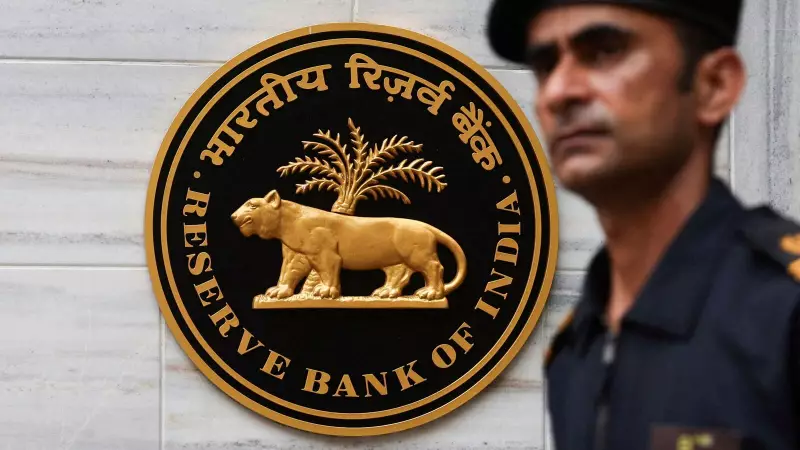
The Reserve Bank of India (RBI) has issued a cautionary note on potential near-term challenges for the Indian economy, stemming from global headwinds. In its latest Financial Stability Report (FSR) released on 31 December 2025, the central bank acknowledged the nation's strong growth, fueled by robust domestic demand, but warned that external factors pose significant risks.
Global Uncertainties Cast a Shadow
The RBI explicitly pointed to global uncertainties related to geopolitics and trade as primary concerns. These factors, the report states, could trigger increased volatility in exchange rates, suppress international trade, reduce corporate earnings, and potentially deter foreign investment. "These factors could increase exchange rate volatility, dampen trade, reduce corporate earnings, and lower foreign investment," the RBI stated in the report.
While global growth has shown resilience, the outlook for global macrofinancial risks remains tilted to the downside. The central bank cited high public debt, risks of a market correction, and elevated uncertainty as key reasons. It also highlighted that ample liquidity is fueling risk-taking across assets, but a sharp correction—potentially if optimism around artificial intelligence (AI) fades—could ripple through the interconnected financial system.

Domestic Resilience Amidst Challenges
On the home front, the assessment was more positive. The RBI emphasized that the Indian economy continues to expand, driven by strong domestic demand that is countering global challenges. Factors like benign inflation, ongoing fiscal consolidation, and prudent macroeconomic policies have collectively bolstered the economy's resilience.
The central bank affirmed that the Indian financial system remains fundamentally 'sound' and stable. This strength is attributed to robust balance sheets across institutions, easy financial conditions, and relatively lower market volatility within the country.
Strength and Vigilance in Financial Institutions
The report provided a detailed health check of various financial institutions:
Scheduled Commercial Banks (SCBs) continue to demonstrate robustness, backed by strong capital and liquidity positions. Stress tests conducted by the RBI reaffirmed that these banks are well-equipped to absorb losses in adverse scenarios while maintaining capital buffers above the minimum regulatory requirements.
Primary (Urban) Cooperative Banks (UCBs) are largely healthy, with sound capital buffers. Their profitability remains strong, although there has been some softening in net interest margins.
The Non-Banking Financial Company (NBFC) sector is seeing a continued improvement in asset quality, while profitability has remained stable. Furthermore, stress tests for mutual funds and clearing corporations confirmed their resilience to potential adverse shocks. The insurance sector also remains resilient, supported by adequate capital buffers.
Regulatory Framework Gets Stronger
The RBI noted that financial sector regulators in India are persistently enhancing their supervisory frameworks. The current focus areas include improving governance and accountability standards, strengthening protections for customers and investors, and enhancing the ease of doing business.
A key initiative involves a fundamental reorganisation of regulatory instructions. This aims to improve clarity, ease access to information, and reduce the compliance burden for the entities they regulate. In a related enforcement action, the report also mentioned that the RBI imposed fines totaling ₹25.5 crore on banks in 2025.
The Financial Stability Report is a half-yearly publication that incorporates contributions from all financial sector regulators. It represents the collective assessment of the current and emerging risks to the stability of India's financial system.






