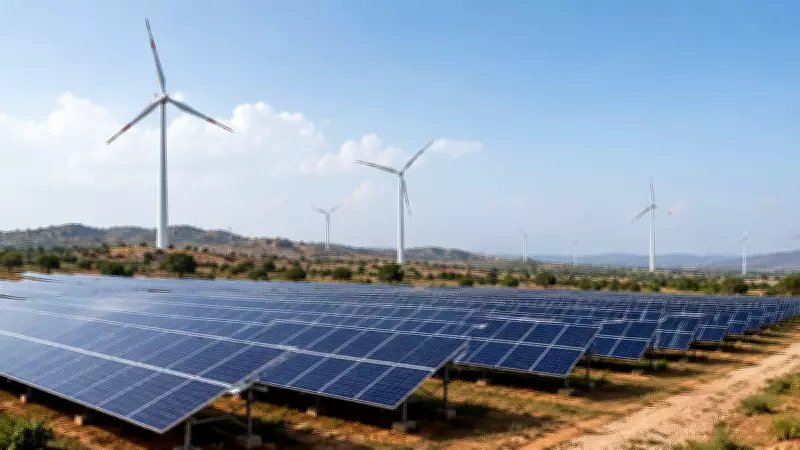
India's ambitious renewable energy target of 500 gigawatts (GW) by 2030 will require approximately 700,000 acres of land, according to a new report. The analysis, conducted by the Council on Energy, Environment and Water (CEEW) and the Natural Resources Defense Council (NRDC), underscores the significant land-use implications of the country's clean energy transition.
Land Requirements for Renewable Projects
The report estimates that solar and wind projects will need between 50,000 and 75,000 square kilometers of land to meet the 2030 goal. This area is roughly equivalent to the size of the state of Haryana. The study highlights that while the land requirement is substantial, it represents less than 2% of India's total geographical area.
To put this in perspective, the required land is about 0.5% of India's agricultural land. The report emphasizes that careful planning and policy interventions can mitigate potential conflicts with agriculture and biodiversity.

Key Challenges and Recommendations
The report identifies several challenges in land acquisition for renewable projects, including fragmented land parcels, competing uses, and regulatory hurdles. It recommends:
- Land pooling: Encouraging farmers to pool their land for larger solar parks.
- Dual-use systems: Promoting agrivoltaics, where solar panels are installed above crops.
- Waste and degraded lands: Prioritizing non-agricultural and degraded lands for renewable installations.
State-Level Analysis
The study also examines state-level land availability. Rajasthan, Gujarat, and Maharashtra have the highest potential for solar and wind energy due to their vast tracts of arid and semi-arid land. However, states with high population density and agricultural activity may face greater challenges.
According to the report, India currently has about 175 GW of installed renewable capacity. To achieve the 2030 target, an additional 325 GW must be added in the next seven years, requiring an annual installation rate of over 46 GW.
The report concludes that with strategic planning and innovative land-use policies, India can meet its renewable energy targets while minimizing environmental and social impacts.