

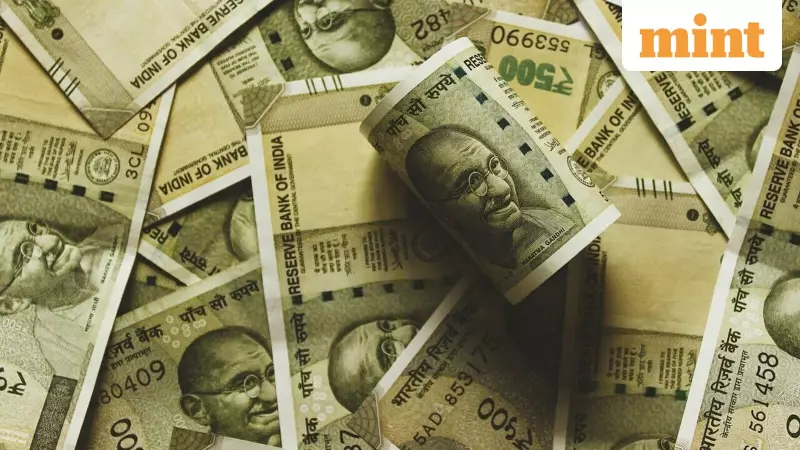
The Indian rupee has faced intense selling pressure in recent weeks, tumbling to unprecedented lows against the US dollar and sparking worries about further declines. However, a fresh analysis from global brokerage Jefferies offers a calming perspective, suggesting the currency's most severe phase of weakness may have already passed.
Rupee's Steep Decline and Market Underperformance
In 2025, the Indian currency has depreciated by approximately 5.3% against the dollar, decisively breaching the psychologically significant level of 90 per dollar in December. This slump has coincided with the Indian stock market's weakest relative performance in nearly three decades, a double blow reflecting both a cyclical slowdown in corporate earnings and the sharp currency depreciation.
Chris Wood of Jefferies, in his latest GREED & fear report, expressed surprise at the extent of the rupee's fall. "The hope is that this is the bottom as regards the rupee," the report stated, while contending that macroeconomic fundamentals indicate the worst could be over.

Why a Full-Blown Currency Crisis Looks Unlikely
Jefferies outlines several robust buffers that significantly reduce the risk of a disorderly collapse in the rupee's value. A primary factor is India's healthy external position. The current account deficit for the fiscal year 2026 is projected at a mere 0.6% of GDP, close to a two-decade low.
Simultaneously, the nation's foreign exchange reserves stand at a formidable $687 billion as of December 5, providing a substantial import cover of around 11 months. These reserves have increased by $47 billion year-to-date, equipping the Reserve Bank of India (RBI) with ample firepower to manage volatility.
Furthermore, the rupee has already undergone a meaningful realignment. Jefferies data indicates India's real effective exchange rate has fallen roughly 11% from its November 2024 peak and is currently at an 11-year low. "The decline in the rupee has already done some of the adjustment work," Wood noted.
Four Key Reasons for a Calmer Outlook
Jefferies' India research team emphasizes that the recent anxiety is disproportionate to the underlying macro health, attributing the weakness largely to capital flows and market positioning. They list four pillars supporting stability:
Deep Undervaluation: The rupee has weakened 5% against the dollar in 2025, even as the dollar index itself fell 9%. It has also depreciated significantly against other major currencies like the euro and yuan. Jefferies estimates this makes the rupee roughly 5% undervalued, its most undervalued state in 12 years.
Contained Current Account Risks: Concerns over India's external balances are overstated, the brokerage argues. Exports have shown resilience, and strong November shipments helped narrow the trade deficit by 23% year-on-year to a five-month low. With subdued crude oil prices and robust growth in services exports and remittances, the current account deficit is expected to remain manageable at 0.6–0.7% of GDP.
Strong Buffers Amid Capital Outflows: While net foreign direct investment (FDI) has been pressured by private equity exits, gross FDI inflows remain healthy, rising 13% year-on-year to $81 billion in FY25. The massive forex reserve pile offers a critical cushion against outflow pressures.
Expectation of Stability, Not a Spiral: Jefferies' base case forecasts the rupee to stabilize in the 90–91 range against the dollar over the next 6-12 months. This outlook is backed by low inflation, manageable fiscal and external deficits, and strong reserves. Aggressive intervention measures seen in the 2013 taper tantrum phase are deemed unlikely.
Near-Term Risks That Could Pressure the Rupee
Despite the constructive medium-term view, Wood flagged several near-term challenges. The 50% US tariffs imposed since August continue to pose a threat, having already contributed to an 11.3% year-on-year rise in India's trade deficit to a record $282 billion in the first eleven months of 2025.

Capital flows remain a headwind, with foreign portfolio investors selling $17.8 billion in Indian equities this year. Outbound direct investment also jumped 69% year-on-year to $28 billion in FY25. "Repatriation flows and outbound investments are offsetting otherwise healthy gross FDI inflows," Wood observed.
Additionally, the RBI's dovish monetary policy stance, with a 125 basis point repo rate cut to 5.25%, has reduced the interest rate carry advantage that typically supports the rupee.
In conclusion, while the rupee's journey to record lows has been painful, analysts at Jefferies believe the nation's solid macroeconomic foundations provide a strong anchor. The combination of a low current account deficit, towering forex reserves, and a meaningfully corrected real exchange rate suggests the currency may be poised for a period of consolidation rather than a continued free fall.





