

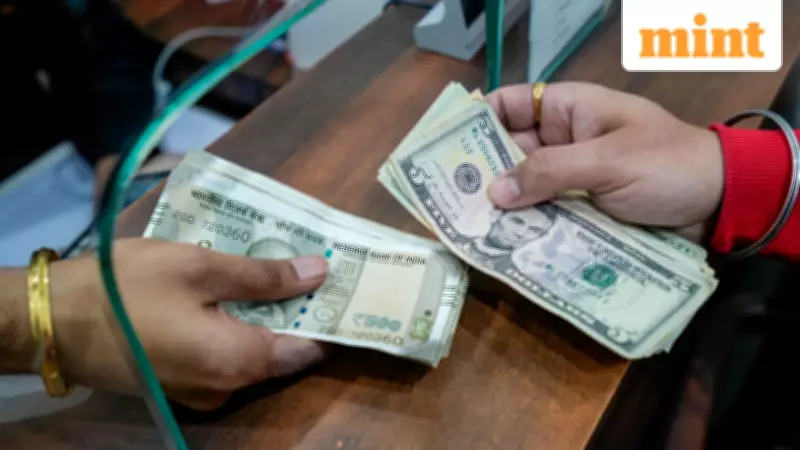
RBI Governor Highlights Rupee's Sensitivity to India-US Trade Deal Details
Mumbai: The future movement of the Indian rupee will critically depend on the specific terms and conditions outlined in the proposed India–US trade agreement, according to Reserve Bank of India Governor Sanjay Malhotra. Speaking on Friday, Malhotra emphasized that while the announcement of the deal initially strengthened the rupee, its long-term impact remains contingent on the fine print.
"The deal has so far been announced, and we observed the strengthening of the rupee following that. However, the ultimate effect on the rupee will be determined by the detailed provisions," Malhotra stated. This clarification comes amid fluctuating currency values, with the rupee experiencing notable shifts in recent trading sessions.
Recent Rupee Performance and Trade Deal Implications
Following the initial announcement of the trade deal, the rupee recorded a significant single-day gain of 124 paise, closing at 90.27 per US dollar on February 3, as per Bloomberg data. In contrast, by Friday, the currency had retreated, declining by 37 paise from its previous close to settle at 90.73 per dollar. This volatility underscores the market's reactive nature to geopolitical and economic developments.

The proposed trade agreement includes key tariff adjustments: the United States plans to reduce its reciprocal tariff on Indian goods from 25% to 18%, while India is expected to eliminate its tariffs and non-tariff barriers against US imports, effectively setting them to zero. Additionally, reports suggest that the 25% penal tariff on imports of Russian oil will be removed, further influencing trade dynamics.
Broader Trade Agreements and Economic Outlook
Commerce Minister Piyush Goyal indicated that India and the US are poised to sign a joint statement on the trade deal within the next four to five days, as reported by Mint. This development is part of a larger strategy to bolster India's export sector through multiple international pacts.
Malhotra pointed out that the recently concluded India-EU free trade agreement (FTA), along with the prospective India-US deal and other trade agreements, will provide medium-term support for exports. India has already secured trade deals with the UK and Oman, while an agreement with the European Free Trade Association (EFTA) became effective on October 1. Furthermore, trade pacts with New Zealand and the European Union have been finalized, and the US deal has been announced.
"With the signing of a landmark trade deal with the European Union and the US trade agreement in sight, growth momentum is likely to be sustained for a longer period," Malhotra added, expressing optimism about India's economic trajectory.
Strong Macroeconomic Fundamentals and Regulatory Support
The RBI Governor reaffirmed that India's macroeconomic fundamentals, particularly in the external sector, remain robust and healthy. Notably, India's current account deficit improved to 1.3% of GDP in the September quarter, down from 2.2% in the previous quarter, indicating a positive trend in economic management.
Malhotra highlighted that these trade agreements are expected to benefit not only the current account but also attract investments, as many include commitments from foreign entities. "All these deals and agreements should further assist not only on the current account but also on the investment side, due to the inclusion of investment commitments," he explained.
He also underscored the proactive role of regulators in facilitating economic activities, both domestically and internationally. The government has been actively engaged in enhancing capital account openness, with recent examples including allowing 100% foreign direct investment (FDI) in the insurance sector. "This year, we have witnessed record deals in the banking and NBFC spaces, with approximately $15 billion in announced or realized FDI, alongside numerous other governmental measures," Malhotra concluded, signaling confidence in India's ongoing economic reforms and global integration efforts.






