

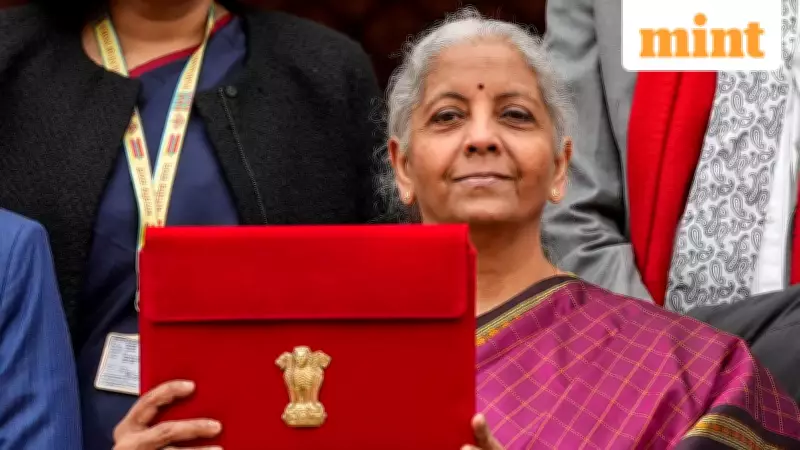
Finance Minister Counters Opposition, Details Budget's Global Shield Strategy
Finance Minister Nirmala Sitharaman robustly defended the Union Budget for Fiscal Year 2027 in Parliament on Wednesday, asserting that it directly addresses the challenges Indian businesses face from rising global tariffs and other international pressures. Her remarks came in response to Opposition leader Rahul Gandhi's criticism that the budget merely acknowledged these issues without providing solutions.
Specific Measures to Insulate the Economy
Sitharaman elaborated on key budget proposals designed to protect the Indian economy from global headwinds while simultaneously enhancing business competitiveness and generating employment. One significant measure allows units in Special Economic Zones (SEZs), impacted by recent US tariff hikes, to sell goods in the Domestic Tariff Area (DTA). This move aims to mitigate the adverse effects of international trade tensions on Indian exporters.
The minister emphasized that the budget prioritizes food, energy, and fertilizer security, with an allocation of ₹2.27 lakh crore for food subsidies, benefiting approximately 80 crore people. She noted that food inflation is currently below 2%, attributing this stability to effective government policies.

Countering Opposition Allegations
Directly countering Rahul Gandhi's charges, Sitharaman stated that Prime Minister Narendra Modi's government acts solely in the national interest, dismissing Gandhi's claim that India's interests were compromised in a recent trade deal with the US. She referenced a 2013 trade facilitation agreement signed during the Congress-led administration, which the NDA government later revised to better serve farmers' interests.
On concerns about data sovereignty and AI disruption, Sitharaman highlighted the budget's focus on incentivizing cloud and data centers within India through the India AI Mission, which has a dedicated allocation of ₹1,000 crore for 2026-27. "This ensures data is stored domestically and creates employment opportunities for our youth," she told the Lok Sabha.
Energy Security and Fiscal Preparedness
To bolster energy security and counter the weaponization of critical minerals, the budget proposes a customs duty exemption on imports of capital goods used for processing these minerals in India. Additionally, existing basic customs duty exemptions for goods required in nuclear power projects are extended until 2035.
Sitharaman assured the House that the government possesses the necessary resources to tackle unanticipated challenges, including the weaponization of finance and technology. She reiterated the budget's dual focus on fostering growth in new-age sectors like biopharma and supporting labor-intensive industries, while maintaining robust capital expenditure as a force multiplier for development.
Opposition's Stance and Government's Rebuttal
Earlier in the debate, Rahul Gandhi had argued that while the budget recognized global issues such as intensifying conflicts and the weaponization of energy and finance, it failed to adequately address them. He expressed specific concerns about the India-US trade deal, alleging it increased average tariffs on Indian goods in the US from 3% to 18%, while reducing duties on US goods to zero, potentially harming sectors like textiles.
In her comprehensive reply, Sitharaman dismissed these allegations, underscoring the budget's strategic provisions for food processing (with ₹4,064 crore allocated) and its overall framework aimed at accelerating growth through 2029. She concluded by affirming the budget's role in securing India's path toward becoming a developed nation, resilient against global economic fluctuations.






