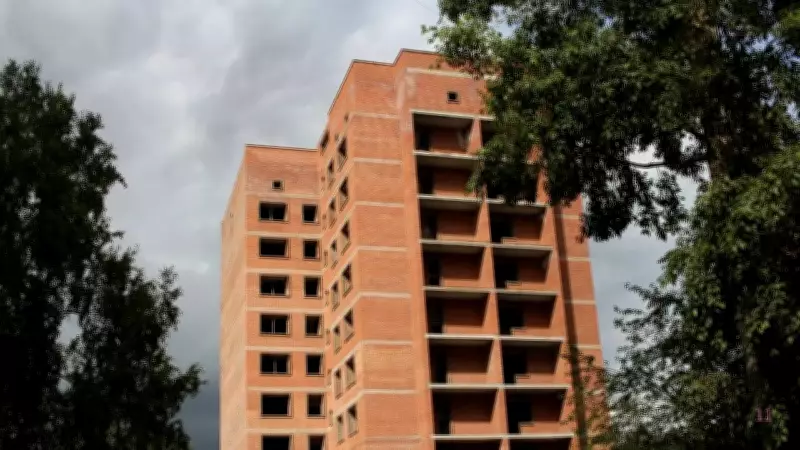
When a residential project runs out of funds midway through construction, homebuyers often find themselves paying EMIs and rent simultaneously while awaiting possession. To address such stalled housing projects, the Indian government launched the Special Window for Affordable and Mid-Income Housing (SWAMIH) Fund in 2019. This government-backed last-mile financing fund provides capital to stressed but viable residential developments, enabling construction to resume and homes to be delivered. Since its inception, the fund has helped complete thousands of homes across the country and has emerged as a key government intervention to tackle stalled housing projects. This article explains how the fund works, which projects qualify, what it has achieved so far, and what SWAMIH Fund-2 is expected to do next.
The Problem It Was Designed to Solve
At the time of its launch in 2019, the government estimated that nearly 4.58 lakh housing units across India were stalled, largely due to funding shortages faced by developers. Most of these projects were in the affordable and mid-income housing segments. Homebuyers who had already paid for their homes were left waiting for possession, often while continuing to pay both home loan EMIs and rent. The government estimated that around Rs 55,000 crore would be required to complete these unfinished projects, prompting the creation of a dedicated last-mile financing mechanism through the SWAMIH Fund.
How Does It Work?
SWAMIH pools capital from the government and investors and lends it to stalled-but-viable residential projects as priority debt. This means the fund's loan is repaid before other creditors. The fund focuses exclusively on completing projects rather than financing new construction. Once homes are delivered and buyers take possession, the loan is repaid through homebuyer collections and project cash flows. SWAMIH is sponsored by the Department of Economic Affairs under the Ministry of Finance and is managed by SBICAP Ventures Ltd., a subsidiary of the State Bank of India. It operates under SEBI regulations as a Category-II Alternative Investment Fund (AIF).

Which Projects Are Eligible?
To qualify for SWAMIH funding, a project must meet several conditions. It should be stalled primarily because of a shortage of funds rather than regulatory, legal, or approval-related issues. The project must also be registered under the Real Estate Regulatory Authority (RERA). The fund focuses on affordable and mid-income housing projects. Eligible units should have a carpet area of less than 200 square metres and be priced below Rs 2 crore in Mumbai, Rs 1.5 crore in major metropolitan cities, and Rs 1 crore in other locations. Projects are also required to be net-worth positive, meaning the value of unsold inventory and pending collections from homebuyers should exceed the cost required to complete construction. Priority is generally given to projects that are already at an advanced stage of construction. Significantly, projects classified as non-performing assets (NPAs) and those undergoing proceedings before the National Company Law Tribunal (NCLT) are also eligible for consideration.
Key Milestones
Since its launch, SWAMIH has crossed several milestones in reviving stalled residential projects. In 2019, the SWAMIH Fund was launched. The first project completed was Rivali Park in suburban Mumbai in 2021. By March 2023, more than 22,500 homes had been delivered. By December 2025, more than 58,000 homes were delivered across 146 projects in 20 cities and 12 states. The Budget 2025-26 announced SWAMIH Fund-2.
What's Next: SWAMIH Fund-2
The next phase of the initiative was announced in the Union Budget for 2025-26. SWAMIH Fund-2 is proposed as a blended finance facility with a corpus of Rs 15,000 crore. The fund is expected to be financed jointly by the government, banks, and private investors. The objective is to provide last-mile funding for an additional one lakh stalled housing units across the country. The government has positioned the second fund as an extension of the original programme, aimed at addressing unfinished projects that continue to affect homebuyers.

SWAMIH by the Numbers
The fund's impact can be measured through several key indicators: 58,596+ homes completed, 146 projects supported, 20 cities and 12 states covered, 2.38 lakh people expected to benefit, and 30,000+ jobs generated through revived construction activity. The government has also said the programme has helped generate economic activity across sectors linked to housing, including construction, building materials, and financial services.
Why It Matters
Beyond the delivery of homes, SWAMIH has become a mechanism for resolving stress in India's residential real estate sector. By providing funding to projects that are financially viable but stuck due to a lack of liquidity, the fund seeks to protect homebuyers while unlocking stalled investments. With SWAMIH Fund-2 now in the pipeline, the government has signalled continued support for resolving legacy housing projects. Together, the two funds are expected to contribute towards the completion of more than two lakh housing units across the country, helping address one of the sector's most persistent challenges.