

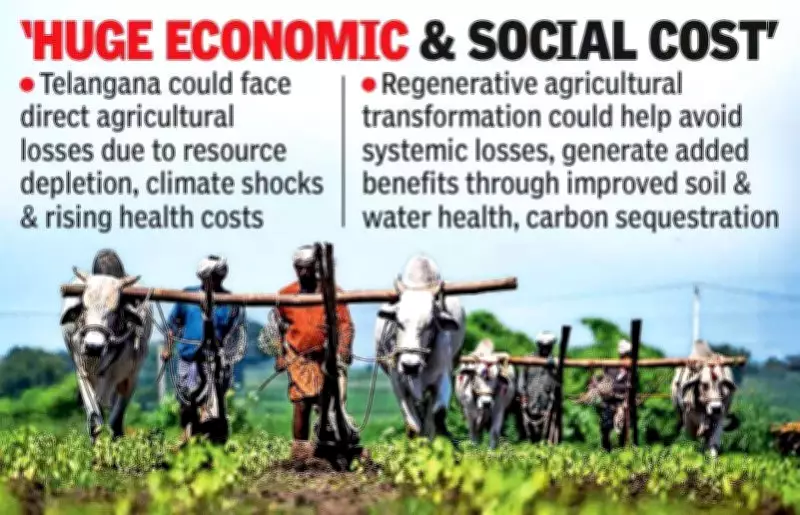
Telangana Agriculture Faces Dire Future: Study Predicts ₹2.85 Lakh Crore Loss by 2047
A stark warning has been issued for Telangana's agricultural sector, with a new analysis projecting potential economic devastation if current practices continue. The Centre for Sustainable Agriculture (CSA) has released an in-depth study forecasting that under a 'business-as-usual' scenario, the state could suffer direct losses estimated at a staggering ₹2.85 lakh crore by the year 2047. This projection highlights the urgent need for transformative action to avert a near collapse of the farm economy.
Root Causes of the Impending Crisis
The analysis identifies a toxic combination of factors driving this bleak outlook. Worsening resource depletion, including rapidly declining soil health and groundwater reserves, is a primary concern. Without corrective measures, losses linked solely to falling soil fertility, dropping water tables, and repeated borewell re-drilling could reach ₹75,000 crore. Additionally, repeated climate-related shocks and rising health costs associated with environmental degradation are exacerbating the situation, making agriculture increasingly unviable for farmers across the state.
Widespread Social and Economic Ripple Effects
The consequences of this agricultural decline extend far beyond the farm gates. As farming becomes less sustainable, large-scale rural distress migration is expected to accelerate, pushing vast numbers of people towards urban centers. Accommodating this influx could necessitate an additional investment of ₹10,000 crore in new urban infrastructure, placing further strain on already stretched public finances. This migration wave threatens to overwhelm cities and deepen social inequalities.

A Viable Alternative: Regenerative Agricultural Transformation
Set against this grim forecast, the CSA study outlines a proactive and economically viable alternative pathway. The proposed 'regenerative agricultural transformation' presents a strategic investment plan that promises a 2.15 times return on investment, calculated based on costs avoided by preventing systemic collapse. This approach not only mitigates losses but also fosters environmental resilience and long-term sustainability.
Financial Framework for Transformation
To operationalize this transition, the study proposes a structured financing framework spread over a 22-year horizon. The total investment required is estimated at ₹1.32 lakh crore, with funding drawn from a blend of public and private sources. The model calls for an annual investment of ₹6,000 crore, comprising:
- ₹4,000 crore per year from combined central and state government contributions, totaling ₹88,000 crore over the full period.
- ₹2,000 crore per year from private sector investments and farmer-producer organizations, amounting to ₹44,000 crore overall.
This blended financing approach is emphasized as critical for reducing public risk, ensuring long-term sustainability, and enabling a large-scale shift towards climate-smart agriculture in Telangana.
Economic Upside and Environmental Benefits
Beyond averting catastrophic losses, the regenerative plan highlights significant economic gains. It estimates additional benefits of ₹20,000 crore through carbon sequestration and associated advantages, such as improved biodiversity, enhanced ecosystem resilience, and better overall wellbeing for farmers. By adopting regenerative practices, Telangana can not only secure its agricultural future but also contribute to global environmental goals.
The CSA analysis serves as a clarion call for immediate intervention, stressing that the window for action is narrowing. With soil and water resources deteriorating rapidly, the time to invest in a resilient and sustainable agricultural model is now, to safeguard Telangana's economy and social fabric for generations to come.






