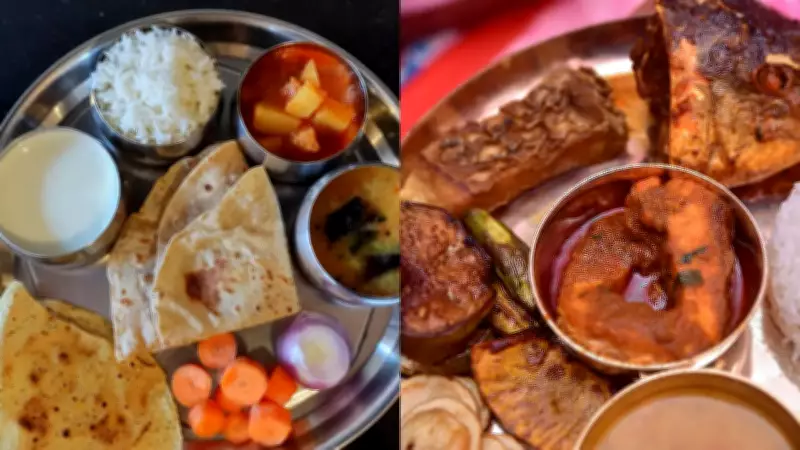
When it comes to Indian thalis (vegetarian and non-vegetarian), it is a general belief that the former will always be cheaper than the latter. There is a common belief that vegetarian key ingredients like rice, dal, flour, and veggies are cheaper than meat and poultry. However, the latest statistics of RRR: Rice Rice Rate for May reveal something else.
What does the Crisil Intelligence Report state
According to the latest Crisil Intelligence Report, in May, the cost of a home-cooked vegetarian (veg) and non-vegetarian (non-veg) thali rose 5% and 7% on-year, respectively. For the unversed, the average cost of preparing a thali at home is calculated based on input prices prevailing in north, south, east and west India. The monthly change reflects the impact on the common man's expenditure. The data also reveals the ingredients (cereals, pulses, broilers, vegetables, spices, edible oil and cooking gas) driving the change in the cost of the thali.
What exactly has happened
The report clearly states that tomato prices emerged as the biggest contributor to the increase in food plate costs. Prices surged 57% year-on-year to ₹36 per kg in May from ₹23 per kg a year earlier. The sharp increase was attributed to a 3%-4% decline in rabi production in southern states, lower summer crop acreage and adverse weather conditions that affected yields. Also, vegetable oil and LPG prices contributed significantly to the rise in meal costs. CRISIL noted that vegetable oil prices increased 8% year-on-year, while LPG cylinder prices rose 7%, largely due to ongoing global supply disruptions.

How much has it impacted the prices of thali
The report showed that the average cost of a vegetarian thali rose to ₹27.4 in May 2026 from ₹26.2 in May 2025, while the cost of a non-vegetarian thali increased to ₹54.8 from ₹51.2 during the same period. On a month-on-month (m-o-m) basis, vegetarian and non-vegetarian thalis became 3% costlier in May.
Why did it happen?
For non-vegetarian meals, rising broiler chicken prices further added to the cost burden. CRISIL estimated that broiler prices increased 9% year-on-year and account for nearly half the cost of a non-vegetarian thali. The increase was attributed to intense summer heat which led to higher bird mortality and reduced poultry supplies.
What does the expert say?
Pushan Sharma, director at CRISIL Intelligence, states that higher prices of tomatoes, vegetable oil and LPG were the primary factors behind the increase in both vegetarian and non-vegetarian thali costs during May.