

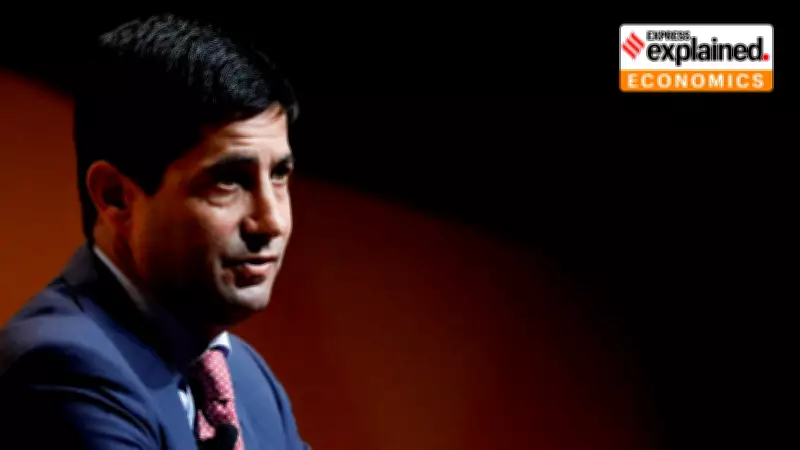
Trump Nominates Kevin Warsh as Federal Reserve Chair Amid Ongoing Tensions
In a significant development that has captured global financial attention, US President Donald Trump has officially nominated Kevin Warsh, a former member of the Federal Reserve Board of Governors, to serve as the next Chair of the Federal Reserve. This nomination comes after months of public clashes between Trump and the current Fed Chair, Jerome Powell, primarily over the central bank's stance on interest rates.
A History of Conflict and Unprecedented Pressure
The relationship between President Trump and outgoing Fed Chair Jerome Powell has been notably strained, marked by repeated criticisms from the President regarding the Fed's monetary policy decisions. This stand-off reached an extraordinary level with the initiation of a US Department of Justice criminal investigation against Powell, widely interpreted by observers as an intimidation tactic to influence central bank policy.
Trump announced the nomination on his TruthSocial platform, stating, "I have known Kevin for a long period of time, and have no doubt that he will go down as one of the GREAT Fed Chairmen, maybe the best. On top of everything else, he is 'central casting' and he will never let you down." The President also highlighted Warsh's historic appointment as the youngest Fed Governor ever at just 35 years of age.

Kevin Warsh's Background and Market Implications
Now 55 years old, Kevin Warsh brings substantial experience to the role. He served as a Member of the Board of Governors of the Federal Reserve System from 2006 to 2011. Prior to his Fed appointment, Warsh held key positions in the White House, serving as special assistant for economic policy to the President and as executive secretary of the White House National Economic Council from 2002 to 2006. His professional background also includes nearly a decade at the investment bank Morgan Stanley.
Financial markets have largely interpreted Warsh's nomination as a market-friendly move, sparking increased speculation about potential interest rate cuts. The Federal Reserve's monetary policy decisions, made by the Federal Open Market Committee, carry immense weight not only for the American economy but also for global financial systems, including emerging markets like India.
The Current Rate Landscape and Future Expectations
Earlier this week, the FOMC maintained the federal funds rate target range at 3.5-3.75%, with 10 of the 12 committee members supporting this decision. The remaining two members advocated for a 25 basis point reduction. Throughout 2025, the committee had implemented a cumulative 75 basis point decrease in interest rates.
While a new Fed Chair does not guarantee immediate rate reductions, given that all 12 FOMC members possess equal voting power, the Chair's philosophical leanings and policy perspectives provide crucial signals to global markets. According to a Financial Times report, Warsh has recently argued that artificial intelligence advancements will enhance productivity, potentially reducing concerns that wage increases might fuel inflation. This viewpoint could theoretically pave the way for more accommodative monetary policy.
The Broader Question of Central Bank Independence
Beyond the immediate question of interest rates, Trump's persistent engagement with Fed policy raises fundamental concerns about the independence of the central bank, which has faced mounting pressure throughout the Republican President's second term. Warsh's nomination appears to align with Trump's perspectives on central banking.
In a lecture delivered last year, Warsh expressed nuanced views on Fed independence, stating that the concept is "more often cited than defined" and emphasizing that "independence is not a policy goal unto itself. It's a means of achieving certain important and particular policy outcomes." He further remarked that "'Independence' is reflexively declared when any Fed policy is criticised," while affirming his belief in the operational independence of monetary policy as a wise political economy decision.

Interestingly, Warsh's current stance represents an evolution from his earlier positions. In a 2010 speech titled 'An Ode to Independence,' he strongly advocated for the Fed's independence, describing it as "precious" and emphasizing the need for "fierce independence from the whims of Washington and the wants of Wall Street."
Analyst Perspectives and Global Implications
Economists Bernd Weidensteiner and Christoph Balz of Commerzbank noted that during his tenure as a Fed Governor, Warsh was "clearly hawkish, frequently opposing monetary easing," but now advocates for significant interest rate cuts and Fed reform. They cautioned that "the independence of the central bank remains at risk" under these circumstances.
The nomination and subsequent confirmation process will be closely monitored by international financial communities, particularly in economies like India where US monetary policy decisions directly impact investment flows, currency valuations, and economic planning. The outcome will significantly influence global economic stability and the delicate balance between political influence and central bank autonomy.





