

In a stunning reversal of fortune, the economic doomsday scenario predicted at the start of 2025 has failed to materialize for two major economies: India and the United States. Despite former President Donald Trump's aggressive trade policies plunging the world into a deep recession, both nations have posted growth figures that seemed like distant fantasies just a year ago.
The 2025 Shock: Tariffs, Retaliation, and Market Panic
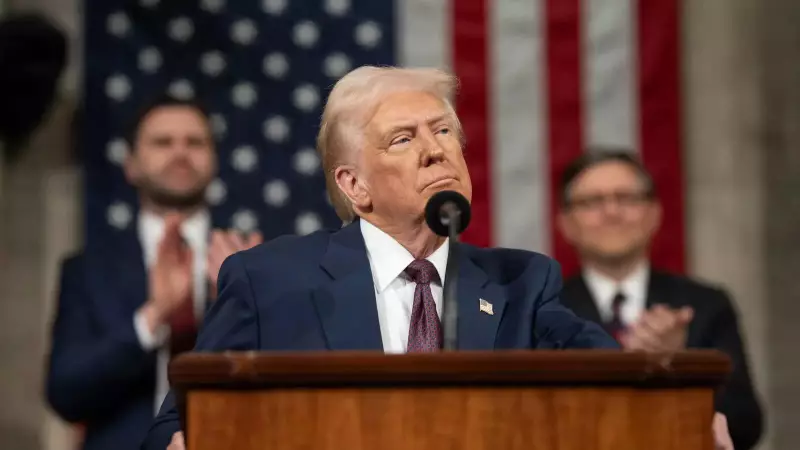
The year began with a forewarning. In his January State of the Union address, Donald Trump outlined a radical plan to sharply increase tariffs and dismantle the global rules-based economic order. This system, along with the US's role as global policeman, had underpinned the fastest economic growth in the post-World War II era.
The real shockwave hit in April, dubbed 'Liberation Day'. On this day, the Trump administration unveiled staggering tariff hikes: up to 150% on Chinese goods and up to 30% on major trading partners. The immediate global reaction was one of retaliation and fear, triggering a deep worldwide recession. Financial markets from Mumbai to New York went into a tailspin, with India's indices crashing alongside their global counterparts.

An Unexpected Economic Resilience
Contrary to all expectations, the story did not end there. As noted by commentator Swaminathan S Anklesaria Aiyar, Trump triumphed over his critics in 2025 by implementing his vision. However, the economic outcome for the US and India has been unexpectedly positive.
The United States recently recorded an impressive 4.3% growth in the last quarter. More remarkably, India's economy surged, registering a robust growth rate of 8.2%. These figures, released in late 2025, stand in stark contrast to the recessionary gloom that followed the tariff announcements.
What This Means for India and the Future of Trumpism
This paradoxical situation—where protectionist policies coincide with high growth in the policy's originator and a key partner—raises critical questions. Analysts suggest that while 'Trumpism' as a political force could face challenges or fail by 2026, its immediate economic impact has been complex and not uniformly negative for all.
India's remarkable growth amidst global turmoil highlights its increasing economic insulation and strong domestic demand drivers. The data suggests that the Indian economy possesses a resilience that can withstand significant external trade shocks, a vital characteristic in an increasingly volatile global landscape.
The coming year will be crucial in determining whether this growth is sustainable or a temporary anomaly. The key takeaway for now is that the global economic system, and nations like India within it, are demonstrating an unexpected capacity to adapt and thrive even under significant pressure.






