

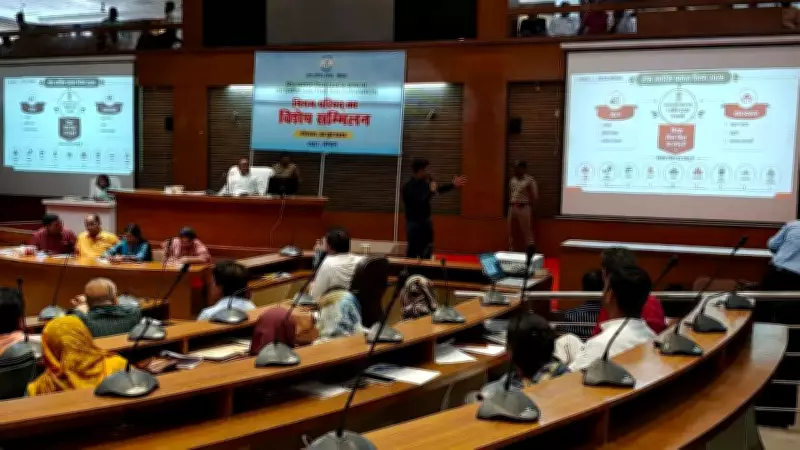
Bhopal: A Bhopal Municipal Corporation (BMC) council meeting on new solid waste rules on Tuesday was dominated by talk of tighter controls on events, but the finer point with the widest public impact went largely unexamined: residential colonies in the city will now be treated as “bulk waste generators” and billed for garbage collection by weight.
Event Regulations Under Scrutiny
BMC corporators spent much of the discussion on provisions that bring even relatively small gatherings under scrutiny. Any event expecting 100 or more people — from concerts and political rallies to birthday parties, engagement ceremonies, farewells and mohalla functions — must be reported to BMC three days in advance. The rules also mandate fines for dumping or burning waste in the open, including after such events, with organisers held responsible for improper disposal.
Residential Colonies as Bulk Waste Generators
What drew less attention is that the Solid Waste Management Rules, 2026 explicitly classify residential colonies and housing societies as bulk waste generators, alongside institutions and commercial establishments. Under the notified structure, bulk generators will be charged at different per-tonne rates. Currently, some registered mapped bulk waste generators are paying Rs 921 per ton, according to BMC. This means RWAs and gated communities will no longer be passive recipients of municipal collection; they will be billed according to the actual weight of waste they send into the BMC system, effectively making residents pay for garbage “by the kilo” at the colony level. Waste will be weighed at transfer stations, and the amount and corresponding charge will reflect in BMC’s integrated bill.

“We are in the process of mapping all bulk generators. IEC camps with RWAs will be undertaken in the near future,” said BMC commissioner, Sanskriti Jain. New rules will encompass the entire city. The exception for now are older colonies which still rely on door-to-door waste collection; those too will be mapped in the long term, according to BMC.
On-Site Waste Management Expected
Officials say the civic body expects colonies and institutions to manage as much waste as possible on their own — through composting and on-site processing, with only residual waste handed over to BMC and attracting charges. Resident groups, however, point out that households produce very different amounts of waste and fear that RWAs will eventually pass on the new bills, raising questions of fairness, transparency in weighing and the support BMC will offer to set up composting systems inside colonies.
“We already pay our RWA a monthly maintenance fee, and now BMC plans to bill the RWA under this ‘pay-as-you-throw’ system. Does that mean the RWA will start charging each household extra for the waste it generates? How will they ensure fairness, when every home produces a different amount of garbage? If I have two pets, for instance, my waste will likely be heavier than that of a neighbour without pets,” said a businessman from a colony on Hoshangabad Road.
Event Organizers Face New Requirements
Host 100 or More Guests? BMC Now Wants Three Days’ Notice, Waste Fines to Follow. Not just big concerts, exhibitions and political rallies but even birthday parties, engagements, farewells and neighbourhood functions will now come under Bhopal Municipal Corporation’s watch if they expect 100 or more people, with organisers required to inform the civic body three days in advance. Fines will also be imposed for dumping or burning waste in the open, officials said in a presentation on the Solid Waste Management Rules-2026 at a special BMC council meeting on Tuesday.
Who Counts as a “Bulk Waste Generator”
Under the new Solid Waste Management Rules, certain buildings and campuses in Bhopal will be treated as Bulk Waste Generators (BWGs) and face pay‑by‑weight garbage billing and stricter waste norms.

- Basic eligibility: A building or campus is classified as a Bulk Waste Generator if it meets any of these thresholds: built‑up floor area of 20,000 sq.m or more; water use of 40,000 litres per day or more; solid waste of 100 kg per day or more. Once it crosses these levels, it is expected to manage part of its waste on‑site and will be billed as a BWG.
- Types of Bulk Waste Generators:
- Institutional BWGs: Central and state government offices and undertakings, local bodies, PSUs, private companies, schools, colleges, universities, research institutes, other educational institutions, community places, public buildings and similar large institutions.
- Commercial BWGs: Railway stations, bus depots, airports, ports, industrial units and areas, malls, multiplexes, hotels, hospitals and nursing homes, hostels, auditoriums, exhibition areas, wholesale markets (such as mandis, fish and meat markets), stadiums and sports complexes, community and convention halls, marriage/banquet halls, conference and expo centres, tourist spots, restaurants and food courts, and other large commercial sites.
- Residential BWGs: Mainly residential societies and RWAs and other large residential complexes that meet the above floor area, water use or waste generation thresholds.
