Finance Ministry and CBIC Order Stricter Monitoring of Customs Assessment System
The Union Ministry of Finance and the Central Board of Indirect Taxes and Customs (CBIC) have mandated tighter monitoring of pendencies and frivolous queries within the faceless customs assessment system. According to ministry sources, field formations across India have been directed to ensure timely first decisions and promote uniformity in the nature of queries raised.
Documents reveal that the board is pushing for standardization of frequently raised queries and implementing a more rigorous review mechanism to curb delays that hinder trade facilitation.
Stricter Tracking of Pendencies and Performance Monitoring
As part of enhanced administrative oversight, deputy and assistant commissioners have been instructed to strictly monitor assessments and maintain quality standards. Meanwhile, additional and joint commissioners are tasked with conducting regular reviews of pending cases.

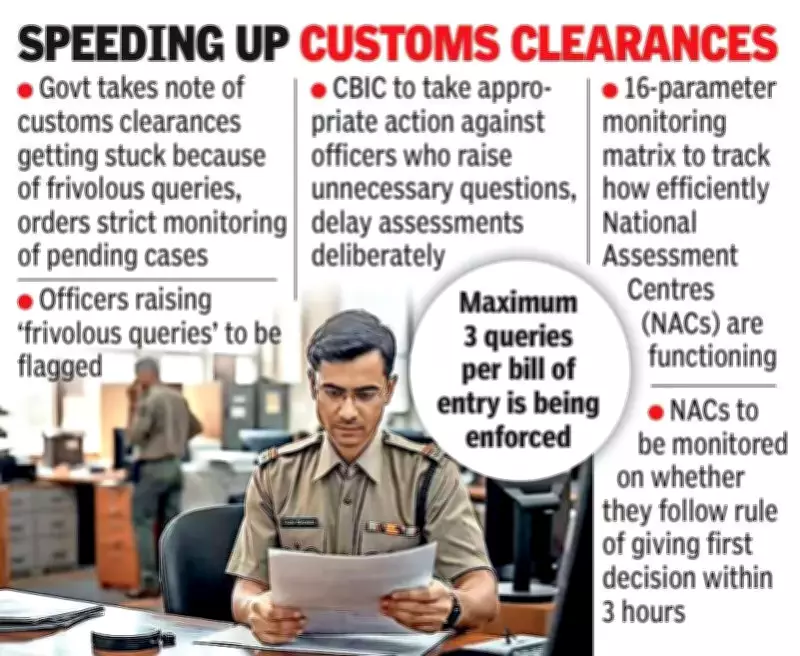
Sources indicate that formations have been directed to identify officers who raise frivolous queries or employ delaying tactics and take appropriate disciplinary action. The document emphasizes that officers at all levels must be sensitized and counseled about the negative impact of artificial delays on trade efficiency.
A crucial component of this initiative is performance tracking through a comprehensive 16-parameter matrix. Under this system, National Assessment Centres (NACs) will be monitored for compliance with the "first decision within three hours" rule, with monthly performance reports required to be submitted regularly.
Query Restrictions and Standard Operating Procedures
To prevent multiple or piecemeal queries, CBIC has identified query standardization as a critical priority. Sources confirm that the total number of queries on a single Bill of Entry will now be restricted to three, significantly reducing bureaucratic hurdles.
Standard Operating Procedures (SOPs) are being developed for 50 identified commodities to enhance transparency, consistency, and legally sound assessment practices. These SOPs aim to create uniform guidelines that minimize interpretation discrepancies and streamline the customs clearance process.
NACs have been instructed to engage proactively in resolving operational challenges, with "review and remedy of divergent practices" designated as a compulsory agenda item in all NAC meetings.
Technical Improvements and Unified Grievance System
The Directorate General of Systems has been assigned the task of improving data accessibility and resolving technical issues that currently make Management Information System (MIS) and pendency tracking processes "tedious and time-consuming."
The document also calls for establishing a single unified grievance redressal architecture that captures different types of grievances under one comprehensive system. Zones are required to set up dedicated grievance cells, submit monthly grievance reports, and conduct regular reviews to ensure timely resolution of trade concerns.
This multi-faceted approach represents a significant step toward modernizing India's customs assessment framework, balancing regulatory oversight with trade facilitation objectives through standardized procedures, technological enhancements, and stricter accountability measures.