

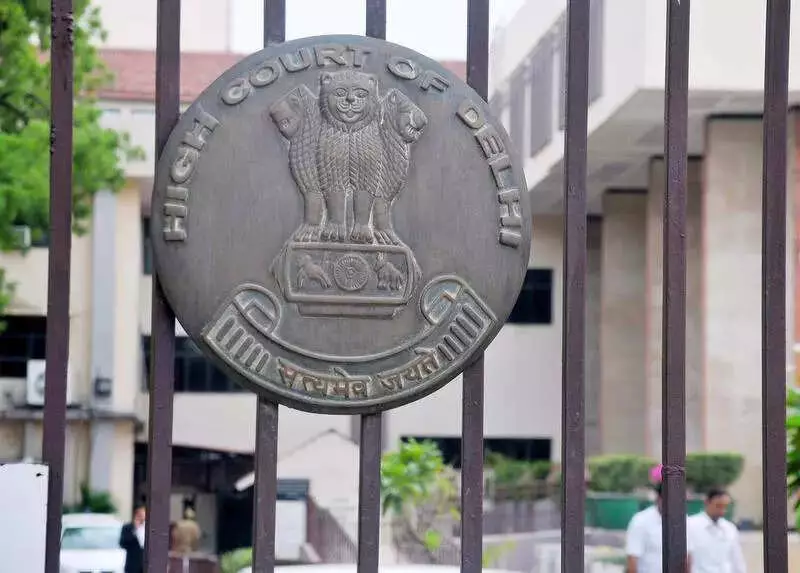
The Central government on Friday informed the Delhi High Court that it would process the recommendations of a parliamentary committee aimed at improving the capital's air quality once it formally receives them. However, it strongly opposed any judicial directive to modify Goods and Services Tax (GST) rates, calling it a violation of constitutional separation of powers.
Parliamentary Panel's Scathing Observation on GST
According to reports, the parliamentary standing committee took a critical view of the government imposing a high GST on essential items like HEPA filters and air purifiers. The panel noted that such a tax "effectively monetises a public health failure" amidst Delhi's severe pollution crisis. It recommended either a significant reduction or a complete abolishment of the tax on these devices to make them more accessible.
Court Records Assurance, Schedules Next Hearing
The court, which is hearing a Public Interest Litigation (PIL) seeking a similar reduction in GST rates for air purifiers, recorded the government's assurance. Additional Solicitor General N Venkataraman, representing the Centre and the GST Council, stated that the revenue department would examine the panel's recommendations and take a decision. The bench, comprising Chief Justice DK Upadhyaya and Justice Tejas Karia, subsequently posted the matter for further hearing on March 19.

Centre's Stance: PIL is "Motivated," Classification Counter-Productive
In its affidavit, the Centre maintained a firm stance against the PIL. It argued that the petition, which seeks to classify air purifiers as "medical devices" to avail lower tax rates, was not a genuine public interest concern. The government labelled it a "colourable" and "motivated" exercise.
Furthermore, the Centre contended that classifying air purifiers as medical devices would be counter-productive to public interest. It argued that this would subject the devices to additional regulatory compliances, potentially affecting their supply in a market already facing constraints. The government emphasized that any direction from the court to modify GST rates or compel the GST Council to consider a particular outcome would amount to the judiciary overstepping into the executive's domain, a function "consciously entrusted to the council" by the Constitution.
The PIL, filed by advocate Kapil Madan, argued that air purifiers cannot be treated as luxury items given the "extreme emergency crisis" caused by air pollution in Delhi. The High Court had earlier questioned the Centre on why it couldn't reduce the GST to make these machines affordable for the common man and had directed the GST Council to consider lowering or abolishing the tax.






