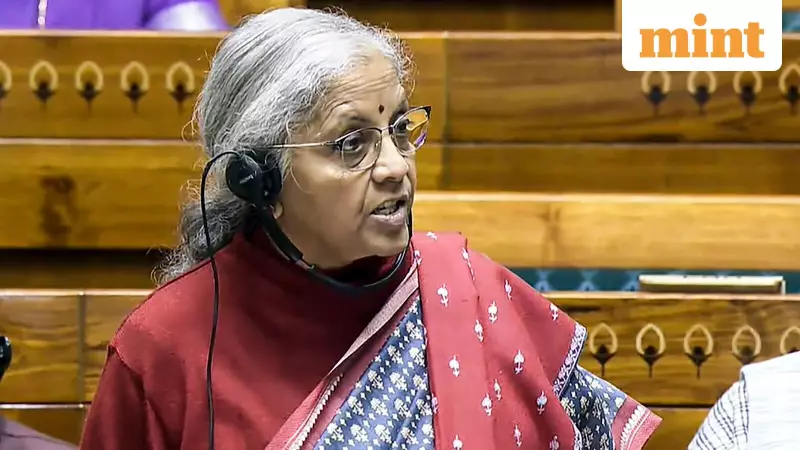
In a significant move to reform indirect taxation on tobacco products, the Union government on Monday proposed a major overhaul by phasing out the Goods and Services Tax (GST) compensation cess and introducing a new cess alongside higher excise duties. Finance Minister Nirmala Sitharaman tabled two Bills in the Lok Sabha to facilitate this transition, aiming to keep the overall tax burden on these products steady while ensuring states continue to receive revenue.
Key Legislative Changes and New Tax Structure
The government introduced The Central Excise (Amendment) Bill, 2025 and The Health Security and National Security Cess Bill, 2025. The first Bill seeks to increase the central excise duty on tobacco products. For instance, the duty on tobacco is proposed to rise from 64% to 70%. This hike is designed to offset the revenue loss from discontinuing the GST compensation cess.
Currently, tobacco products like cigarettes, pan masala, and gutkha attract a GST of 28% plus a compensation cess that can go as high as 290% for items like pipe smoking mixtures. Once the new structure is implemented at a date decided by the finance minister, these items will move to the 40% GST slab. The remaining gap in tax incidence will be covered by the proposed new cess and any additional excise duty.

The shift is crucial because, unlike cess proceeds, central tax revenues like GST, income tax, and excise duty are shared with states. The government noted that the original excise duty on tobacco was reduced significantly in 2017 to accommodate the compensation cess without raising the overall tax burden.
Focus on Capacity-Based Taxation to Curb Evasion
The second Bill proposes a new cess aimed at funding public health and national security initiatives. A notable feature is its focus on capacity-based taxation, particularly for the pan masala sector, which is considered prone to tax evasion.
Under this model, the cess payable will be calculated based on the installed production capacity of machinery, not the actual quantity of goods produced and leaving the factory. While the Bill allows for other tobacco products to be brought under this regime via notification, pan masala is specifically named in the legislation.
This approach marks a shift. The GST Council had previously examined but rejected capacity-based taxation for the sector, as GST is inherently a consumption tax. The new effort revives this model specifically for the proposed cess on pan masala.
Rationale and Industry Perspective
The move comes as the Centre is expected to fully repay the ₹2.69 trillion debt it raised to support states during the COVID-19 pandemic from the compensation cess fund before March. The law states the compensation cess on tobacco will be discontinued once these payment obligations are completely discharged.
Tax experts view the changes as a step towards a more streamlined system. Mahesh Jaising, Partner and Indirect Tax Leader at Deloitte India, said that with the sunset of the GST Compensation cess, "GST 2.0 brings a more streamlined and transparent framework, reducing complexity for businesses while strengthening compliance."
He added that the new Bills ensure critical national priorities are supported by a dedicated revenue stream. "Importantly, the cess will be operationalized through a capacity-based tax model... ensuring predictability and reducing evasion," Jaising noted. He expects the total tax incidence on tobacco and pan masala to largely remain unchanged for consumers.
These reforms represent a balancing act for the government—maintaining fiscal sustainability and revenue for states, addressing public health concerns through taxation, and creating a predictable tax environment for the industry.