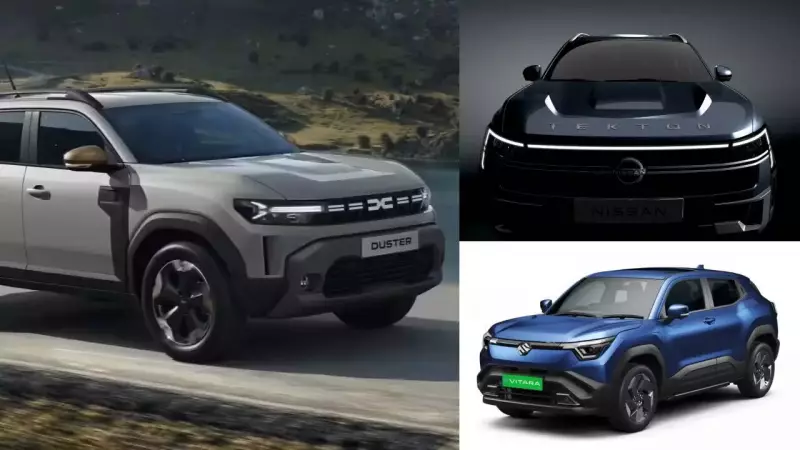
The Indian automotive landscape is set for a transformative and action-packed year in 2026. A slew of major launches across segments—from eagerly awaited SUV revivals and groundbreaking electric vehicles to significant facelifts—promises to redefine choices for car buyers. This surge of new models indicates fierce competition and rapid technological adoption in one of the world's most dynamic car markets.
SUV Heavyweights & Electric Debuts Lead the Charge
Mahindra will inaugurate the year's festivities with the XUV 7XO, launching on January 5, 2026. This is essentially a comprehensive facelift for the popular XUV700, aligning with Mahindra's new naming convention. It sports a refreshed exterior with new lighting, alloy wheels, and a modern front profile inspired by the brand's electric SUVs. Inside, it is expected to inherit premium features from the XEV 9S, including a triple-screen dashboard (10.25-inch driver display, 12.3-inch infotainment, and 12.3-inch co-driver screen), auto parking, ventilated front and rear seats, and a panoramic sunroof. Powertrain options will likely continue with the 197 bhp 2.0L turbo-petrol and the 182 bhp 2.2L mHawk diesel, paired with 6-speed manual or automatic transmissions.
In a landmark move, Maruti Suzuki will introduce its first mass-market electric SUV, the e-Vitara, in January 2026. Based on the new Heartect-e platform, its design takes cues from the eVX concept. The cabin features a futuristic layout with floating dual screens, a floating centre console, and a two-spoke steering wheel. It will be offered with two battery options—49 kWh and 61 kWh—with the larger pack claiming a range of up to 543 km. Safety will be bolstered by Level 2 ADAS and seven airbags.

Highly Anticipated Returns & New Entrants
The Renault Duster makes a triumphant return on January 26, 2026, after a four-year hiatus. The new-generation model boasts a design inspired by the Bigster concept and a feature-loaded interior. Highlights include a 10.1-inch touchscreen, a 7.0-inch digital instrument cluster, wireless connectivity, and ventilated front seats. Globally, it offers multiple powertrains, including a 1.2L turbo-petrol mild-hybrid and a 1.6L strong hybrid setup with two electric motors.
Nissan is plotting a strong comeback with two key products. The Tekton SUV, set for unveiling in February 2026, will rival the Hyundai Creta and Kia Seltos. Sharing its base with the new Duster, it features bold Patrol-inspired styling and is expected with multiple petrol engines and ADAS. For family buyers, Nissan will launch the Gravite MPV in January 2026. Based on the CMF-A+ platform (shared with Renault Triber), it will likely use a 1.0-litre petrol engine with manual and AMT options.
Expanding Portfolios and Luxury Arrivals
Tata Motors has a multi-pronged strategy for 2026. The company will address a key demand by introducing petrol versions of the Harrier and Safari. These will be powered by a new 1.5-litre Hyperion turbo-petrol engine generating 170 hp and 280 Nm. A Punch facelift with updated styling and a larger touchscreen is due by March 2026. Furthermore, the much-awaited Sierra EV is expected in the first half of the year, promising a range of 450–500 km to compete in the electric midsize SUV space.
In the luxury segment, Audi will launch the new-generation Q3 in early 2026. The third-gen model will feature a bolder design with split headlamps and a tech-centric cabin with curved displays. The locally assembled SUV is expected to be larger and come with a 2.0-litre turbo-petrol engine (204 hp), mated to a 7-speed dual-clutch transmission and Quattro AWD.

The collective impact of these launches underscores a pivotal year for the Indian auto industry. Manufacturers are aggressively targeting every segment—from affordable people-movers and mainstream SUVs to premium electric vehicles and luxury offerings. This influx of new technology, design, and powertrain options will ultimately empower Indian consumers with unprecedented choice, setting the stage for a highly competitive and innovative market in 2026 and beyond.