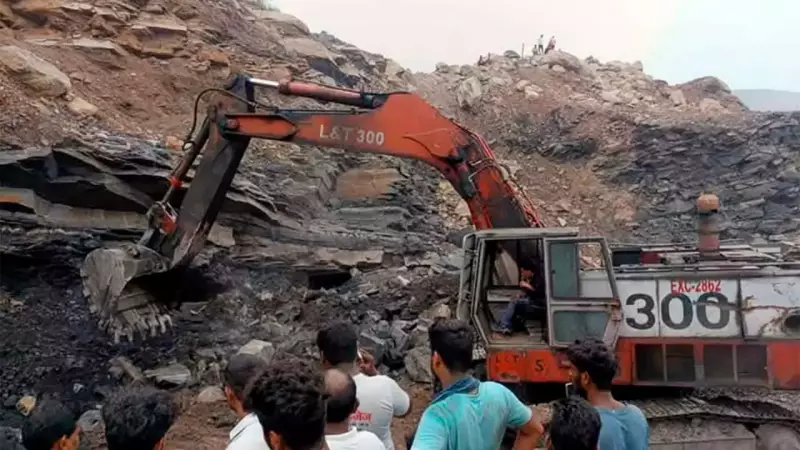
In a significant push to bolster domestic energy resources, the Indian government has commenced work on reviving a majority of its abandoned coal mines. Union Minister for Coal and Mines, G Kishan Reddy, recently informed the Lok Sabha that work has started on 28 out of 32 identified abandoned coal mines, while the remaining four are currently in the re-tendering stage.
Production Begins and Future Targets
Providing concrete progress details, the minister stated that production has already begun in two of these revived mines during the 2025-26 financial year. The collective annual capacity of these 28 mines is a substantial 39.28 million tonnes. This initiative is part of a broader strategy to meet the nation's escalating energy demands. The government has set an ambitious raw coal production target of 1,157 million tonnes for 2025-26, with plans to escalate this to 1.5 billion tonnes by the financial year 2029-30.
Revenue Sharing Model and Economic Impact
The revival project is being spearheaded by Coal India Limited (CIL), which is employing a revenue-sharing model with private partners. Under this framework, private mine developers and operators are tasked with reopening, rehabilitating, and operating suitable discontinued mines for coal excavation and extraction. This public-private partnership aims to efficiently leverage existing assets.

In a separate but related development, Minister Reddy highlighted the success of the coal block auctions held over the past five years. A total of 133 coal mines have been auctioned, which are projected to create a significant economic impetus. These auctions are expected to generate an annual revenue of approximately Rs 38,710 crore, attract a capital investment of around Rs 41,407 crore, and most importantly, provide employment to an estimated 373,199 people.
Coal's Role in India's Energy Future
Despite a remarkable rise in renewable energy capacity, India continues to rely heavily on coal for its base-load power requirements. Currently, coal and lignite together contribute nearly 75% of the country's total electricity generation. While this share is projected to decline to about 55% by 2030 and further to 27% by 2047, the absolute demand for power is soaring.
To meet the estimated electricity demand by 2031-32, India will need an installed capacity of 283 gigawatts (GW) against the current 217.5 GW. Analysts indicate that the government will need to establish an additional coal-based capacity of at least 80 GW by 2031-32 to ensure grid stability and support the intermittent nature of renewables, underscoring the continued strategic importance of coal in the nation's energy mix for the foreseeable future.