Ahmedabad's Industrial Clusters Grapple with Surging Input Costs Amid War Disruption
Industrial units in Ahmedabad's chemical and textile clusters are confronting a severe crisis as gas companies have curtailed supplies to industrial consumers, a direct fallout of the ongoing Israel–Iran war. This disruption has triggered lower production levels, tighter availability of key raw materials, and a cascading increase in prices across the entire value chain, according to industry representatives.
Chemical Manufacturers Face Drastic Gas Shortages
Chemical manufacturers in the region are currently receiving only 40% of their gas requirements, forcing numerous units to operate at significantly reduced capacity. The curtailed output has resulted in price surges for basic chemicals and intermediates, with increases of 30–40% compared to just a fortnight ago.
Ankit Patel, former president of the Vatva Industry Association, highlighted the severe impact on chemical production. "We have witnessed a massive price rise in various products such as coal, sulphuric acid, and phthalic anhydride. This escalation has driven up overall production costs substantially. While we can pass on some of this impact to our dyes buyers, our margins have shrunk dramatically," he explained.

Textile Processors Bear the Brunt of Rising Costs
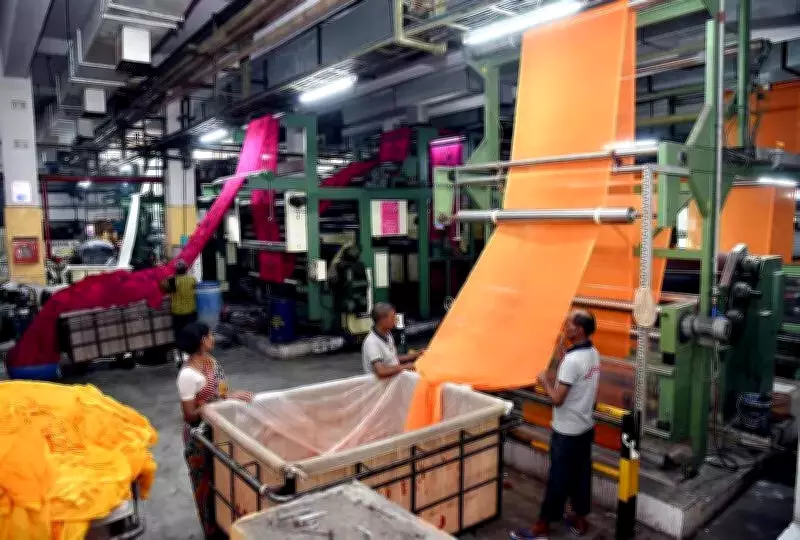
The price increases have spilled over into colour chemicals utilized by textile processors, further inflating costs for processing units. Industry sources indicate that several textile processing units have already revised their job-work rates for new orders effective from Monday.
Textile processors, particularly those in the Narol cluster, are also under pressure from escalating fuel costs. Most units in Narol depend on imported coal and lignite, making them highly vulnerable to fluctuations in global fuel prices. Fuel typically constitutes about 25% of the total production cost for many processing units.
A director of a leading processing unit revealed that imported coal prices have surged sharply in recent weeks. "Over the last 15 days, prices of imported coal have risen by an average of 30%, depending on quality, severely hurting our margins. Indonesian coal with 4,100 GAR (Gross As Received) has exceeded Rs 9,000 per tonne excluding GST. Combined with the 25-30% increase in colour chemical prices, this has imposed a tremendous burden on process houses," he stated.
Industry Leaders Voice Concerns Over Operational Disruptions
J K Vyas, CEO of the Narol Textile Infrastructure and Enviro Management (NTIEM), noted that while the industry was experiencing steady demand, the surge in input costs has disrupted operations. "Textile process houses enjoyed robust demand during the Diwali festival period following the GST reduction, and demand has remained steady since. However, the war has adversely affected the entire industry. Process houses are unable to pass on the entire cost burden to customers," he said.
Gaurang Bhagat, president of Maskati Cloth Market Mahajan, confirmed that processing units have already informed traders about an increase in job-work charges. "Raw material price hikes have significantly affected process houses, and they have notified our members about an average 5% hike in job-work rates starting Monday," he added.
Ahmedabad's Textile Hub: A Vital Economic Engine
Ahmedabad stands as one of India's largest cotton textile processing hubs. The Narol cluster alone comprises approximately 125 processing units, which collectively process about 2,800 million metres of fabric annually and provide direct employment to as many as 1.5 lakh people.