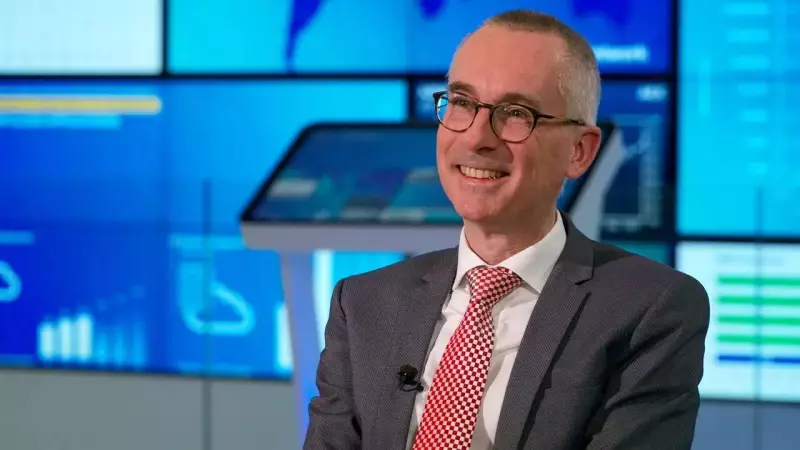
In a significant corporate restructuring move, ASML Holding NV, Europe's premier technology company and the world's sole manufacturer of advanced lithography machines, has unveiled plans to reduce its workforce by approximately 1,700 employees. This strategic decision, announced by CEO Christophe Fouquet, primarily targets the company's technology and IT divisions, aiming to address organizational complexity that has been identified as a barrier to operational efficiency.
Streamlining for Future Growth
The job reductions, which represent about 4% of ASML's global workforce, will predominantly affect employees based in the Netherlands, with additional cuts in the United States. Leadership positions are expected to bear the brunt of this restructuring initiative. During a recent earnings call, CFO Roger Dassen emphasized that the company received feedback highlighting its "complex organization," which often resulted in excessive time spent on coordinating processes rather than focusing on core engineering tasks.
"We want to make sure engineers can be engineers again," Dassen stated, as reported by Bloomberg. This sentiment underscores ASML's commitment to simplifying its operational structure to enhance productivity and innovation capabilities.

Record Bookings and Optimistic Outlook
Interestingly, the announcement of job cuts coincides with ASML reporting its thirteenth consecutive year of sales growth. The company disclosed remarkable fourth-quarter bookings totaling 13.2 billion euros ($15.8 billion), a substantial increase from 5.4 billion euros in the previous quarter. This figure far surpassed analyst expectations of 6.32 billion euros, according to data from researcher Visible Alpha.
CEO Christophe Fouquet attributed this surge to growing optimism among customers regarding the sustainability of artificial intelligence-related demand. "In the last months, many of our customers have shared a notably more positive assessment of the medium-term market situation, primarily based on more robust expectations of the sustainability of AI-related demand," Fouquet explained in an official statement.
AI Infrastructure Boom Driving Expansion
ASML's advanced lithography systems are essential for producing high-end semiconductors, positioning the company to benefit immensely from the hundreds of billions of dollars being invested globally in AI infrastructure. Major chipmaker customers, including TSMC and Samsung, are increasing capital expenditures to expand capacity for AI logic and memory chips, responding to heightened demand from cloud computing giants like Microsoft, Amazon, and Alphabet's Google.
This favorable market environment has prompted ASML to revise its financial outlook upward. The company now anticipates full-year sales for 2026 to range between 34 billion and 39 billion euros, exceeding analysts' previous expectations of around 35 billion euros, based on LSEG data. This represents a significant shift from earlier forecasts that projected flat or lower sales compared to 2025, when revenues reached 32.7 billion euros.
"We expect 2026 to be another growth year for ASML's business," Fouquet confidently added, highlighting the firm's optimistic trajectory despite the ongoing restructuring efforts.
Balancing Efficiency with Expansion
The dual narrative of workforce reduction and sales growth illustrates ASML's strategic balancing act. While streamlining operations to eliminate bureaucratic inefficiencies, the company continues to capitalize on the global semiconductor boom, particularly driven by advancements in artificial intelligence. Analysts predict that ASML will maintain its competitive edge as the exclusive provider of critical lithography equipment, ensuring sustained demand from top-tier clients navigating the tight supply of memory and AI-accelerator chips.
This restructuring initiative reflects a broader trend in the technology sector, where companies are increasingly focusing on organizational agility to adapt to rapidly evolving market dynamics. For ASML, simplifying its structure is not merely a cost-cutting measure but a proactive step to reinforce its engineering prowess and sustain long-term growth in an AI-dominated era.