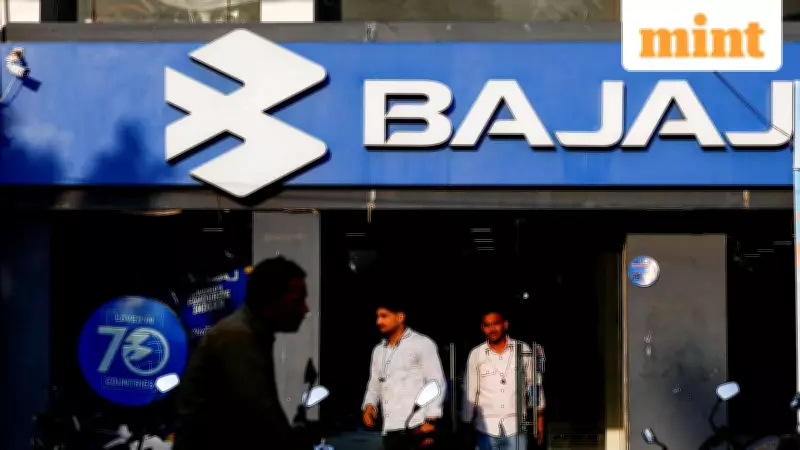
New Delhi: Riding high on the dual engines of premium motorcycle demand and robust overseas market performance, Bajaj Auto Ltd has embarked on a strategic mission to revitalize Austrian motorcycle manufacturer KTM, marking its most significant acquisition to date. This powerful combination of growth drivers is providing the Pune-based automotive giant with both the financial resources and strategic impetus needed to breathe new life into the iconic brand.
Financial Performance and Growth Catalysts
India's fourth-largest two-wheeler manufacturer by sales volume reported impressive financial results for the December quarter, with consolidated net profit soaring 25% year-on-year to reach ₹2,749 crore. This remarkable growth was primarily fueled by an enhanced product mix, as consumers increasingly opted for higher-end models following reductions in the goods and services tax (GST). Revenue witnessed a substantial 23% increase, climbing to ₹16,640 crore during the same period.
The KTM Revival Blueprint
Executive director Rakesh Sharma revealed that KTM's comprehensive turnaround strategy rests on three fundamental pillars: implementing new leadership, injecting liquidity into the company's operations, and implementing rigorous cost-cutting measures. "We have successfully appointed a new CEO, CFO, and CIO, with a chief strategy officer set to join by April 1st—thus completing our top management team," Sharma explained during a post-earnings media briefing on Friday. "These experienced professionals will spearhead KTM's journey back to its former glory."

Sharma further elaborated on the cost optimization initiatives, stating, "Our analysis identified numerous opportunities for reducing expenses across various operational areas, including manufacturing processes, sourcing strategies, and overhead management. Multiple collaborative projects have been launched between Bajaj Auto and KTM, with our company providing substantial support to achieve cost reductions and capitalize on synergies between the two organizations."
Investment and Timeline
The executive highlighted 2026 as a crucial milestone for KTM's transformation, noting that significant clarity has emerged since Bajaj announced its acquisition of full ownership in May last year. As part of the agreement, Bajaj committed to infusing €600 million into KTM through debt financing, supplementing the €200 million already invested since FY24, bringing the total investment to €800 million (approximately ₹7,778 crore). This partnership traces its roots back to 2007 when Bajaj initially acquired a stake in KTM's parent company, Pierer Mobility AG.
Market Dynamics and Premium Segment Surge
International operations continue to play a pivotal role in Bajaj's growth narrative, with export expansion significantly outpacing domestic market sales. Company disclosures indicate that domestic two-wheeler sales during October-December grew modestly by 2% to 601,208 units, while exports surged 14% to 531,175 units.
Sharma emphasized that the consumer shift toward premium products represents a substantial tailwind for the company. "The quality of growth is particularly noteworthy, with higher-end segments outperforming entry-level categories," he observed. "This trend aligns perfectly with our portfolio strategy, which focuses on encouraging customers to upgrade through higher displacement engines and more differentiated product features."
An analysis of Society of Indian Automobile Manufacturers (SIAM) data reveals that Bajaj Auto's premium motorcycles, featuring engine capacities exceeding 150cc, experienced an extraordinary 96% surge in domestic sales, reaching 150,748 units during the December quarter. "This favorable market dynamic benefited all our business units, contributing to peak performance delivery," Sharma added.
Industry Outlook and Competitive Landscape
Looking ahead, the company believes that the growth momentum observed following September's GST reductions will depend significantly on inflation trends and regulatory developments. While near-term prospects appear positive, Sharma cautioned that price increases resulting from inflationary pressures and regulatory adjustments will be critical factors to monitor in the coming months.

This optimism is echoed across the industry. TVS Motor Co., India's third-largest two-wheeler manufacturer, expressed confidence in sustained demand during its recent earnings call. "We have consistently outperformed industry growth and remain confident that this momentum will continue," stated K.N. Radhakrishnan, director and chief executive at TVS, on January 28. "We anticipate maintaining this outperformance in the fourth quarter."
According to SIAM statistics, the two-wheeler sector achieved its highest-ever December quarter sales, with 5.7 million units sold—representing 17% growth—as festive season demand and GST reductions stimulated market activity. TVS Motor reported a 46% year-on-year increase in net profit to ₹891 crore for the December quarter, with revenue growing 33% to ₹14,745 crore. Meanwhile, industry leader Hero MotoCorp is scheduled to announce its financial results on February 5.