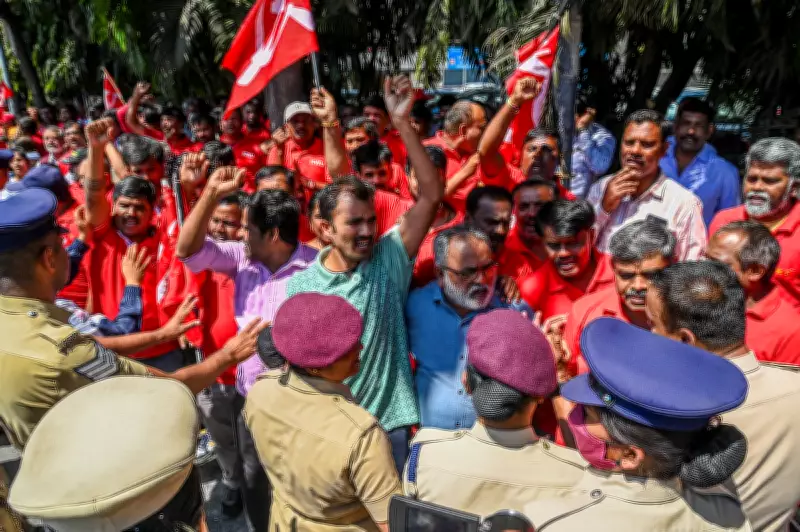
Bengaluru Trade Union Strike: Workers Detained Amid Mixed Industrial Response
A significant trade union strike unfolded in Bengaluru, resulting in the detention of workers during protest activities. The event, which took place on February 12, 2026, saw public transport and essential services remain largely unaffected, but the impact across industrial production and the services sector was notably mixed.
Protest and Detentions in the City
Workers participating in the trade union strike were detained by authorities as they engaged in demonstrations across Bengaluru. The protests, organized by various trade unions, aimed to highlight labor rights and demands, leading to confrontations with law enforcement. Despite these detentions, the strike did not severely disrupt daily life in terms of public transportation or essential services, which continued to operate normally.
Varied Impact on Industries and Services
The strike elicited a mixed response from different sectors. Industrial production in some areas experienced slowdowns or temporary halts, while other factories and manufacturing units reported minimal disruption. Similarly, the services sector saw varied effects, with some businesses facing operational challenges and others continuing as usual. This uneven impact underscores the diverse nature of Bengaluru's economy, which spans traditional industries and modern service-based enterprises.

- Workers were detained during protests, highlighting tensions between labor groups and authorities.
- Public transport and essential services remained operational, ensuring basic city functions were not compromised.
- Industrial production faced mixed disruptions, with some sectors more affected than others.
- The services sector reported a varied response, reflecting the city's economic diversity.
As the situation develops, stakeholders are monitoring the aftermath of the strike and its implications for labor relations in Bengaluru. The mixed industrial response suggests that while the strike had symbolic significance, its practical effects were limited in certain areas, pointing to a complex interplay between protest actions and economic resilience.