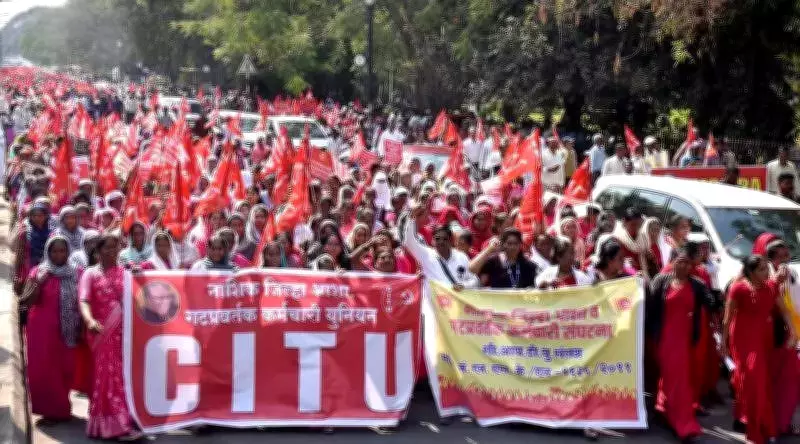
Bharat Bandh Paralyzes Nashik Industrial Estates, Demands Economic Policy Changes
The nationwide Bharat Bandh, organized by various central trade unions on Thursday, significantly disrupted industrial operations in key Maharashtra Industrial Development Corporation (MIDC) estates located in Nashik. The protest was directed against the Centre's labor reforms and broader economic policies, though its impact was notably muted in Chhatrapati Sambhajinagar.
Industrial Operations Partially or Fully Affected in Over 200 Units
According to the Nashik Industries and Manufacturers' Association (NIMA), industrial activities in more than 200 units situated within the Satpur and Ambad MIDC areas, both under Nashik Municipal Corporation jurisdiction, were either partially or completely halted. These units, which have workers affiliated with the central trade unions, reported substantially reduced manpower attendance as employees participated in the bandh.
"Production in over 200 industrial units was affected on Thursday due to the Bharat Bandh. These were the industrial units where workers' unions are affiliated with the various trade unions that called the bandh," stated Ashish Nahar, the president of NIMA.

Protest March and Key Demands Presented to District Collector
Workers organized a protest march in Nashik city, starting from the Golf Club ground and proceeding to the district collectorate. An action committee comprising different trade unions was formed to ensure the strike's success. A delegation met with Nashik district collector Ayush Prasad and submitted a memorandum outlining their demands, which include:
- A minimum wage of Rs 30,000 per month for an 8-hour shift across all establishments.
- A minimum pension of Rs 10,000 per month for farmers and workers.
- Equivalent pension benefits for senior citizens under the Employees State Insurance Corporation (ESIC).
- Job creation for the unemployed.
- An end to the privatization of public sector undertakings (PSUs).
- The abolition of corporate-oriented labor acts.
Limited Impact in Chhatrapati Sambhajinagar, Continued Unrest
In Chhatrapati Sambhajinagar, most services and commercial establishments operated normally, though trade union leaders reported disruptions in anganwadis and certain factory sections. Trade union leader Subhash Lomate highlighted that many contract-based workers were unable to join the strike despite growing discontent with government policies.
"Several establishments have contract-based workers, who could not take part in the strike despite their willingness. We will continue to fight for our rights till govt mends its ways," Lomate emphasized.
Broader Demands and Demonstrations
Trade union representatives held demonstrations at Kranti Chowk, where they chanted anti-government slogans and reiterated their demands. Key issues raised by the central trade unions include:
- Repeal of the Labour Codes.
- Restoration of funding for the Mahatma Gandhi National Rural Employment Guarantee Act (MGNREGA).
- Rollback of the Viksit Bharat-Gramin Act, 2025.
The Bharat Bandh underscores ongoing tensions between labor groups and the government over economic and labor policies, with Nashik's industrial sector bearing the brunt of the protest's immediate effects.