Bhilwara's Textile City: Women at the Forefront of Industry
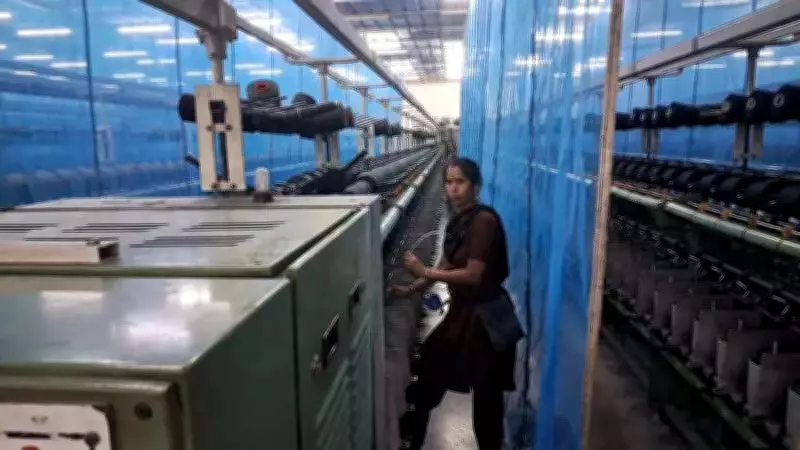
Bhilwara, renowned as 'Vastranagari' or the 'Textile City,' owes its global fame to the dedication and expertise of thousands of women who operate its textile factories with remarkable precision and immense pride. As International Women's Day approaches, these workers are sharing their inspiring journeys of empowerment and economic independence.
Voices from the Factory Floor
Bela Bai, a worker from Madhya Pradesh with five years of experience in Bhilwara's textile mills, expressed unwavering confidence in her abilities. "We have no hesitation in operating machines because we are no less than men," she stated. "The same tasks that are assigned to men in the textile industry are given to us, and we always strive to outperform them." She emphasized the importance of hard work, urging other women to follow her example to secure their children's education and future success.
Rajkumari, another dedicated employee, highlighted the practical benefits of her role. "We work eight hours daily and earn between Rs 20,000 to 25,000 per month," she said. "We are proving that women are equal to men. The Prime Minister's vision of women advancing in all fields is being realized as we achieve self-reliance through our efforts."

Education and Economic Necessity
Romani, who holds a BA degree, shared her story of resilience. Despite her academic achievements, she faced challenges in securing a government job. "Instead of remaining idle at home, it is essential to work in this era of high prices," she explained. "That's why so many of us have turned to the textile industry, where we can contribute meaningfully and support our families."
Supportive Infrastructure and Leadership
Chhotu Singh Purawat, a factory overseer, detailed the measures taken to ensure a safe and conducive work environment for women. "Separate premises were established exclusively for female workers, with nearly a thousand women operating machinery throughout the day," he noted. The company has deployed female security guards and provides bus facilities for commuting, prioritizing the well-being and security of its workforce. Purawat added, "I consider myself a father figure to these women, caring for each worker as if she were my own daughter."
Industry Impact and Statistics
Prem Swaroop Garg, senior vice president of the Bhilwara Textile Trade Federation, provided insights into the scale of women's participation. "Approximately 10,000 to 12,000 women are employed in Bhilwara's textile sector," he revealed. This significant workforce not only drives the local economy but also embodies the spirit of women's empowerment, transforming the city into a hub of skilled labor and progressive values.
As Bhilwara continues to thrive as a textile powerhouse, these women stand as testaments to the power of determination, skill, and collective effort in shaping a more inclusive and prosperous future.