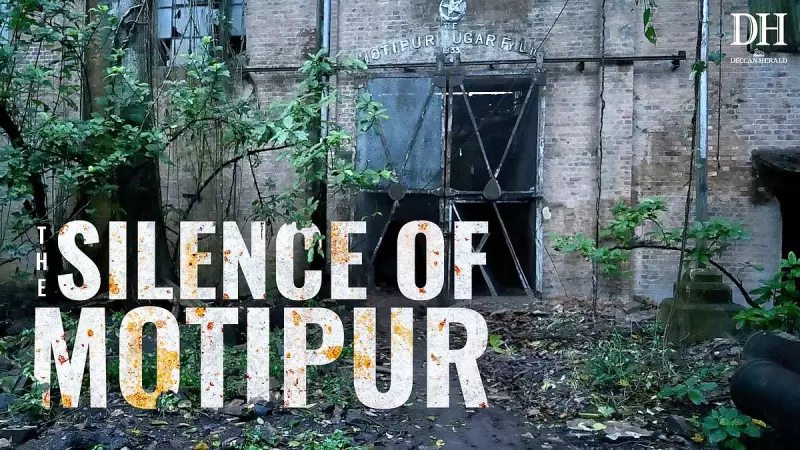
The gates of Motipur's industrial area in Bihar's Muzaffarpur district stand as silent witnesses to a story of economic decline that has gripped the entire state. What was once a bustling hub of industrial activity now presents a grim picture of shuttered factories, rusted machinery, and lost livelihoods.
The Ghost Town That Was Once an Industrial Hub
Walking through Motipur's industrial estate today reveals a landscape of decay and abandonment. Factory after factory displays closed gates and overgrown compounds, with only a handful of units still operating at minimal capacity. The area, which once promised to be an engine of growth for Bihar, now symbolizes the state's broader industrial stagnation.
The scale of closure is staggering - of the approximately 150 industrial units established here over decades, fewer than 30 remain functional today. The remaining operational factories are mostly running at 20-30% of their capacity, struggling to stay afloat in an increasingly challenging business environment.

Human Cost: Workers Left in Limbo
The industrial collapse has extracted a heavy human toll. Thousands of workers who once earned stable livelihoods in these factories now face unemployment and financial uncertainty. Many have been forced to migrate to other states in search of work, while others have taken up menial jobs that pay significantly less than their former factory positions.
Local residents recall better times when the industrial area provided employment to people from surrounding villages and contributed to the local economy. Shopkeepers, food vendors, and transportation services all benefited from the regular flow of workers and industrial activity. Today, that ecosystem has largely collapsed, creating ripple effects throughout the local economy.
The timing of this industrial decline is particularly significant as Bihar prepares for crucial elections. The state's economic performance and job creation record have become central issues in political debates, with opposition parties highlighting the industrial failures as evidence of governance problems.
Root Causes and Political Implications
Multiple factors have contributed to Motipur's industrial decline. Industry owners and workers cite inconsistent power supply, inadequate infrastructure, regulatory hurdles, and lack of government support as primary challenges. The situation reflects broader patterns across Bihar, where industrial development has consistently lagged behind other states.
Political leaders from various parties have made promises to revive Bihar's industrial sector, but ground realities tell a different story. The contrast between political rhetoric and industrial reality has become a focal point in election campaigns, with voters expressing frustration over unfulfilled promises of economic development.
As election season intensifies, the story of Motipur's industrial decline serves as a powerful symbol of Bihar's economic challenges. The closed gates and silent factories represent not just lost jobs and opportunities, but also the unmet aspirations of a population seeking better economic prospects.
The future of Bihar's industrial sector remains uncertain. While government schemes and policy announcements continue to promise revival, the ground reality in places like Motipur suggests that meaningful industrial recovery will require more substantial interventions and sustained political commitment.