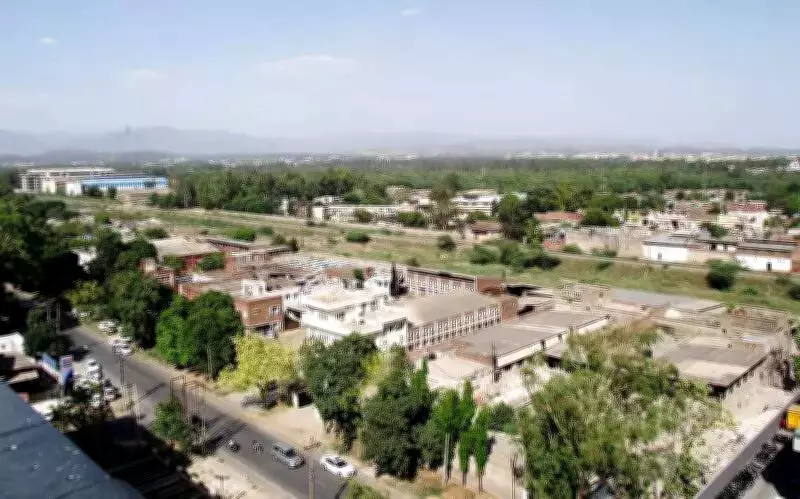
Chandigarh Administration Embraces PPP Model for Industrial Area Phase-III Development
The Chandigarh administration is actively pursuing private sector involvement through a public-private partnership (PPP) framework to accelerate the development of the long-delayed 153-acre Industrial Area Phase-III. This strategic move aims to fast-track the creation of modern, high-quality infrastructure in the region, which has remained largely undeveloped for decades.
Policy Framework and Infrastructure Overhaul
A senior UT official confirmed that the administration is thoroughly examining the PPP approach to ensure better and updated infrastructure. "The UT is encouraging the PPP model for enhanced infrastructure in the industrial area. This was also discussed in a recent meeting between UT and senior central government officials," the official stated. To facilitate private participation, the administration is currently preparing a comprehensive policy framework and reviewing existing regulations to identify and modify restrictive clauses. Revised proposals are expected to be presented to the competent authority in the near future.
Historical Context and Current Challenges
Industrial Area Phase-III, located near Raipur Kalan and Mauli Jagran, has been part of the Chandigarh Urban Complex Plan for nearly forty years but has seen minimal progress. Although land acquisition was completed in 2003, infrastructure development has been sluggish. Recent directives from the central government to optimize land use have revitalized the project. Currently, the area lacks complete road networks, stormwater drainage, and sewerage systems, with only some basic amenities in place. Since development is essentially starting from scratch, the administration is also finalizing liberal planning norms specifically for Phase-III, which are anticipated to be significantly more relaxed than those in Phases I and II.

Relaxed Norms and Strategic Planning
Officials have revealed that the proposed floor area ratio (FAR) for Phase-III is nearly three times higher than what is currently permitted in the existing industrial phases. Additional relaxations in building height, coverage, and related parameters are under consideration to attract industrial investment. Phase-III is envisioned as a major warehousing and services hub, leveraging its proximity to the railway station. According to the Chandigarh Master Plan, nearly one-third of the area is earmarked for warehousing, while industrial plotted sites account for only about 10% of the land. Approximately 80% is dedicated to green spaces, parking, roads, and other support infrastructure.
Implementation and Broader Reforms
Once the new planning norms receive approval, the estate office will commence auctioning plots on a freehold basis. A previous attempt to auction around 20 plots was halted due to ongoing changes in regulations. This initiative is part of broader industrial reforms underway in Chandigarh, which may include potential FAR increases and bylaw relaxations in Phases I and II. Currently, FAR in these phases is around 0.75 and could be revised to remain competitive with neighboring areas like Mohali and Panchkula.
Key Details of Industrial Area Phase-III
As per the Chandigarh Master Plan 2031, the land use distribution for the 153-acre site includes:
- Industrial plots: 14.65 acres
- SAIL steel stockyard: 10 acres
- Warehousing zone: 45 acres
- STP area: 0.91 acre
- Roads & parking: 43.97 acres
- Reserved / open spaces: 36.44 acres
Location Highlights: Situated near Raipur Kalan and Mauli Jagran, the area features a triangular layout bordered by a link road to Mauli Jagran/Raipur Kalan, Route No. 2 to the north, the Panchkula/UT boundary, and the Ambala–Chandigarh railway line to the southwest. It is accessible via Railway Station Road from Daria village, with Raipur Kalan village falling within Phase-III limits.
Officials emphasize that these steps are designed to boost industrial activity, attract significant investment, and transform Phase-III into a modern industrial and warehousing destination, aligning with the administration's goals for economic growth and development.