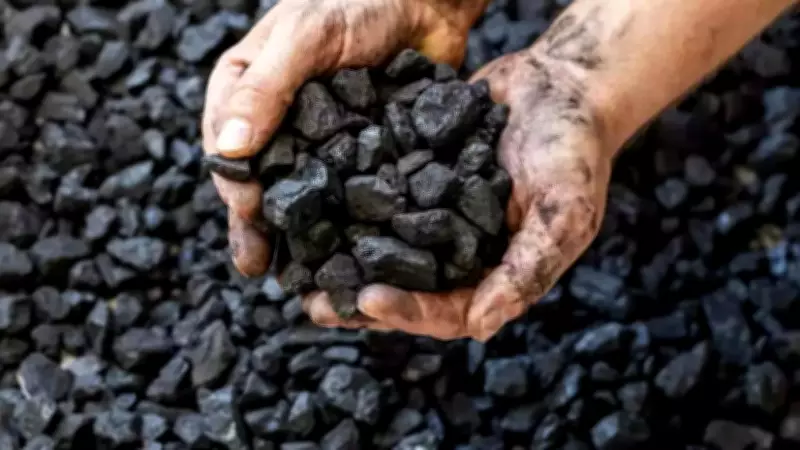
NEW DELHI: Coal will continue to play a pivotal and central role in India's evolving energy mix as the nation ambitiously works towards tripling its per capita energy consumption over the next two decades, Union Coal Secretary Vikram Dev Dutt emphatically stated on Thursday.
Coal's Imperative Role in India's Development
Speaking during a panel discussion on the third day of India Energy Week 2026, Secretary Dutt clarified India's strategic position. "Coal is not going away in a hurry. For India, affordable and dependable baseload power is not a choice; it is an imperative. The mantra is not 'phase out', it is 'phase down' in calibrated steps that reflect ground realities," he asserted. Dutt further elaborated that coal fundamentally underpins India's pressing development needs and will continue to do so, even as renewable energy sources scale up alongside the country's climate commitments.
Economic Survey 2025-26: Data-Driven Energy Landscape
According to the recently released Economic Survey 2025-26, coal maintains a critically important role in India's energy landscape. The data reveals:

- Coal contributes a substantial 55% to the national energy mix.
- It fuels over 74% of India's total power generation.
- India's total installed power generation capacity currently stands at nearly 514 gigawatts (GW).
- This includes approximately 247 GW of thermal capacity, predominantly coal-based.
The survey also projects significant growth in energy consumption. Annual per capita energy consumption, currently at 1,460 kWh, is expected to rise to 2,000 kWh by 2030 and surpass 4,000 kWh by 2047, aligning with the nation's development goals.
Global Perspective on Coal and Energy Security
Highlighting the international context, Kyle Haustveit, Assistant Secretary for Hydrocarbons and Geothermal Energy at the U.S. Department of Energy, emphasized that coal remains critically important for global energy security. "Coal powered the modern world and it is not going away. Reliable, affordable and secure energy matters, and coal provides that stability, regardless of weather or market volatility," he noted during the discussion.
Haustveit pointed to the strong potential for enhanced India-US collaboration in several advanced areas, including:
- Clean coal technologies
- Coal gasification processes
- Carbon capture and utilisation
- Trade in high-quality metallurgical coal
Coal as a Bridge in India's Energy Transition
Echoing the sentiment, B. Sairam, Chairman-cum-Managing Director of Coal India Limited, described coal's role as a necessary bridge and enabler in India's energy transition. "India's per capita energy consumption is barely a third of that in developed economies. As this demand triples, coal will provide firm, dispatchable power while renewables and storage technologies mature and become more cost-effective," he explained. This perspective underscores coal's function in ensuring grid stability and meeting base load requirements during the nation's gradual shift towards a more diversified energy portfolio.
The consensus from India Energy Week 2026 is clear: while the global narrative often focuses on phasing out fossil fuels, India's approach is one of pragmatic calibration. Coal is positioned not as a relic of the past, but as a foundational component of a secure, affordable, and growing energy system that must support the aspirations of over a billion people for decades to come.