

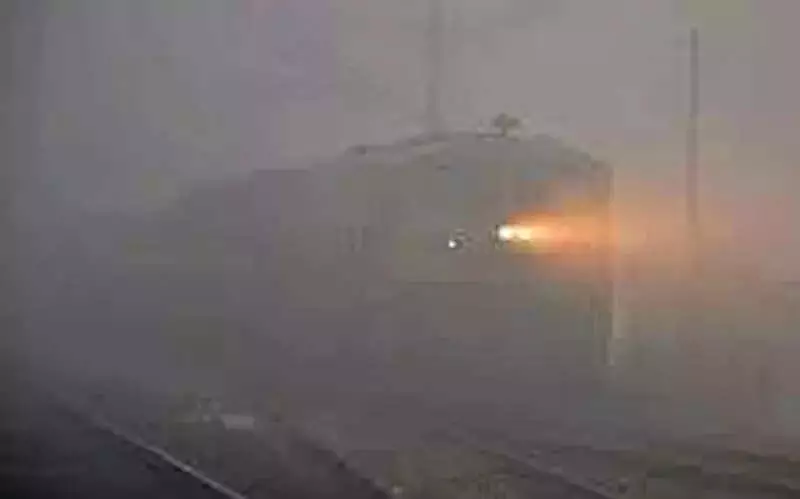
Rail operations across the crucial North Central Railway (NCR) network have been thrown into chaos for over a week, with dense winter fog causing severe disruptions and massive delays, particularly on premium trains connecting Delhi and Bihar. This paralysis persists despite the railways having introduced GPS-based tracking systems intended to improve efficiency.
Key Corridor Brought to a Crawl
The Tundla–Kanpur–Prayagraj–DDU–Patna corridor, a major artery for north Indian rail traffic, has been severely affected. The persistent low visibility conditions have forced train speeds to drop drastically, leading to widespread passenger inconvenience and abnormal delays. Sources from the Danapur control room confirmed that the fog has reduced visibility across large sections of the NCR route.
Premium Trains Hit Hardest
Long-distance connectivity, especially for passengers traveling from the national capital to Patna and other parts of Bihar, has been massively disrupted. On Wednesday, the situation reached a critical point with several key trains running hours behind schedule.

The New Delhi–Rajendra Nagar Terminal Tejas Rajdhani Express (12310) arrived in Patna nearly 10 hours and 42 minutes late. In an even more severe delay, the New Delhi – Rajendra Nagar Terminal Sampoorna Kranti Express (12394) was delayed by a staggering 12 hours.
Other important trains suffering significant delays included:
- New Delhi – Rajgir Shramjeevi Express (12392)
- New Delhi- Islampur Magadh Express (20802)
- Anand Vihar – Bhagalpur Vikramshila Express (12368)
Safety Protocols vs. Passenger Anger
NCR chief public relations officer (CPRO) Sashi Kant Tripathi explained that the disruptions were primarily due to safety protocols mandated for low visibility. He stated that loco pilots are compelled to operate trains at restricted speeds on the fog-prone Tundla-Kanpur-Prayagraj route as per winter safety guidelines.
“As a safety measure, even fast and premium trains are being run at speeds ranging between 60 to 75 kmph in dense fog, far below their scheduled cruising speeds,” Tripathi said. He emphasized that these precautions are necessary to avoid accidents and ensure passenger safety during such hazardous weather.
However, this explanation has done little to assuage frustrated passengers. Many traveling from Delhi to Patna on Wednesday pointed out that fog is a predictable, annual seasonal phenomenon. They questioned the railways' perennial lack of preparedness and a robust contingency plan to handle it.
Passengers argued that while GPS-based tracking might help in monitoring train movements, it does nothing to solve the core operational challenge posed by the month-long foggy weather each winter. The absence of a effective plan to mitigate these predictable delays remains a glaring issue, turning a seasonal weather pattern into a crisis for thousands of travelers year after year.






