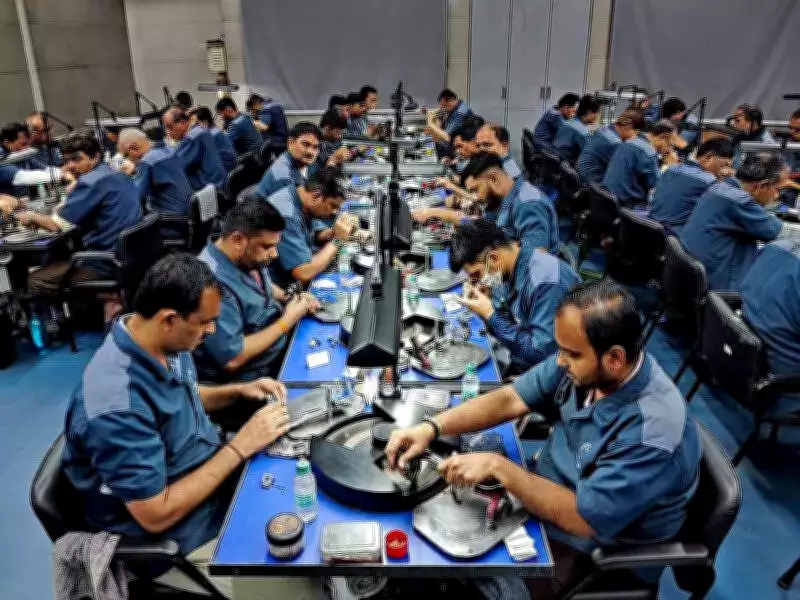
Surat Diamond Industry Advocates for Rural Expansion to Curb Urban Migration
The Surat Diamond Association (SDA), the nation's foremost representative body for the diamond cutting and polishing sector, has formally requested the Gujarat government to prioritize the establishment of diamond manufacturing clusters in rural and semi-rural regions. This strategic move aims to alleviate the intense pressure on urban centers like Surat while fostering balanced regional development across the state.
Formal Representation to the State Government
During a crucial administrative committee meeting held on Monday, the SDA resolved to submit a detailed representation to Chief Minister Bhupendra Patel. The association has urged the government to incorporate specific schemes and incentives into the upcoming annual state budget, which is scheduled for announcement shortly. The core proposal focuses on promoting and facilitating diamond polishing units at the taluka and semi-rural levels.
"Our vision is to develop Gujarat holistically, ensuring that growth is not confined to Surat alone," explained a senior SDA official. The initiative seeks to leverage recent advancements in rural infrastructure to create sustainable local economies.

Transforming Rural Employment with Improved Infrastructure
SDA President Jagdish Khunt highlighted a significant shift in rural conditions that makes this proposal timely and feasible. "Historically, drought conditions and inadequate infrastructure severely limited employment opportunities in rural Gujarat, forcing migration to cities," Khunt stated. "Today, with enhanced irrigation systems and reliable electricity, farmers can cultivate crops throughout the year. Establishing diamond units in these areas would provide supplementary, year-round employment, allowing workers to earn a livelihood without relocating to urban hubs."
This approach directly addresses the challenges faced by Surat, which currently employs approximately 800,000 workers in its diamond industry and polishes an astonishing 90% of the world's diamonds. Significant workforce concentrations also exist in other cities including Ahmedabad, Bhavnagar, Navsari, Botad, and Amreli.
Comprehensive Demands for Sustainable Development
The association's proposal extends beyond mere unit establishment. It encompasses a suite of essential support measures designed to ensure the success of rural diamond hubs:
- Robust and high-speed internet connectivity to facilitate global trade and operations.
- Comprehensive training and skill upgradation programs for workers.
- Affordable electricity tariffs specifically for rural polishing units.
- Targeted subsidies and tax benefits to attract investment.
- Streamlined and speedy approval processes for new unit proposals.
- Development of local infrastructure to support industrial activity.
Social and Economic Benefits of Decentralization
Khunt emphasized the profound social advantages of this decentralized model. "This initiative will generate substantial employment opportunities at the grassroots level while actively preventing disruptive migration patterns," he added. "It promises to improve the quality of life for entire families, enabling younger generations to remain with their elders, provide care, and contribute to their local communities."
Addressing Practical Challenges in Rural Sourcing
While the vision is ambitious, SDA committee members acknowledge practical hurdles. Dinesh Navadiya, Chairman of the Indian Diamond Institute and a key SDA member, pointed out a critical supply chain consideration. "Opening diamond units in rural areas presents a challenge regarding the sourcing of high-value rough diamonds," Navadiya noted. "However, at this initial stage, it is entirely feasible to commence operations focusing on basic processing work for lower-quality roughs, building expertise and capacity gradually."

The SDA's proposal represents a forward-thinking strategy to reshape Gujarat's diamond industry landscape. By advocating for policy-driven rural development, the association aims to create a more resilient, distributed, and socially beneficial manufacturing ecosystem that supports workers, strengthens communities, and sustains India's global leadership in diamond processing.