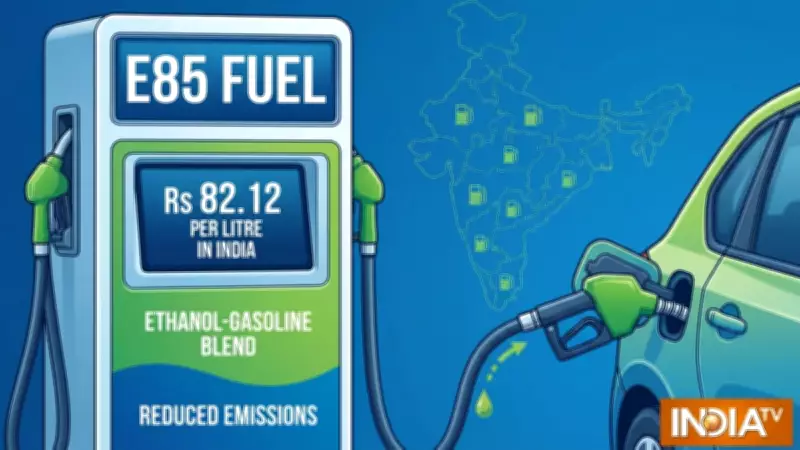
The Indian government has introduced E85 fuel, a blend of 85% ethanol and 15% petrol, priced at Rs 20 less than regular petrol. This move aims to promote cleaner fuel and reduce dependence on fossil fuels. However, not all cars can use E85; only flex-fuel vehicles (FFVs) are compatible. FFVs have engines designed to handle high ethanol concentrations, while standard cars may suffer damage if E85 is used.
Why Is E85 Cheaper?
E85 is cheaper because ethanol is produced from agricultural sources like sugarcane and corn, which are abundant in India. The government also provides subsidies to encourage ethanol production. Additionally, ethanol has a lower energy content than petrol, meaning vehicles may get slightly lower mileage, but the cost savings offset this.
Benefits of E85 Fuel
- Reduced Emissions: Ethanol burns cleaner, reducing carbon monoxide and greenhouse gas emissions.
- Energy Security: Using domestically produced ethanol reduces oil imports.
- Support for Farmers: Increased demand for sugarcane and corn benefits the agricultural sector.
Can Your Car Use E85?
Only flex-fuel vehicles can use E85. These cars have sensors that detect the ethanol content and adjust the engine timing and fuel injection accordingly. Most modern cars in India are not FFVs, but some manufacturers like Toyota and Mahindra have launched flex-fuel models. Using E85 in a non-FFV can lead to engine damage, poor performance, and voided warranty.

Availability of E85 in India
E85 is currently available at select pumps in states with high ethanol production, such as Uttar Pradesh, Maharashtra, and Tamil Nadu. The government plans to expand availability nationwide by 2025. Drivers can check with local fuel stations or use apps to locate E85 pumps.
Comparison with Regular Petrol
- Price: E85 is Rs 20/liter cheaper.
- Mileage: E85 gives about 20-30% less mileage due to lower energy density.
- Performance: Ethanol has a higher octane rating, which can improve engine power in FFVs.
- Environmental Impact: E85 reduces lifecycle greenhouse gas emissions by up to 40%.
Future of Ethanol Blending in India
The government aims to achieve 20% ethanol blending in petrol by 2025 under the Ethanol Blended Petrol (EBP) program. E85 is a step beyond that, targeting FFVs. As more flex-fuel cars enter the market, E85 adoption is expected to grow. However, challenges include ensuring consistent ethanol supply and educating consumers about compatibility.
In conclusion, E85 offers significant savings and environmental benefits, but only for flex-fuel vehicle owners. If you own a standard car, stick to regular petrol or ethanol-blended options like E10 or E20 to avoid damage.