

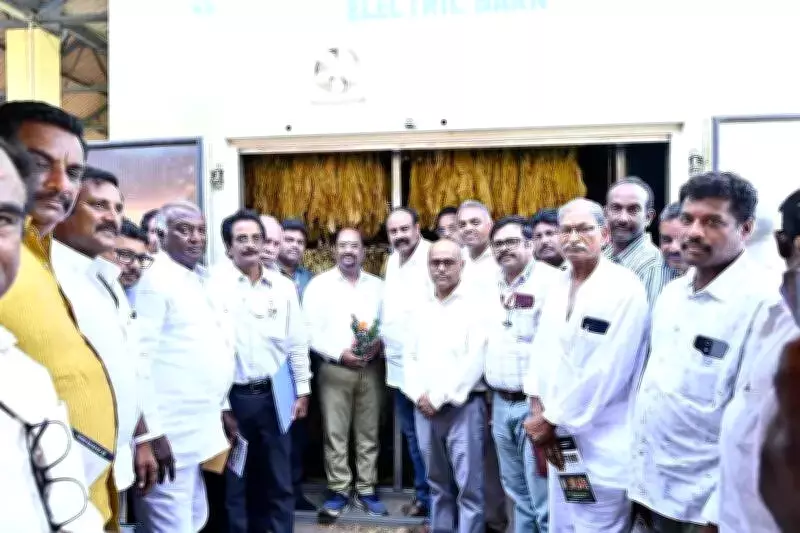
Electric Curing Technology Set to Transform Indian Tobacco Industry
In a significant breakthrough for Indian agriculture, a farmer-friendly and highly efficient electricity-based curing technology is poised to revolutionize tobacco processing across the country. This innovative system promises to substantially reduce operational costs, decrease labor dependence, and dramatically lower environmental impact compared to traditional methods.
Century-Old Practices Meet Modern Innovation
At the heart of this agricultural transformation is a newly developed curing technology created through collaboration between the ICAR–National Institute for Research on Commercial Agriculture (ICAR–NIRCA) and Owl Tech Pvt. Ltd. This innovation represents a fundamental shift from the fuel wood-fired barns that have dominated Flue-Cured Virginia (FCV) tobacco processing for over a hundred years.
The conventional curing system has remained largely unchanged since its inception, typically consuming approximately five kilograms of fuel wood for every single kilogram of green leaf processed. This makes tobacco curing one of the most energy-intensive and environmentally taxing stages in agricultural production, contributing significantly to deforestation pressures and carbon emissions.

Addressing Multiple Agricultural Challenges
Beyond environmental concerns, the traditional curing system presents numerous operational challenges for farmers. These include heavy dependence on increasingly scarce fuel wood resources, high labor requirements, shortage of skilled curers, and inconsistent cured leaf quality that directly affects market prices and farmer incomes.
As climate concerns intensify globally and labor dynamics shift within agricultural communities, the limitations of this century-old system have become increasingly evident. International buyers and multinational companies are now prioritizing supply chains that demonstrate low carbon emissions across production and processing, elimination of deforestation-linked practices, enhanced traceability and transparency in sourcing, and strict compliance with environmental and social responsibility standards.
A Farmer-Centric Solution Emerges
According to Dr. Venumadhav, Director of NIRCA, the newly developed curing system represents a comprehensive response to these mounting challenges. The technology completely replaces fuel wood with electric-powered systems, achieving zero direct carbon emissions during the entire curing process.
What truly distinguishes this system is its sophisticated integration of IoT-enabled precision controls, allowing for real-time monitoring and automated regulation of the curing environment. The technology offers simple and user-friendly operation without wood fuel, minimal labor requirement, reduced curing time, and consistently uniform, high-quality cured leaf output.
The electric curing cycle is completed in just four to four-and-a-half days, presenting a significantly faster and more efficient alternative to conventional barns that typically require longer processing times with less predictable results.
Versatile Applications Beyond Tobacco
In a notable expansion of its agricultural utility, researchers emphasize that this technology is not limited to tobacco alone. The system demonstrates remarkable adaptability for drying various other crops including chillies, mushrooms, and coconut, making it a versatile post-harvest solution with broad applications.
This multi-crop applicability holds particular relevance for farmers engaged in diversified agriculture, enabling them to utilize the system across different growing seasons and commodity types. Such flexibility enhances overall farm income potential while maximizing the return on technology investment.
Aligning Agriculture with National and Global Sustainability Goals
India's commitment to achieving net-zero emissions by 2050 requires comprehensive transformation across all economic sectors, including agriculture. While much policy and research focus has traditionally been placed on crop production methods, post-harvest processes such as curing also contribute significantly to overall agricultural emissions.

As sustainability becomes increasingly central to both agricultural policy and market demands, the tobacco sector stands at a critical crossroads. The shift from smoke-filled traditional barns to clean, intelligent, and farmer-friendly curing systems signals more than just a technological upgrade—it reflects a broader transformation in aligning agricultural practices with environmental responsibility and long-term economic viability.
This electric curing technology represents a practical pathway toward sustainable agricultural modernization, offering tangible benefits for farmers while addressing pressing environmental concerns that affect both local communities and global climate objectives.





