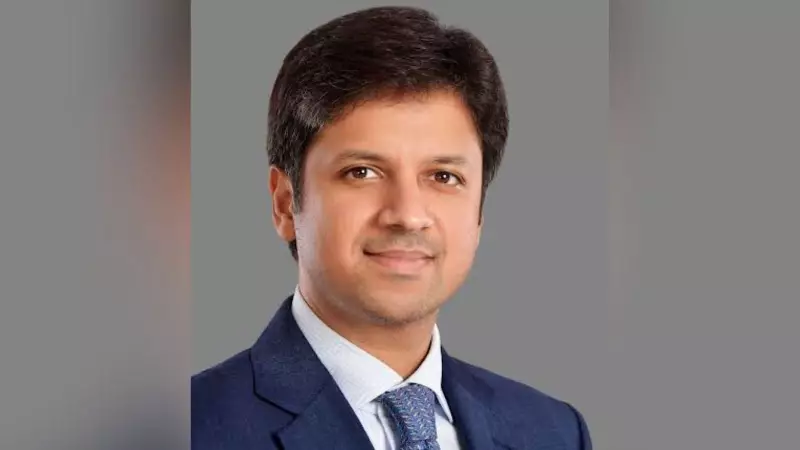
In a significant statement, the newly appointed President of the Federation of Indian Chambers of Commerce and Industry (FICCI), Anant Goenka, has outlined the next critical reforms needed to boost India's economic competitiveness. Following the implementation of the four new labour codes, Goenka emphasized that the government must now turn its attention to land acquisition and power sector reforms to further reduce the cost of doing business and logistics.
Beyond Labour: The Next Frontier of Reforms
Anant Goenka, who is also the Vice Chairman of the RPG Group, stated that while infrastructure spending is helping bring down logistics costs, more can be done. He specifically pointed to the need for addressing issues related to cross-subsidisation in the power sector and simplifying the process of land acquisition. These factors, he argues, are crucial for enhancing India's manufacturing prowess and attracting long-term private investment.
"With infrastructure spending, logistics costs are coming down. But certainly, something can be done on cross-subsidisation of power and acquisition of land," Goenka told The Indian Express in an interview. His comments come at a time when the government is pushing through various economic measures, including in response to external pressures like the recent steep tariff hikes by the United States.

Labour Codes: A Net Positive, Not a Cost Burden
Addressing industry concerns about potential cost increases from the newly notified labour codes, Goenka adopted a constructive stance. He views the consolidation of 29 labour laws into four streamlined codes as a major positive step that simplifies compliance and facilitates the movement of workers across states.
"We can't think about everything on a cost basis," he remarked, referring to provisions like retiral benefits. He highlighted important advancements such as enabling women to work night shifts and improved safety norms. Asserting that India remains competitively strong on people costs globally, Goenka stated, "I don't think the industry should complain at all about the cost increase." He urged businesses to focus on boosting their own productivity and efficiency to manage costs.
Manufacturing Growth: An Imperative for Job Creation
Goenka stressed that for India to achieve its economic potential and absorb its growing workforce, the manufacturing sector must expand at a double-digit growth rate, exceeding 10%. He pointed to positive tailwinds, including India's demographic dividend and growing skill base, citing the example of Apple now manufacturing a significant portion of its iPhones in the country.
However, he cautioned that with productivity gains and the rise of artificial intelligence, there is a tangible risk to job creation. "The way to (more) jobs is going to be through manufacturing," he asserted, noting that services can only absorb a limited share. With nearly 10 million people entering the workforce annually, he sees no alternative but to aggressively scale up manufacturing.
To this end, FICCI has identified key priorities for the coming year, aiming to raise manufacturing's share of GDP from the current 15-16% to over 20% and eventually 25%. These priorities include:
- Boosting R&D and innovation spending from 0.7% to over 1% of GDP.
- Strengthening industry-academia partnerships.
- Ensuring effective implementation of announced reforms.
- Leveraging Free Trade Agreements (FTAs) more effectively.
- Securing critical raw materials to reduce import dependency.
On Trade, FTAs, and Global Competition
Discussing global trade dynamics, Goenka acknowledged the impact of US tariffs but expressed optimism about ongoing negotiations for a Free Trade Agreement. He believes a conclusion is near, which would help restore higher trade levels. On the ideal tariff rate, he suggested closer to 15% would be favourable for competitiveness.
He also addressed competition from ASEAN nations like Vietnam, which have benefited from Chinese investments. Goenka advocated for a strategic shift in how Indian entrepreneurs view return on investment (ROI), encouraging them to think long-term and at a larger scale, similar to the approach seen in China.

Regarding partnerships, he recommended focusing on countries with more complementary economies, such as those in the European Union and the United States, while expressing caution about long-term dependencies on China due to elevated country risk.
Finally, on balancing the interests of Micro, Small, and Medium Enterprises (MSMEs) with larger corporations in trade policy, Goenka affirmed that MSMEs are the industry's backbone. He expressed confidence in the government's intent to protect Indian interests and highlighted the significant gains India can achieve from well-structured FTAs, given its lower production costs.