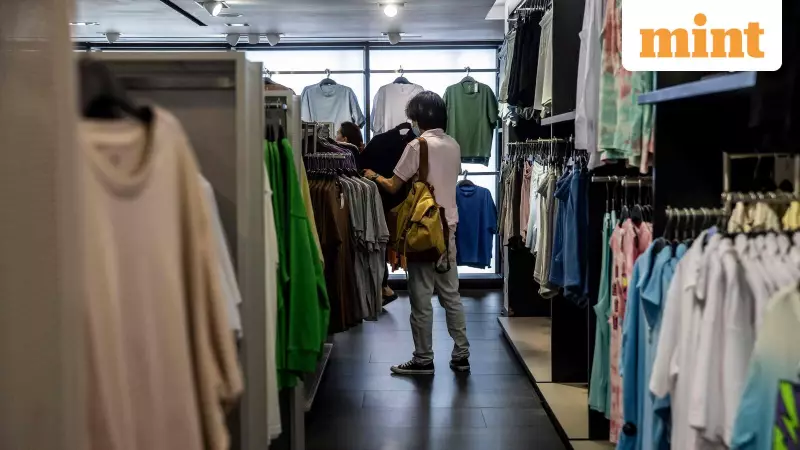
The world's largest retail brands are turning their gaze towards India with unprecedented urgency. Attracted by the country's booming economy and a young, aspirational consumer base, names like COS, Bershka, Next, G-Star Raw, and Lush have all made their debut in the past year. They are set to be joined in 2026 by heavyweights like Canada's Lululemon and America's Abercrombie & Fitch. This scramble for a foothold in the world's fastest-growing major economy comes even as demand in several of their traditional global markets begins to plateau.
The Allure of an Underserved Market
Industry leaders point to a significant gap in the Indian retail landscape that is now driving this influx. Vishal Anand, CEO of Bilberry Brands India, which brought Lush back to India, highlights that the market remains underserved, particularly in segments like women's western wear and accessories. "India has historically had fewer international brands than a market of its size," Anand told Mint. He notes that while men's western wear saw earlier focus, the entry of fast-fashion giants like H&M and Zara for broader categories is a more recent phenomenon.
Lush plans to open its first Indian store in January 2026, with an ambitious plan to launch 10 more over the following 18-24 months. However, Anand cautions against reckless expansion, emphasizing a thoughtful, calibrated approach. "Several global brands have struggled in India—so a calibrated approach is essential," he added, signaling a learned pragmatism among new entrants.

Digital Infrastructure and Evolving Aspirations
The retail transformation is being supercharged by India's digital leap and shifting consumer demographics. Gopal Asthana, CEO of Tata CLiQ, identifies rising aspirations, expanding digital infrastructure, and growing purchasing power—especially beyond major metros—as key reshapers of consumer spending. "Today’s Indian consumers are globally aware, style-conscious and deeply value authenticity, heritage and craftsmanship," Asthana stated.
His platform is actively facilitating this global brand push, serving as the official retailer for Guess Jeans and partnering with Lululemon for its omnichannel launch in the latter half of 2026. Tata CLiQ Luxury has also partnered with TimeVallée and launched Bvlgari’s online boutique, underscoring the demand for premium experiences.
This sentiment is echoed by Venu Nair of Myntra, which has a franchise partnership with Abercrombie & Fitch Co. "India is undeniably one of the most attractive growth markets for global lifestyle brands, driven by rising disposable incomes, rapid premiumization and the growing demand arising from tier 2 and tier 3 cities," Nair said. Myntra connects over 450 international brands to its vast user base.
A Market Poised for Explosive Growth
The numbers paint a compelling picture. India's retail market was valued at $1.06 trillion in 2024 and is projected to swell to $1.9 trillion by 2030, growing at a compound annual growth rate (CAGR) of 10%, according to Deloitte. In 2024 alone, more than 750 new stores opened with investments exceeding ₹12,000 crore (approx. $1.38 billion), with fashion and apparel dominating retail leasing at 31%.
This stands in stark contrast to the global scenario. While Swedish giant H&M plans to shutter 200 stores worldwide, it has identified India and Brazil as major "opportunities," even launching its upmarket COS brand in Delhi and introducing its beauty line in India.
Nitin Chhabra, CEO of Ace Turtle (licensee for Lee, Wrangler, and Dockers), which recently brought G-Star Raw back to India, explains the consumer shift: "India's opportunity is driven by a clear consumer movement: first from unbranded to branded fashion, and then from branded fashion to higher-quality, premium and lifestyle-driven wardrobes." He believes this creates a long growth runway for international brands across multiple market tiers.

Analysts like Naveen Malpani of Grant Thornton Bharat agree, noting that while value retail will see bulk volumes, international labels retain strong aspirational value. Early entrants are now expanding into tier-2 and tier-3 cities, where appetite for premium products is rising steadily. As brands like NEXT open stores in Pune and plan for 50 points of sale in five years, the race to capture the Indian shopper is only just beginning.