

Global Gold Boom Sparks Mining Renaissance in South Africa
The unprecedented surge in gold prices has triggered a remarkable revival in South Africa's once-struggling gold mining industry. With gold futures recently settling above $5,000 for the first time ever, mining companies worldwide are scrambling to boost production, and South Africa is experiencing a particularly dramatic transformation.
From Illegal Diggings to Modern Mine
Just outside Johannesburg, a site that was once dominated by hundreds of illegal miners known locally as zama zamas has been completely transformed. These miners previously used hammers and chisels in hand-dug tunnels, creating what West Wits Mining CEO Rudi Deysel described as "a Mad Max movie" where he had to crawl on his stomach to enter.
Today, this same location has become South Africa's first new underground gold mine in over 15 years. The Qala Shallows project represents a significant milestone for the country's mining sector, which has struggled to attract investment for nearly two decades.

Massive Investment and Modern Technology
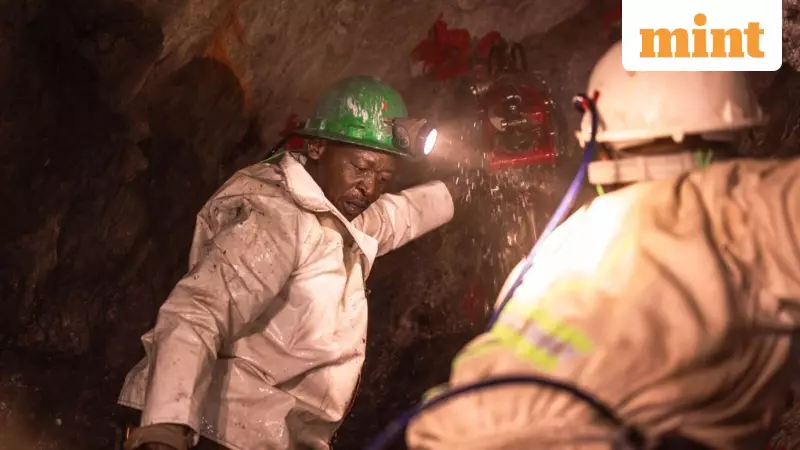
Approximately $100 million of investment has poured into the Qala Shallows mine, where workers now operate with proper safety equipment including hard hats and emergency breathing devices. The mine employs advanced drilling technology, with hydro drills using pressurized water to efficiently loosen ore from rock formations.
The project recovered its first gold in October and is estimated to produce more than $4.5 billion worth of gold at current market prices. With gold having more than doubled in value in less than two years, the economic incentives for such projects have become irresistible to investors.
Global Context of Gold Rush
The current gold boom is a worldwide phenomenon driven by multiple factors including heightened geopolitical concerns. According to S&P Global Energy, global gold-exploration budgets increased by 11% to $6.15 billion in 2025, reflecting the industry's renewed confidence.
Major mining companies are expanding operations globally:
- Newmont, the world's largest gold miner, began commercial production at its Ahafo North mine in Ghana in October
- Barrick Mining, the second-largest producer, is expected to start underground development of its Fourmile project in Nevada this year
South Africa's Mining Challenges and Opportunities
South Africa's journey from being the world's gold capital throughout much of the 20th century to its current position as the 12th largest producer has been marked by significant challenges. The country's aging, deep mines have been viewed by investors as dangerous, expensive, and fraught with labor issues.
Several factors have contributed to South Africa's mining difficulties:
- Soaring wages driven by strong unions
- Unmechanized operations making costs among the highest globally
- Difficulty attracting investment since 2007
West Wits Mining initially struggled to secure funding for Qala Shallows around 2021, with Deysel noting that "investors didn't even want to speak to us" due to negative perceptions about South Africa. However, the rally in gold prices changed everything, allowing the project to secure funding from multiple sources including a local bank, a development-finance institution, and an American mining-finance firm.
Qala Shallows: A Model for Modern Mining
The Qala Shallows mine offers several advantages that make it particularly promising:
- Located just 10 miles from downtown Johannesburg
- Current depth of around 200 feet with planned expansion to approximately 2,800 feet
- Break-even point of $1,291 per ounce, lower than many South African mines
- Use of modern technology including hydro drills
The mine was hurried into production a year ahead of schedule to capitalize on skyrocketing prices, with Deysel explaining that "this was all done with a view to create a very quick cash flow." The operation currently uses shipping containers as offices, changing rooms, and lamp rooms where workers prepare before heading underground.

Industry-Wide Impact and Future Projections
While Qala Shallows alone won't transform South Africa's gold industry, it represents a positive trend of renewed investment. Other major producers are also expanding operations:
- Harmony Gold, the country's top producer, is expanding its Mponeng mine (the world's deepest) to more than double its expected lifespan to 20 years
- Sibanye-Stillwater, the second-largest producer, is considering reopening its Burnstone mine
The industry-wide rush to boost capacity presents challenges, including difficulty finding skilled labor and lengthy wait lists for equipment. However, the economic incentives remain compelling.
Qala Shallows is projected to recover about 6,000 ounces of gold in 2026, rising to approximately 70,000 ounces annually by 2029, with an expected mine life of 17 years. The payroll is expected to more than double to 400 miners by year's end.
Izak Odendaal, an investment strategist at fund manager Old Mutual, summarized the sentiment: "The South African gold mining sector has just suffered headwind after headwind over the years. Now, to finally get this kind of boost from the gold price is phenomenal."
The transformation from illegal mining operations to modern, technologically advanced facilities represents not just an economic revival but a fundamental shift in how South Africa approaches its mineral resources in the 21st century.
