Odisha Emerges as Focal Point for India's Critical Mineral Exploration Drive
The Geological Survey of India (GSI) has significantly ramped up its mineral exploration activities in Odisha, undertaking a total of 36 comprehensive projects between the fiscal years 2021-22 and 2024-25. A substantial portion of this initiative—specifically 14 projects—is dedicated to the exploration of rare earth elements and rare metals (REE-RM), which are crucial for various high-tech and defense applications.
Expansion and Focus on Strategic Resources
Building on this momentum, GSI has already initiated an additional 15 exploration projects for the upcoming 2025-26 period, targeting critical minerals essential for national security and economic growth. Among these new projects, three are specifically focused on REE-RM as the primary commodity, underscoring the strategic importance of these resources.
In a parallel development, the National Mineral Exploration and Development Trust (NMEDT) has sanctioned 29 critical mineral exploration projects within the state. This includes three projects specifically aimed at exploring rare earth elements and their associated minerals, further amplifying Odisha's role in India's mineral self-sufficiency goals.

Legislative Framework and Economic Auction
Minister of State for Coal and Mines, Satish Chandra Dubey, provided these detailed updates in response to a query from BJP member Mamata Mohanta during a Rajya Sabha session on Monday. The minister highlighted that since the pivotal amendment to the Mines and Minerals (Development and Regulation) Act in 2023, the central government has successfully auctioned 46 blocks of critical and strategic minerals across the country.
Notably, seven of these auctioned blocks are located within Odisha, signaling strong investor interest and the state's rich mineral potential. This auction process is designed to transparently allocate mining rights and accelerate the development of these vital resources.
Operational Plants and Local Economic Impact
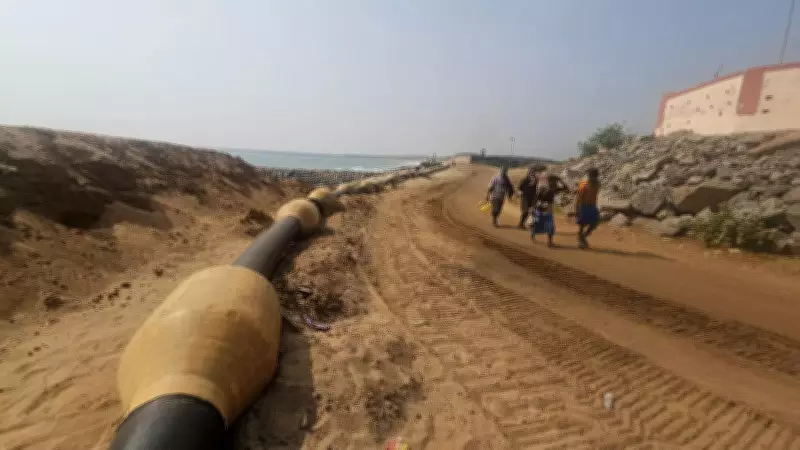
The minister also detailed the establishment of key processing infrastructure within the state. A dedicated processing plant for rare earth minerals, specifically targeting beach sand, has been set up by IREL (India) Limited at Chhatrapur in Ganjam district. This facility is crucial for adding value to raw mineral extracts.
Furthermore, Odisha currently boasts five operational graphite beneficiation plants. These are strategically located with three in Balangir, one in Koraput, and one in Rayagada. Minister Dubey emphasized that these plants are not merely processing units; they are engines of local economic growth. They enable significant value addition to mined resources, provide robust support to downstream local industries, and are instrumental in generating both direct and indirect employment opportunities for the regional population.
Commitment to Sustainable and Regulated Mining
Addressing environmental concerns, the minister outlined the stringent regulatory framework governing mining activities. The Ministry of Mines enforces sustainable mining practices as mandated under Chapter V of the Mineral Conservation and Development Rules (MCDR), 2017.
These rules require mining lessees to implement comprehensive precautions to mitigate air and noise pollution, prevent the discharge of toxic liquids, and guard against surface subsidence. Crucially, before any mineral concession is granted, prospective lessees must obtain all necessary statutory clearances, with environmental clearance being a non-negotiable prerequisite.
As part of this rigorous process, lessees are required to conduct detailed Environment Impact Assessment (EIA) studies, prepare thorough Environment Management Plans (EMP), and strictly implement all approved mitigation measures throughout the lifecycle of the mining operation.
Star-Rating System and Technological Advancement
To incentivize and monitor compliance, Rule 35 of the MCDR, 2017, establishes a star-rating system for all mining leases based on their adherence to sustainable mining practices. Every lease holder is mandated to achieve a minimum three-star rating within four years of commencing operations and must maintain this standard annually thereafter.

Beyond regulation, the Ministry of Mines actively fosters innovation through its science and technology programme. Under the R&D and S&T-PRISM components, the ministry provides support for research and development in advanced mineral processing techniques, metallurgical technologies, and mineral beneficiation processes. This dual focus on regulation and innovation aims to ensure that India's mineral wealth is developed responsibly, efficiently, and for the long-term benefit of the nation and its people.