Gujarat's Homegrown Cherry Tomatoes: A Breakthrough in Indian Agriculture
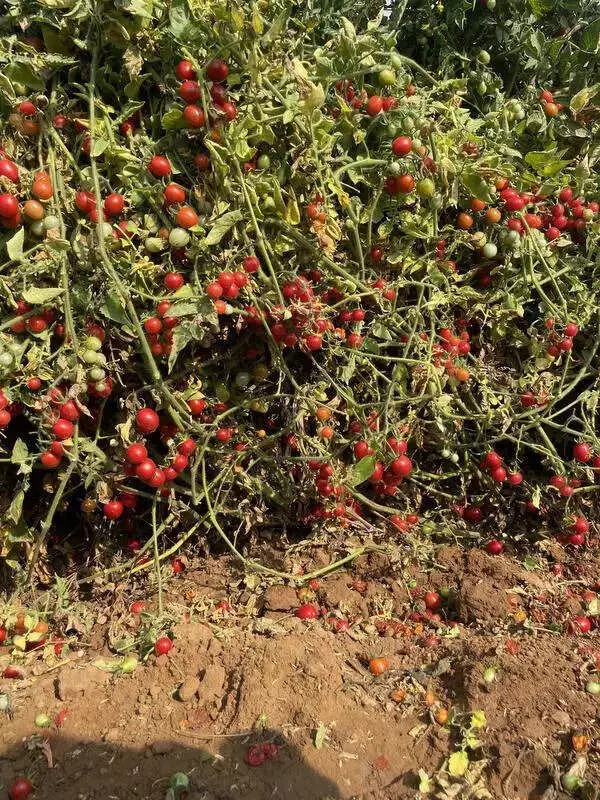
Gujarat has proudly introduced two new cherry tomato varieties, marking India's first biofortified cherry tomatoes developed through domestic research. The State Variety Release Committee recently approved Anand Lalima and Anand Kundan, also known as Gujarat Cherry Tomato 301 and 302. This achievement concludes nearly twenty years of dedicated scientific work at Anand Agricultural University.
Cost Savings for Farmers
These new varieties bring immediate benefits to farmers. Imported hybrid cherry tomato seeds currently cost between Rs 30,000 and Rs 34,000 per kilogram. Farmers must purchase fresh seeds every season. Anand Lalima and Anand Kundan will sell for approximately Rs 15,000 to Rs 17,000 per kilogram, cutting costs by about half.
Dr K B Kathiria, vice-chancellor of AAU and the plant breeder who initiated this program in 2006-07, explained the advantage. "Cherry tomatoes are self-pollinated crops," he said. "Farmers can harvest seeds from the fruits and use them for continuous sowing over many years. They don't need to buy fresh seeds annually. Farmers can share seeds with others, producing large quantities without extra effort. This reduces costs and enables rapid dissemination."

The Kitchen Revolution
Cherry tomatoes have transformed from gourmet ingredients to kitchen staples across India. Once limited to five-star hotels and specialty salads, they now appear regularly in pasta dishes, fusion chaats, children's lunch boxes, and healthy snacks.
Sudhakar Angre, a Vadodara-based chef, witnessed this change firsthand. "A decade ago, we struggled to find exotic vegetables like cherry tomatoes," he recalled. "We ordered them specially from major cities like Mumbai or Delhi. Even cheese required special sourcing."
The growth of premium hotels and restaurants in Gujarat over the past eight to ten years strengthened supply chains and increased consumption. "As luxury dining spaces emerged, supply improved dramatically and consumption multiplied," Angre noted. "Today, these ingredients are essential for authentic Western and Oriental dishes."
Chefs use cherry tomatoes in various preparations including cherry tomato pesto with pine nuts, penne pasta with broccoli in Alfredo sauce, pasta salads, pizzas, and sandwiches like pesto sliders. Indian kitchens incorporate them into saffron or jaffrani gravies paired with exotic vegetables.
"People desire vibrant, globally-inspired food," Angre added. "Cherry tomatoes provide that freshness and visual appeal, which explains their growing popularity."
Retailers sell cherry tomatoes separately, often in pallet boxes similar to grapes, across fruit and vegetable markets, supermarkets, and online delivery platforms.
Value Over Volume Farming
For agricultural producers, cherry tomatoes represent a shift from volume-focused cultivation to value-driven farming. These plants are indeterminate, producing fruits continuously over several months. This allows staggered harvesting, steady income streams, and reduced vulnerability to sudden market crashes that frequently affect conventional tomato growers.
Cherry tomatoes respond well to protected cultivation methods like polyhouses and net houses, making them attractive for peri-urban farmers supplying city markets. Despite India being one of the world's largest tomato producers with cultivation across 8,45,000 hectares and annual production exceeding 21 million tonnes, cherry tomatoes remain a niche crop. In Gujarat alone, tomatoes cover 54,000 hectares producing approximately 1.58 million tonnes, with only a small fraction dedicated to cherry tomatoes.
Typically, cherry tomatoes yield 50-75 tonnes per hectare in open fields, increasing to 120 tonnes under greenhouse conditions. Most imported hybrids require protected cultivation, raising production costs and limiting the fruit to premium urban markets. AAU's research addresses this limitation effectively.
The Scientific Breakthrough
The foundation for this achievement began two decades ago when Dr Kathiria, then a research scientist at AAU, imported wild tomato germplasm from the CM Rick Tomato Genetics Resource Centre at the University of California, Davis. This center represents one of the world's most important tomato gene banks.

Recognizing the limitations of routine breeding approaches, AAU established a specialized Centre for Distant Hybridisation with a long-term vision to utilize wild and exotic genetic resources. The coordinated breeding program formally took shape in 2013-14 under the leadership of the late Dr Akarsh Parihar, associate research scientist, who led interspecific hybridisation between cultivated tomatoes and wild cherry tomato relatives.
This demanding approach aimed to combine resilience, nutrition, sustained fruiting, and adaptability to Indian field conditions. Over more than a decade, successive generations underwent evaluation for yield, earliness, disease and pest resistance, tolerance to climatic stresses, fruit shape, size, colour, taste, aroma, and nutritional quality.
Multilocation trials conducted across Gujarat between 2021-22 and 2024-25 confirmed the success of two advanced pure-line varieties. Scientists including Dr D A Patel, Dr R R Acharya, and Dr M B Vaja contributed to this work, with administrative and technical support from Dr M K Jhala, director of research at AAU.
High Yield Without Greenhouses
Field trials demonstrated impressive results. Anand Lalima recorded an average yield of 153 quintals per hectare, while Anand Kundan yielded 143 quintals per hectare, outperforming existing check varieties. Unlike most imported hybrids, the AAU varieties perform well in open fields using simple trailing systems supported by poles and wires, along with drip irrigation.
"They suit terrace gardens and kitchen plots too," Kathiria noted. With a fruiting window of nearly four months, a single plant can produce over 1,000 fruits, sometimes approaching 2,000 fruits through multiple pickings. The current cost-benefit ratio stands at 1:1.86 for open field cultivation.
Resilient, Climate-Ready Plants
Since each variety includes wild species parentage, both demonstrate strong resistance to major soil-borne and airborne diseases, along with insect pests. They also tolerate abiotic stresses including drought, high temperatures, and cold spells. These traits were carefully preserved through years of selection under open-field conditions, making the varieties suitable even for natural farming systems.
The fruits maintain quality for 10-15 days without transportation issues, addressing a key concern for perishable produce. Preservation methods include freezing, dehydration, and pickling.
Nutrition represents where the new varieties truly excel. Anand Lalima, the red-fruited variety, is particularly rich in lycopene, a powerful antioxidant linked to cardiovascular health and protection against oxidative stress. Researchers describe it as a "natural lycopene capsule."
Anand Kundan, the yellow-fruited variety, contains higher levels of β-carotene, a precursor of vitamin A essential for vision, immunity, and cellular health. This quality proves especially relevant for addressing micronutrient deficiencies.
Both varieties show elevated levels of total soluble solids, sugars, dietary fibre, protein, and essential minerals including potassium, calcium, magnesium, and phosphorus compared to existing cherry and common tomato varieties. These improvements remained consistent across locations, confirming genetic stability. Based on these characteristics, officials designated both as biofortified varieties.
The Global Context
Globally, cherry tomatoes have become high-value export commodities. Between March 2023 and February 2024, over 8,900 shipments traded worldwide, with exports increasing by 22% year-on-year. Major destinations include Russia, the United States, and Romania, while Turkey, the Netherlands, and Mexico dominate exports.
India's cherry tomato story increasingly focuses inward toward domestic consumption, farmer profitability, and nutritional security. However, export potential remains significant. "This variety will have excellent chances of popularization even in export scenarios," said a researcher associated with the program. "This will greatly contribute to Atmanirbhar Bharat."
Next Steps
AAU will now conduct adaptive trials at farmers' fields as the varieties release for commercial cultivation through the state's formal seed certification agency. The Main Vegetable Research Station at AAU serves as the primary seed producer. Licensing arrangements can proceed with private companies interested in multiplying and distributing seeds.
While government subsidies are currently unavailable, inherent cost savings from seed reusability, open-field cultivation, and reduced input requirements make the varieties economically viable without financial support.
Small Fruit, Big Future
With locally developed, climate-resilient, and nutrient-rich varieties now available, cherry tomatoes are poised to move beyond elite kitchens. For farmers, they offer steady income and lower risk. For consumers, they bring flavour and nutrition in convenient forms. For home gardeners, they promise abundant harvests from single plants.
The journey from ancient Andes to Indian backyards has been lengthy. With Anand Lalima and Anand Kundan, cherry tomatoes may have finally found their true home in India.
The Weight of History
Botanically known as Solanum lycopersicum L. var. cerasiforme, cherry tomatoes are believed to be ancestors of all cultivated tomatoes. Native to South America, particularly the Andean region, these wild tomatoes travelled northward to Central America, where early civilizations like the Aztecs and Incas domesticated them around 700 AD.
For centuries, tomatoes carried mysterious reputations. Their association with the nightshade family meant they were surrounded by folklore and suspicion, remaining largely absent from European diets until the mid-19th century. Even after tomatoes gained acceptance, cherry tomatoes were long dismissed as decorative garnishes rather than crops with serious culinary or commercial potential.
That perception changed in the late 20th century. British farmer Bernard Sparkes developed one of the first commercially successful cherry tomato varieties, Gardener's Delight, in the early 1980s. Around the same time, Israeli scientists including Professor Nachum Kedar and Professor Haim Rabinowich of the Hebrew University of Jerusalem played pivotal roles in transforming cherry tomatoes into globally viable crops by breeding varieties that combined sweetness, firmness, uniformity, and suitability for large-scale production. Most cherry tomato varieties grown worldwide today trace their lineage to these Israeli innovations.