GMDA Initiates Major Road Shoulder Paving Project Along Gurgaon's Southern Peripheral Road
The Gurugram Metropolitan Development Authority (GMDA) is embarking on a significant infrastructure enhancement project aimed at improving environmental conditions and traffic safety along one of the city's busiest corridors. The authority has announced plans to pave a 6-kilometer-long unpaved road shoulder along the Southern Peripheral Road (SPR), specifically covering the stretch from Ghata to Vatika Chowk.
Addressing Environmental and Safety Concerns
This initiative comes as a direct response to multiple concerns that have plagued this important arterial road for years. The primary objectives are twofold: to significantly curb dust pollution that has been affecting air quality in the area and to address persistent waterlogging issues that occur during monsoon seasons. The project involves laying interlocking paver block tiles along the entire shoulder length, which is expected to create a more stable and environmentally friendly roadside infrastructure.
Officials have revealed that the work is estimated to cost approximately Rs 5.5 crore and will specifically target stretches where the shoulder remains bare and uneven. These unpaved sections have created both environmental hazards and traffic safety concerns that have been growing in severity as traffic volumes increase on this crucial corridor.

The Problem with Unpaved Shoulders
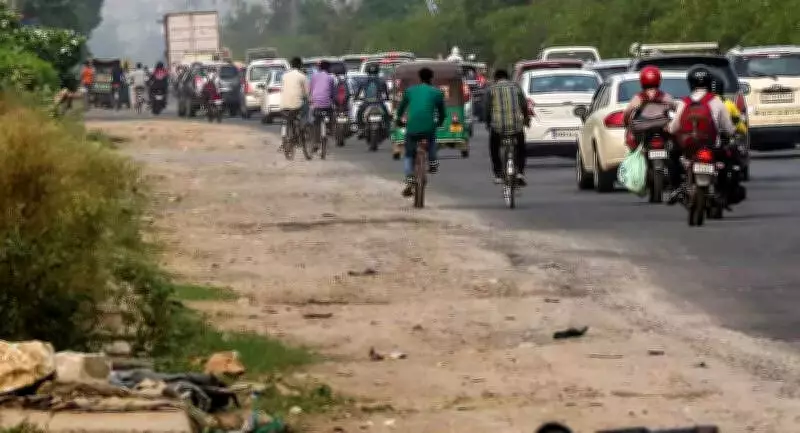
Road shoulders are designed to serve as emergency stopping spaces for vehicles, but on the SPR, the unpaved condition has led to unintended consequences. With traffic congestion becoming more frequent, many motorists—particularly two-wheeler riders attempting to navigate through traffic—have begun using the shoulder as an informal lane. This practice has created a dangerous situation where:
- The risk of accidents has increased significantly
- Vehicle movement has further loosened the soil on unpaved edges
- Dust from the shoulder spreads onto the main carriageway
- The overall condition of the road infrastructure has deteriorated
Environmental Impact and Regulatory Pressure
The Commission for Air Quality Management (CAQM) had previously flagged the dust pollution issue on the SPR and directed civic agencies to implement mitigation measures. Roadside dust is considered a major contributor to particulate matter levels, especially during peak pollution months in the National Capital Region.
A senior GMDA official explained the expected benefits of the paving project: "Paving the shoulder with interlocking tiles is expected to reduce dust generation and also help address waterlogging. We prepared the estimate, and the tender will be floated soon."
The official further noted that the paving will help prevent soil from being carried onto the carriageway by vehicle tires and wind movement, which should result in cleaner air and better road conditions.
Technical Approach and Community Response
Under the proposal, interlocking paver block tiles will be laid along the entire 6 km stretch between Ghata and Vatika Chowk. These tiles are commonly used for quick paving solutions due to their relative durability, easier maintenance requirements, and the practical advantage of being removable and re-layable when utility work is needed.
Residents and regular commuters have welcomed the initiative, noting that the unpaved shoulder had become a risky but routine workaround, particularly during peak hours when main lanes slow down. Sudakshina Laha, general secretary of Sushant Lok 2 and 3, shared her perspective: "SPR is one of the key arterial stretches, yet the roadsides are full of accumulated dust and turn muddy during rains. It becomes risky for two-wheelers, especially when riders try to bypass traffic using the shoulder. Paving the stretch is a welcome move, but authorities should also focus on improving the greenbelt and footpaths to ensure pedestrian safety."
Broader Context and Future Implications
This project represents a continuation of infrastructure improvements along the SPR, following the authority's repair of primary lanes between Ghata Chowk and Vatika Chowk in 2024. The road shoulder, however, had remained unpaved even after those repairs were completed.

The timing of this initiative is particularly important as Gurgaon continues to grapple with air quality challenges and urban infrastructure demands. By addressing both dust pollution and waterlogging through a single intervention, the GMDA hopes to create multiple benefits for the city's environment, traffic management, and overall quality of life for residents and commuters who depend on this vital transportation corridor.