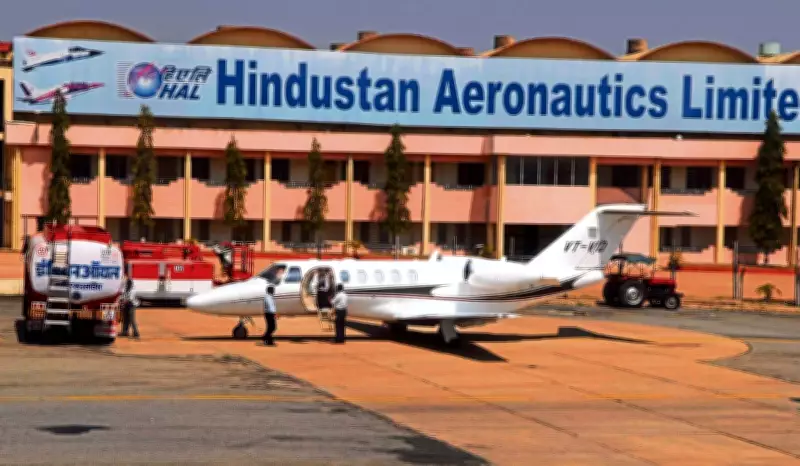
In a significant development for India's defence sector, Hindustan Aeronautics Ltd (HAL), the country's premier aerospace company, has been excluded from the race to develop India's indigenous 5th-generation fighter aircraft under the Advanced Medium Combat Aircraft (AMCA) programme. This marks the first time the maharatna public sector undertaking, which has been involved in numerous high-profile defence projects, will not participate in India's most ambitious advanced aircraft development initiative.
Order Book Constraints and Strategic Focus
The primary reason for HAL's exclusion appears to be its substantial existing order commitments. According to sources familiar with the matter, HAL currently maintains a significant order book for the Light Combat Aircraft (Tejas) programme, and the government wants the company to concentrate on fulfilling these delivery obligations. Following a March 2025 contract, HAL is also engaged in producing 156 additional Light Combat Helicopters (LCHs) for the Indian military, with deliveries scheduled to commence in 2028.
Additionally, on January 29 this year, HAL signed contracts with Pawan Hans for the supply of 10 Dhruv NG helicopters valued at over Rs 1,800 crore. Another strategic consideration cited for HAL's exit is the nation's perceived need to establish a parallel assembly line for fighter aircraft within India, diversifying manufacturing capabilities beyond traditional defence public sector undertakings.

Shortlisted Consortia and Selection Criteria
From the seven consortia comprising both public and private sector firms that submitted bids for the AMCA programme, three have been shortlisted:
- Tata Group
- Larsen & Toubro (in partnership with Bharat Electronics Limited and Dynamatic Technologies)
- Bharat Forge of the Kalyani Group (collaborating with BEML and Data Patterns)
The selection panel evaluated consortia based on multiple criteria beyond just outstanding order books. Technical expertise, manufacturing capability, development experience, and financial strength were all thoroughly assessed during the evaluation process.
Experience and Capabilities of Shortlisted Firms
Among the three shortlisted entities, only Tata Group possesses direct experience in establishing a final assembly line for aircraft, having accomplished this for the C-295 transport aircraft in partnership with Airbus. The other firms have demonstrated experience in manufacturing critical components such as wings, fuselage sections, and various aircraft subsystems.
Other contenders who remain in consideration include Adani Defence & Aerospace with MTAR Technologies, engineering solutions provider Goodluck India Ltd with defence firm Axiscades Technologies Ltd, state-run BrahMos Aerospace Thiruvananthapuram Ltd, and another consortium featuring ICOMM Tele Ltd.
Programme Timeline and Future Prospects
The final partner for the AMCA programme is expected to be announced within the next three months. The selected consortium will collaborate with the Aeronautical Development Agency (ADA) to construct five AMCA prototypes by 2031, utilizing the ministry's initial allocation of Rs 15,000 crore.
Once these prototypes are completed and successfully undergo rigorous testing phases, the Indian Air Force is anticipated to place an order for approximately 120 fighter jets, with provisions for potential expansion based on operational requirements and strategic needs.
Policy Shift and Industry Implications
This development follows Defence Minister Rajnath Singh's decision in May of last year to open the AMCA programme to both state-owned and private players, marking a significant policy shift in India's defence procurement and development strategy. The move reflects a broader trend toward greater private sector participation in defence manufacturing and represents a strategic effort to build multiple indigenous capabilities within India's aerospace ecosystem.
The exclusion of HAL from this flagship programme, while notable, underscores the government's commitment to ensuring timely delivery of existing defence contracts while simultaneously fostering competition and capability development across India's defence industrial base.